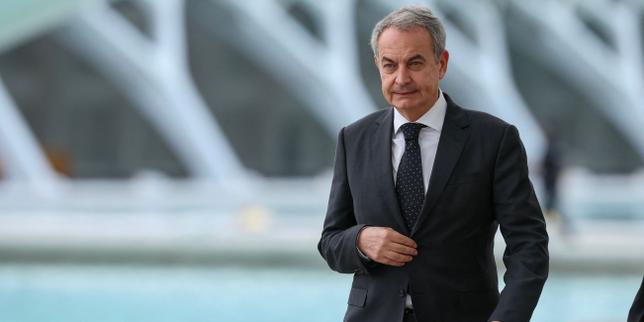
Power does not evaporate when a leader steps down. It changes form. It becomes a ghost in the corridors of state, a whisper in the ears of corporate boards, a Rolodex worth millions to those who know how to ask. For over a decade, José Luis Rodríguez Zapatero inhabited this twilight world of the global elite. He was the smiling, progressive face of modern Spain, the man who legalized same-sex marriage and pulled troops out of Iraq. He was the grandfatherly diplomat who flew to Caracas to negotiate with dictators under the banner of peace.
Then, the music stopped.
The news broke like a sudden thunderstorm over Madrid. For the first time in the history of modern Spanish democracy, a former prime minister became the official target of a judicial investigation for influence trafficking. The headlines in the mainstream press were cold, clinical, and buried under procedural jargon. They spoke of magistrates, legal articles, and corporate filings. But strip away the bureaucratic prose, and you find a story about the fragility of trust, the invisible lines between diplomacy and corruption, and the haunting realization that no one is truly untouchable.
The Weight of the Gavel
To understand the shockwave ripping through Spain, you have to understand the specific weight of the Spanish judiciary. This is a country where judges regularly bring down governments. The National Court and the investigative magistrates of Madrid are not faceless bureaucrats; they are the ultimate arbiters of accountability. When a judge decides to open a formal investigation into a figure of Zapatero’s stature, it is never a casual decision. It means the smoke has thickened enough that the law must go looking for the fire.
Imagine sitting in a quiet, wood-paneled office in Madrid, looking at a stack of bank transfers and meeting logs. That is where this story actually lives. The investigation centers on allegations that the former leader leveraged his immense political capital to smooth the way for private business interests, blurring the line between international mediation and corporate lobbying. In Spain, influence trafficking is the ultimate sin of the political class. It is the monetization of public trust.
The tragedy of the situation lies in the contrast. Zapatero was always the idealist. His political brand was built on a fierce, almost poetic optimism—what his critics called buenismo, or naive goodness. To see that legacy dragged into the mud of financial opportunism feels like a betrayal to millions who watched him transform the social fabric of the country in the early 2000s.
The Anatomy of an Access Economy
How does a former leader find themselves in such a position? The answer lies in the nature of the modern global economy. When a prime minister leaves office, they do not simply retire to a quiet life of writing memoirs. They are courted by think tanks, foreign governments, and multinational corporations. They become geopolitical navigators.
Consider how this works in practice. A private entity wants to secure a contract or a regulatory favor in a volatile foreign market. They could hire a standard lobbying firm. Or, they could hire a man who used to command armies and sit at the G20 table. When that man walks into a room, doors open automatically. Presidents take his calls. Ministers clear their schedules.
The defense will argue that this is simply diplomacy. They will say it is the legitimate work of a statesman using his experience to foster international relations. But the prosecution sees a darker pattern. The core of the legal question hinges on whether Zapatero received personal financial benefits in exchange for using his political weight to influence public decisions or secure unfair advantages for third parties.
The law is clear, yet the reality is incredibly muddy. Where does elder statesmanship end and mercenary lobbying begin? The boundaries are invisible, defined only by the conscience of the individual and the vigilance of the courts. Spain is now forced to examine those boundaries under a microscope.
The Shock to the System
The political class in Madrid is currently holding its breath. The current socialist government, led by Pedro Sánchez, finds itself in a deeply uncomfortable position. Zapatero has been a fierce defender of Sánchez, acting as a crucial campaign surrogate during recent, tight elections. He was the elder lion brought out to rally the base. Now, that same lion is a political liability.
The opposition parties are already seizing the moment. They smell blood in the water. For years, they have accused the ruling left-of-center coalition of degrading Spain’s institutions. This investigation provides them with a devastating narrative. It allows them to argue that the rot goes all the way back to the foundation of modern Spanish progressivism.
But the real casualty here is not a political party. It is the citizen's belief in the fairness of the system.
When people see a former prime minister under investigation, two things happen simultaneously. First, there is a sense of cynical validation. They are all corrupt, the voice in the street says. They all look out for themselves in the end. But second, and more importantly, there is a profound sense of exhaustion. Spain has spent the last decade recovering from massive corruption scandals that decimated the traditional political parties. The country was supposed to have turned a page. This investigation feels like a relapse.
The Long Shadow of Venezuela
You cannot talk about Zapatero’s post-presidential career without talking about Caracas. His frequent trips to Venezuela as a mediator between the Maduro regime and the opposition have long been a source of intense controversy. To his supporters, he was a courageous peace broker trying to prevent a civil war. To his detractors, he was a useful idiot, or worse, a paid apologist for a brutal dictatorship.
While the current investigation involves specific corporate interests, the shadow of his Latin American entanglements hangs heavily over the proceedings. It created the environment of suspicion that made this judicial inquiry inevitable. It trained the public to look at his international movements not with admiration, but with deep skepticism.
The investigative judge faces a monumental task. Proving influence trafficking is notoriously difficult. It requires tracing a direct line between an action taken by a public official, the intervention of the accused, and a financial reward. It is a puzzle where the pieces are often scattered across multiple jurisdictions and hidden behind shell companies or vague consulting contracts.
The Verdict of History
Regardless of how the legal process unfolds, the damage to Zapatero’s legacy is already done. In the court of public opinion, the opening of the investigation is a point of no return. The image of the triumphant young reformer who took office in 2004 has been permanently replaced by the image of an aging politician navigating the murky waters of judicial scrutiny.
The coming months will see a grueling parade of witnesses, document leaks, and political grandstanding. The courtroom in Madrid will become the center of a national drama, a mirror reflecting Spain's ongoing struggle with its own leadership elite.
Late in the evening in Madrid, after the television news broadcasts have moved on to other stories, the lights stay on in the ministry buildings and the law offices. The documents sit on the desks, waiting. They contain the meticulous details of a career's final chapter—a chapter that no one, least of all the man who once led the nation, ever expected to see written in the cold ink of an indictment.