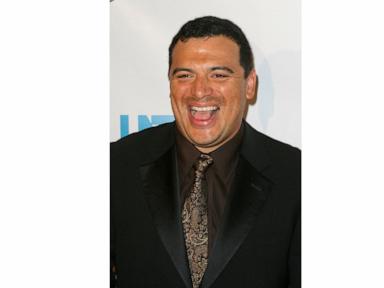
The mainstream media loves a fallen star, especially when the fall involves handcuffs and Uncle Sam. The latest headlines screaming about comedian Carlos Mencia pleading not guilty to 12 felony counts of tax evasion follow a tired, predictable script. The narrative is always the same: a greedy celebrity hoards cash, thinks they are above the law, and gets caught red-handed by heroic auditors.
It is a comforting story for the average taxpayer who cuts a standard W-2 check every two weeks. It is also entirely wrong.
When a high-earning entertainer faces a massive federal tax indictment, it is rarely a story about malicious criminal masterminds. Instead, it is almost always a systemic breakdown of liquidity, terrible business management, and the federal government using a famous face as a compliance billboard. The public views these cases through the lens of morality. If you want to understand what is actually happening, you have to look at the mechanics of irregular cash flows and the brutal reality of how the Internal Revenue Service operates.
The Illusion of the Liquid Millionaire
The foundational error of the public consensus is the assumption that earning money equals having money.
In the entertainment industry, income is violent, spiked, and completely unpredictable. A comedian goes on a massive theater tour, pulls in millions over an eighteen-month period, and then enters a dry spell. The modern tax system, however, is built for linear predictability.
When a W-2 employee earns money, their tax liability is stripped out before the cash ever hits their bank account. They never truly hold the government’s share. An independent creator or touring artist receives gross payouts. They hold 100% of the revenue. To survive that ecosystem long-term, you need a corporate treasury mindset. Most entertainers possess the financial literacy of a high school sophomore.
Imagine a scenario where a performer grosses $5 million in a single calendar year through a web of loan-out corporations, venue payouts, and merchandise sales.
- The Manager takes 15% ($750,000)
- The Agent takes 10% ($500,000)
- The Lawyer takes 5% ($250,000)
- Production, travel, and crew costs swallow 30% ($1,500,000)
Before the performer even looks at their personal tax bill, $3 million of that $5 million is entirely gone. Yet, the IRS looks at the gross activity and the individual's ultimate net taxable income, which still carries a massive top-tier federal and state liability. If that performer spent their remaining cash on lifestyle creep or illiquid investments before making their quarterly estimated payments, they are suddenly staring down a seven-figure debt with zero cash on hand.
They did not hide money in a Swiss bank account. They just spent money they did not technically own.
The IRS Needs Scapegoats, Not Just Dollars
The media portrays criminal tax indictments as the natural, automatic consequence of missing a tax payment. This misses the entire strategy of federal law enforcement.
The IRS Criminal Investigation division does not have the resources to audit every non-compliant citizen. They operate on a strategy of deterrence. To make deterrence work, you need high-profile examples. Indicting an anonymous construction contractor in Ohio for hiding $500,000 does not make national news. Indicting a recognizable television personality for 12 felonies dominates the news cycle for a week.
The government uses these cases to scare the broader public into compliance. The systemic reality is that thousands of regular business owners owe massive sums to the government and spend years negotiating Offers in Compromise or installment agreements in the shadows. A celebrity is denied that quiet off-ramp because their public prosecution yields a massive return on investment for the government in the form of public fear.
Pleading not guilty in these scenarios is not necessarily an assertion of perfect innocence; it is often the only logical opening move in a high-stakes corporate negotiation. The criminal justice system treats tax evasion as a matter of intent. The government must prove beyond a reasonable doubt that a defendant willfully evaded their obligations, rather than simply falling victim to catastrophic accounting negligence. By forcing the state to prove willfulness, defense teams attempt to downgrade criminal charges into civil penalties and structured payment plans.
The Gatekeeper Failure
Every time a celebrity tax scandal breaks, the immediate question is always: "Where were their accountants?"
The truth is that the financial infrastructure surrounding Hollywood and the entertainment industry is riddled with perverse incentives. Business managers are frequently paid a percentage of a star's gross income rather than a flat fee. This incentivizes them to keep the star working, spending, and generating gross revenue, rather than enforcing strict fiscal discipline or hoarding cash for future tax liabilities.
Furthermore, many boutique accounting firms catering to talent are hesitant to deliver hard financial truths. If a conservative CPA tells a volatile comic that they cannot buy a new home because they need to escrow 40% of their tour revenue for a tax bill due in nine months, the comic frequently fires that CPA and hires someone who will tell them what they want to hear. The industry rewards enablers until the federal government steps in.
The real lesson of these public tax battles is not that celebrities are uniquely corrupt. It is that our collective understanding of wealth, taxation, and liquidity is fundamentally broken. We treat cash flow problems as moral failures when they are actually structural math problems. Until observers decouple the theatrical outrage of a courtroom plea from the raw mechanics of high-bracket independent taxation, they will continue to misunderstand every single headline that crosses their screen.
The government does not just want its money back. It wants the headline. And right now, the media is giving it to them for free.