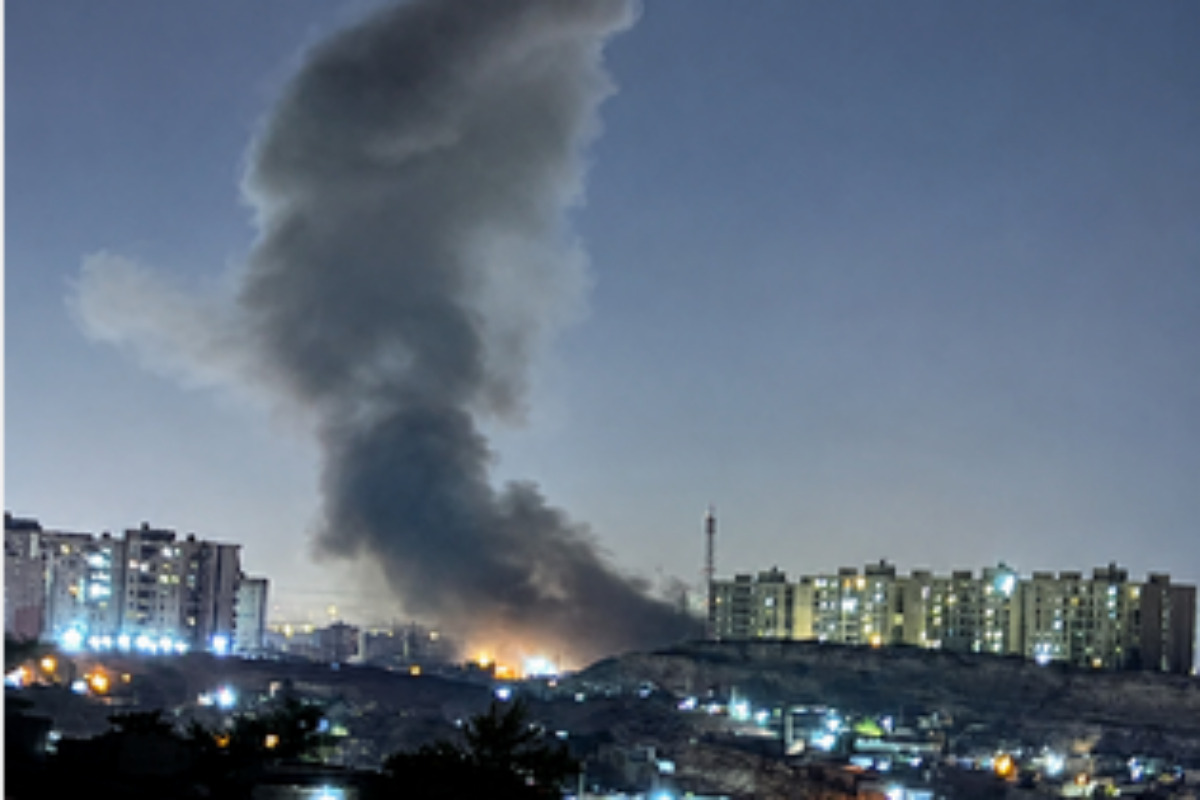
The glass on the kitchen table does not shatter. It hums.
It is a low, vibrating frequency that starts in the floorboards, travels up the legs of the mismatched chairs, and ripples across the surface of a half-filled cup of tea. To anyone unfamiliar with this corner of the Middle East, it might feel like a minor tremor, a passing heavy truck, or a trick of the mind.
But Layla knows the difference.
Layla is a composite figure, a representation of the thousands of civilians living along the porous, heavily militarized borders of Iraq and Syria—zones where the shadow war between the United States and Iran frequently breaks its silence. When that low hum starts, she does not look at the ceiling. She looks at her children. She measures the seconds between the vibration and the distant, thudding boom that follows.
On this night, the boom is louder than usual.
Thousands of miles away, in carpeted briefing rooms in Washington, the event is translated into the sterile language of modern warfare. It is called an "asymmetric response." It is categorized as a "surgical strike on command-and-control facilities." The official press releases speak of deterrence, of red lines, and of neutralizing threats to coalition forces.
But on the ground, there is nothing sterile about it. The sky turns a bruised, violent purple. The scent of ozone and burning fuel drifts on the desert wind. A message has been sent, written in fire, and its primary recipient sits in Tehran.
The Grammar of Violence
To understand why the skies have flared up once again, we have to discard the notion that these airstrikes are sudden, isolated incidents. They are not. They are part of a highly choreographed, incredibly dangerous dialogue that Washington and Tehran have been conducting for decades.
When diplomatic channels clog with mistrust, both sides resort to a different kind of grammar.
Iran speaks through its network of regional allies—groups it has funded, armed, and trained over generations. These groups launch drone attacks on remote outposts, fire rockets at military bases, and disrupt shipping lanes in critical waterways. It is a strategy designed to exert maximum pressure while maintaining just enough deniability to avoid a direct, catastrophic war with a superpower.
The United States responds with the crushing weight of its airpower.
Consider how this cycle functions in practice. A drone strikes an American outpost, causing casualties. The political pressure in Washington builds to a boiling point. The administration must act to show strength, reassure allies, and deter future attacks. The order is given. Bombers roll out. Targets—often warehouses, ammunition depots, or headquarters used by these aligned groups—are reduced to craters.
The strikes are designed to be painful enough to make Tehran hesitate, but not so devastating that they force Iran’s leadership into an all-out mobilization. It is a tightrope walk over an abyss.
The problem is that the tightrope is fraying.
The Illusion of the Clean Strike
There is a comforting myth surrounding modern aerial campaigns. We are told that precision-guided munitions can surgically excise threats with zero collateral damage, like a scalpel removing a tumor.
The reality is far messier.
When a warhead detonates, the physical destruction is only the first wave. The second wave is psychological. The constant, buzzing presence of unmanned aerial vehicles overhead creates a state of perpetual, low-grade trauma for those living beneath them. Children learn to fear clear blue skies because that is when the drones fly.
Moreover, the intelligence used to target these facilities is never flawless. A warehouse earmarked as an arms depot might sit dangerously close to a civilian neighborhood. A road used by military transports is the same road used by farmers bringing their crops to market.
When the bombs fall, the geopolitical calculations made in high-security war rooms collide violently with the fragile daily lives of ordinary people. The strategic victory claimed in a morning press conference in Washington often looks very different when viewed through the dust of a collapsed residential street.
The Calculations in Tehran
Inside the halls of power in Tehran, the reaction to these renewed airstrikes is a mix of public defiance and intense private calculation.
For the ruling establishment, standing up to American "imperialism" is a foundational pillar of their political identity. Every strike is met with fiery rhetoric, promises of retaliation, and state-media broadcasts showing undamaged military parades.
But behind the bravado lies a stark economic and social reality.
Iran is a nation under siege from within and without. Years of crippling economic sanctions have choked its currency, sparked widespread inflation, and fueled domestic unrest. The leadership knows that a direct, conventional war with the United States would be ruinous.
So, they play the long game.
Instead of launching a direct military counteroffensive, Tehran often calibrates its response to exploit regional fractures. They increase their influence in local politics, tighten their grip on key trade corridors, and wait for the political will in Washington to waver. They know that American administrations change, public appetite for foreign interventions wanes, and foreign policy focus can easily shift to other parts of the globe.
It is a test of endurance. Tehran is betting it can outlast the American patience.
The Danger of the Miscalculated Spark
What keeps analysts and historians awake at night is not the planned strikes, but the unplanned escalations.
History is littered with conflicts that nobody wanted but everyone stumbled into. When military operations are conducted with such high frequency and intensity, the margin for error shrinks to almost nothing.
A single errant missile landing in the wrong place, a sudden technical failure, or a misinterpreted radar signal could instantly transform a managed proxy conflict into a raging regional war. If an American strike accidentally kills a high-ranking Iranian general, Tehran may feel it has no choice but to respond with overwhelming force to save face. If a proxy group’s rocket hits a heavily populated barracks, the US domestic pressure for a direct strike on Iranian soil could become unstoppable.
We are playing a game of chicken with live ammunition.
The quiet after the bombs stop falling is never a peaceful silence. It is the tense, holding-of-breath silence of a room waiting for the other shoe to drop.
Back in her small kitchen, Layla waits for the hum to fade from her teacup. She knows that tonight’s explosions are over, but she also knows that the argument is far from settled. The planes will return to their bases, the press releases will be filed away, and the diplomats will continue their cold, distant maneuvers.
And on the ground, the dust will slowly settle over the desert, waiting for the next spark to light up the dark.