Unannounced visits by a defense chief during an active regional conflict function less as routine inspections and more as deliberate instruments of coercive signaling, domestic coalition management, and alliance calibration. When Defense Secretary Pete Hegseth conducts unannounced travel into the U.S. Central Command theater alongside parallel developments across Israel, the West Bank, Gaza, Saudi Arabia, and Iran, standard wire-service roundups treat each item as a separate headline. Separating them obscures the structural links between kinetic force, diplomatic positioning, local governance, and domestic politics.
A rigorous reading of the underlying events requires sorting what is verified from what remains contested or unconfirmed. Confirmed facts include Hegseth's unannounced travel tied to CENTCOM operations and meetings with Israeli leadership, ongoing military strikes and retaliatory exchanges involving Israel, Hamas, Iran, and Houthi forces, rising settler violence during the West Bank olive harvest, disputes over commercial deliveries and local revenue collection in Gaza, executions carried out by Saudi authorities that prompted inquiries from Bangladesh, and diplomatic friction involving European capitals and Tehran. By contrast, claims regarding the long-term strategic durability of current strikes, the exact motives behind specific unilateral moves, or the trajectory of ceasefire talks remain analytical interpretations rather than settled facts.
The Four Structural Pillars of Theater Escalation
Routine wire reporting aggregates discrete incidents chronologically without modeling how they interact. Examining the theater through four structural variables clarifies why pressure in one sub-theater alters incentives in another.
Coercive Signaling and Force Posture
Unannounced trips to forward theaters serve two operational purposes: compressing adversary decision timelines and demonstrating executive resolve without committing to a single public itinerary in advance. In an environment marked by missile and drone exchanges, air-defense interceptions, and maritime friction, visible movement of senior defense officials signals readiness to sustain or intensify operations.
The causal mechanism is straightforward. When a defense leader visits the region while strikes continue and force deployments shift, regional actors face higher uncertainty over escalation thresholds. Higher uncertainty can deter certain provocations in the short term, yet it also raises the risk of miscalculation if different officials send mixed signals about war aims, timelines, or off-ramps.
Sub-National Friction and Governance Contestation
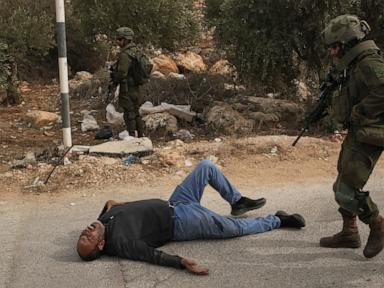
Conflict in the Levant does not move solely at the state-to-state or state-to-militia level. On the ground, localized friction in the West Bank—such as clashes and attacks around the olive harvest—erodes agricultural livelihoods, strains local security forces, and inflames political fault lines inside Israel ahead of domestic elections.
In Gaza, disputes over commercial supply flows and informal taxation or civil-service funding illustrate a secondary battleground: control over economic distribution and administrative authority. Whoever regulates goods and revenue shapes daily survival and leverages political influence long after a given round of kinetic strikes pauses.
Regional Spillover and Diplomatic Realignment
Events inside the core conflict zone reverberate outward into neighboring states and external capitals. Cross-border missile and drone attacks affecting Gulf states test air-defense capacity and economic confidence, while sovereign actions such as executions of foreign nationals create bilateral diplomatic friction that must be managed alongside security cooperation.
Simultaneously, diplomatic outreach between Tehran, Moscow, and regional capitals—alongside European responses to alleged intelligence plots—shows that actors outside the immediate battlefield are actively hedging. Regional governments balance alignment with Washington against the cost of hosting foreign forces or becoming collateral targets in a wider confrontation.
Domestic Political Constraints
Foreign policy and military operations operate inside tight domestic calendars. In Washington, debates over war costs, congressional oversight, and shifting majorities constrain how long open-ended commitments can be sustained without friction. In Israel, electoral dynamics and coalition politics shape how leaders weigh military escalation, settlement policy, and diplomatic pushback from international partners.
The second limitation of treating external trips as decisive turning points is that domestic political incentives often pull in opposite directions. A display of strength abroad may rally core supporters at home while complicating long-term diplomatic settlement or burdening strained defense logistics.
Cause-and-Effect Chains Standard Roundups Miss
Basic news summaries list happenings side by side; strategic analysis traces the transmission mechanisms linking them.
- Kinetic strikes to diplomatic bargaining: Military pressure can alter an adversary's cost calculus, yet strikes alone rarely produce durable political settlements unless paired with clear terms and credible verification mechanisms.
- Local economic chokepoints to prolonged instability: Restrictions on trade or disputes over local revenue collection directly affect civilian welfare and administrative legitimacy, feeding grievances that fuel future cycles of violence.
- Mixed public messaging to alliance friction: When senior leaders emphasize escalating options while other public remarks suggest potential disengagement or shifting timelines, allies and rivals alike adjust their behavior to hedge against U.S. unpredictability.
- Cross-border spillover to wider coalition strain: Attacks or security incidents affecting neighboring states force governments to divert attention toward homeland protection and bilateral damage control.
Analytical Answers to Core Questions Around the Trip
Observers following defense travel and regional news typically look for clarity on four practical questions.
First, why keep a defense secretary's trip unannounced until arrival or confirmation? Operational security reduces predictable targeting windows during transit and ground movements, while preserving dramatic impact when the visit is disclosed.
Second, how does a short visit change facts on the ground? A brief trip does not by itself resolve structural conflicts; its primary value lies in direct command assessment, face-to-face alignment with allied counterparts, and visible backing for deployed personnel.
Third, why do ceasefire announcements and ongoing strikes coexist? Ceasefires frequently fail or fray when underlying disputes over governance, security guarantees, disarmament, and humanitarian or commercial access remain unresolved, turning truces into lulls rather than settlements.
Fourth, what signals matter most when evaluating escalation risk? Track sustained force posture changes, air-defense and maritime disruptions, diplomatic messaging from regional capitals, and domestic legislative or budgetary constraints rather than rhetoric alone.
Step-by-Step Framework for Evaluating Future Dispatches
To avoid getting whipsawed by daily headlines, analysts and decision-makers can apply a four-step diagnostic whenever a new Middle East roundup appears:
- Isolate verified actions from rhetoric: Separate confirmed movements, strikes, diplomatic meetings, and official statements from political posturing or unverified claims.
- Map the affected sub-theater: Identify whether the development alters state-to-state deterrence, militia operations, West Bank or Gaza ground conditions, Gulf security, or external diplomacy.
- Trace second-order incentives: Ask how the move changes the calculations of each key actor over the next two to six weeks—including domestic political factions.
- Identify the binding constraint: Determine what limits each side most—munitions and air defense, economic resilience, diplomatic room for maneuver, or domestic political support.
Limitations and Blind Spots in Current Reporting
No analytical framework eliminates uncertainty in an active conflict zone. Information lags, operational secrecy, contested casualty or strike reports, and competing political narratives mean that initial accounts frequently shift. Furthermore, heavy focus on high-profile visits and dramatic strikes can understate slower-moving structural shifts, such as economic strain, institutional decay, or quiet diplomatic backchannels.
Strategic Play for Monitoring and Decision-Making
Treat every high-profile defense visit and regional news cycle as an indicator of incentive alignment rather than a guaranteed turning point. Anchor tracking around three concrete watchpoints: tangible shifts in force posture and air- or sea-lane security, measurable changes in commercial and administrative conditions on the ground, and formal legislative or diplomatic commitments that lock in policy beyond short-term political messaging.