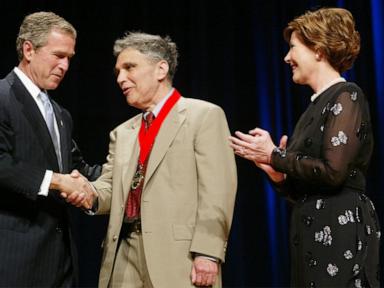
The passing of Dr. Robert Coles at age 97 marks the conclusion of a profound methodological experiment in American psychiatry: the structural quantification of how macroeconomic and political instability alters child development. Traditional mid-century psychoanalysis operated primarily within a clinical vacuum, attempting to diagnose structural pathologies via localized, individual histories. Coles inverted this paradigm. By treating systemic sociopolitical trauma—such as mandatory school desegregation, deep rural poverty, and migrant labor displacement—as independent variables affecting the child's psychological equilibrium, he created a framework for analyzing the human cost of systemic inequality.
His core achievement, encapsulated in the five-volume Children of Crisis series which earned the 1973 Pulitzer Prize for General Nonfiction, was not merely an exercise in empathetic documentation. It was an empirical challenge to the prevailing clinical metrics of his era, proving that resilience and psychological adaptation are heavily mediated by systemic external inputs rather than purely internal defense mechanisms.
The Core Analytic Framework: The Three Pillars of Social Psychiatry
To understand the structural impact of Coles' work requires breaking down his approach into distinct operational methodologies. Traditional psychiatry often categorized marginalized populations through a deficit model, assuming that economic scarcity or social trauma directly correlated with baseline psychological degradation. Coles established three counter-hypotheses that altered this analytical model.
1. The Adaptive Resilience Function
Coles documented that children exposed to acute systemic stress—such as six-year-old Ruby Bridges navigating hostile crowds during the desegregation of New Orleans public schools—did not uniformly exhibit the acute psychiatric pathologies predicted by standard trauma models. Instead, he identified a distinct behavioral buffer. When a child's socio-political exposure is tied to a shared, culturally validated narrative (e.g., the broader Civil Rights Movement), the psychological cost of that stress is mitigated. The trauma does not disappear, but the structural meaning assigned to it acts as an stabilizing mechanism.
2. Qualitative Direct Observation via Projective Mediums
A persistent bottleneck in child psychiatry is the limitation of verbal reporting. Children lack the precise vocabulary to articulate complex systemic anxieties. Coles bypassed this diagnostic barrier by integrating non-verbal, projective analytical tools into his multi-year field studies. By standardizing the analysis of children's drawings across diverse demographics—ranging from Appalachian sharecroppers to urban tenement dwellers—he converted visual outputs into measurable indicators of spatial anxiety, structural awareness, and internal efficacy.
3. Longitudinal Environmental Immersion
Clinical observation usually occurs in clinical settings, creating an artificial observer effect. Coles operated via long-term environmental immersion. He embedded himself within the subject's primary environment over years, removing formal clinical signifiers (such as structured diagnostic questionnaires and professional attire) to minimize behavioral distortion. This methodology allowed him to capture data on the generational transmission of economic anxiety that standard, short-form clinical interviews failed to detect.
The Cause-and-Effect Bottlenecks of Systemic Stress
The primary divergence between Coles and the academic establishment of the late 20th century lay in the diagnosis of causation. While contemporary figures like Lawrence Kohlberg evaluated moral development through structured, hypothetical ethical dilemmas, Coles observed moral development as a real-time negotiation with survival constraints.
[Systemic Economic / Political Shock]
       │
       ▼
[Disruption of Primary Caregiver Stability]
       │
       ▼
[Altered Spatial and Moral Worldview in Child]
       │
       ▼
[Expression via Projected Anxiety / Adaptive Resilience]
This causal chain reveals that a child's moral and psychological architecture is not a fixed chronological progression. It is highly elastic, reacting dynamically to the stability of the immediate macroeconomic environment. When a state shifts its legal framework (e.g., enforcing desegregation) or an economy shifts its labor demands (e.g., marginalizing migrant workers), the immediate downstream effect is a localized psychological shockwave within the family unit. Coles demonstrated that a child's internal equilibrium is directly dependent on how effectively the primary caregiver can absorb that macroeconomic shock.
Methodological Criticisms and Systemic Limitations
An objective evaluation of Coles' career requires analyzing the professional friction his work generated within mainstream psychiatric research. His methodology faced systemic critiques from quantitative behavioral scientists who argued his approach lacked the traditional controls of empirical science.
- The Problem of Replicability: Because Coles' data collection relied on highly individualized, long-term relationships with specific families, his experimental designs could not be replicated under strict laboratory conditions.
- Observer Bias: Critics argued that by abandoning the traditional distance of the clinical psychiatrist, Coles risked introducing subjective confirmation bias into his qualitative findings, acting more as an advocate-journalist than a detached researcher.
- Absence of Standard Metrics: The reliance on narrative profiles and analyzed drawings made it difficult to convert his insights into standardized diagnostic manuals or statistically aggregatable data points.
Despite these limitations, the utility of Coles' framework was validated by its direct impact on public policy. His extensive documentation of malnutrition and poverty in works like Still Hungry in America (1969) provided the granular case data required by congressional committees to expand federal food assistance programs and migrant health initiatives. The qualitative insights served as a necessary corrective to the limitations of purely statistical economic reporting, mapping the precise human coordinate where policy failure manifests as physiological and psychological trauma.
The Structural Realignment of Modern Clinical Practice
The legacy of Coles' research points toward an essential operational imperative for contemporary healthcare and social policy architecture. Treating psychological pathology without addressing the underlying socioeconomic determinants is an inefficient distribution of clinical resources.
The strategic play for modern clinical institutions is the systematic integration of structural data into diagnostic frameworks. This requires moving beyond the Diagnostic and Statistical Manual (DSM) criteria to include standardized assessments of environmental stressors, economic volatility indices, and systemic trauma histories. Only by quantifying the precise relationship between a child's external socio-political landscape and their internal psychological state can modern medicine design interventions that are preventative rather than merely reactive.