The floor of a modern manufacturing plant does not sound like the future. It sounds like a rhythmic, relentless heartbeat. Hissing pneumatics, the sharp whine of high-torque servo motors, and the faint, copper scent of ozone hang heavy in the air. For decades, this has been the domain of the yellow robotic arm—heavy, blind, and bolted to the concrete, repeating a single arc ten million times a day without ever knowing what it touches.
Step three feet away, and you find something entirely different.
Imagine an assembly line worker named Marcus, though his real name is lost in a ledger of shift logs at a sprawling facility in coastal China. Marcus has spent twelve years installing wire harnesses into electric vehicle door panels. His fingers are calloused at the tips, permanently stained with a faint film of graphite and industrial adhesive. He works with a speed that looks effortless, but it is actually the hard-won muscle memory of ten thousand repetitions a shift. He knows the exact angle required to snap a plastic clip into place without breaking its fragile retaining tab. He knows when a screw feels slightly loose in its housing before the torque driver registers the error.
Marcus is about to teach a machine how to do his job. And the machine is not just another yellow arm.
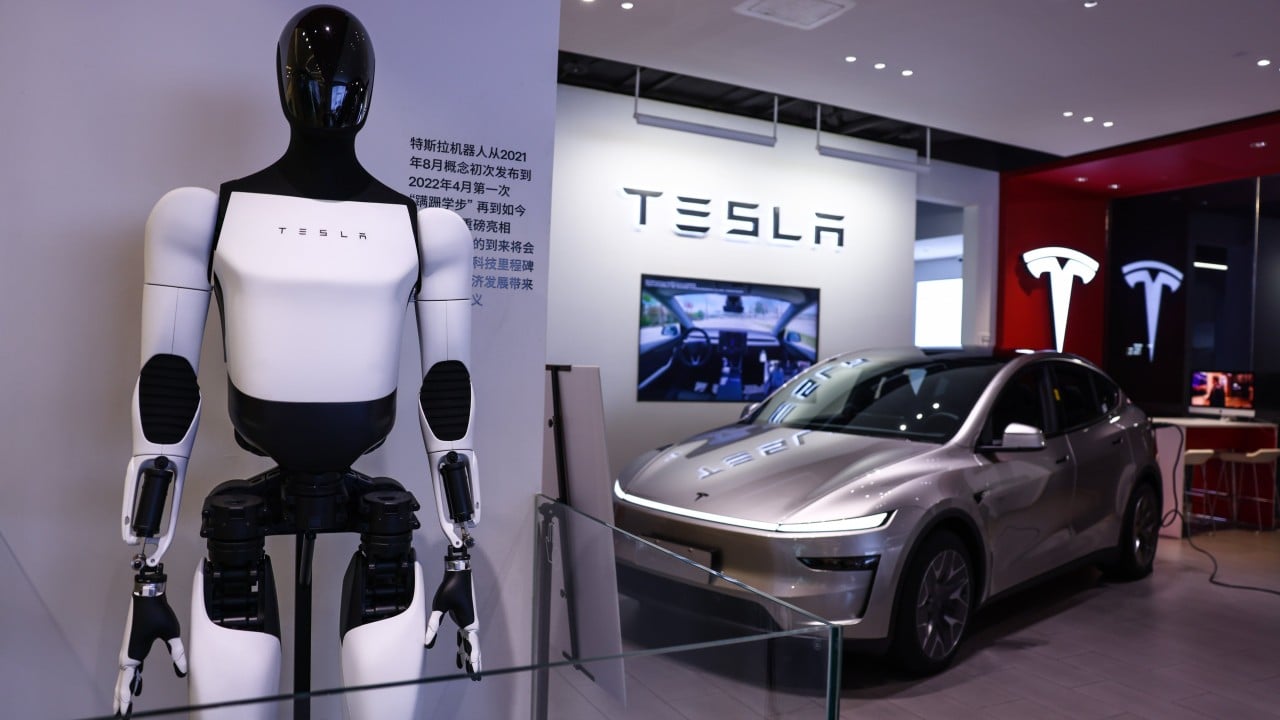
Reports from supply chain corridors indicate that Tesla is quietly dispatching auditing teams deep into its Chinese supplier network. Their mission is not to check quarterly margins or audit standard lithium-ion cell yields. They are inspecting the microscopic precision of actuators, gearboxes, and tactile sensors—the vital anatomy of the Optimus humanoid robot.
This is the hidden theater where the future of labor is currently being negotiated.
For years, humanoid robotics has been an academic playground. Brilliant engineers in Silicon Valley built bipedal marvels that could dance, jump, and backflip on polished laboratory stages. They looked impressive in high-production promotional videos. But a backflipping robot is a party trick. It does not earn its keep on a commercial assembly line. To earn its keep, a machine must be able to do what Marcus does: handle thousands of variable, slightly misaligned, organic components hour after hour, day after day, without dropping a single part or scratching a painted surface.
That capability does not come from software alone. It comes from hardware so refined, so impossibly light and strong, that it pushes the absolute limits of modern metallurgy.
This is why the auditing teams are in China.
China’s manufacturing ecosystem possesses a specific kind of alchemy. It is an infrastructure built on speed, iterative failure, and an unmatched density of specialized component suppliers. If you need a miniature harmonic drive machined to tolerances thinner than a human hair, and you need five thousand of them by next Tuesday, there are districts in Guangdong and Jiangsu where the entire supply chain lives within a forty-minute radius.
When Tesla turns its gaze toward the mass production of a humanoid robot, it cannot rely on boutique laboratory fabrication. It needs scale. It needs the kind of industrial muscle that built the world's consumer electronics and electric vehicle fleets.
Yet, translating a prototype into a mass-market machine is fraught with invisible perils. Consider the hand.
Human hands possess twenty-seven bones and a staggering array of tactile receptors. We pick up an egg with just enough pressure to lift it, but not enough to crack the shell. Replicating that dynamic feedback loop in a robotic hand requires force-torque sensors at every single joint. These sensors must be cheap enough to manufacture by the millions, durable enough to withstand continuous factory vibration, and precise enough to register the resistance of a rubber gasket slipping into a groove.
If a supplier in the supply chain cuts a corner on the metallurgical purity of a finger joint gear, that joint will wear down within three weeks of continuous operation. Multiply that by twenty-eight degrees of freedom per robot, and across tens of thousands of units, and the maintenance bill alone would bankrupt an enterprise.
This is the reality behind the dry headlines of corporate audits. It is a grueling, unglamorous hunt for perfection in the micro-details.
Tesla’s auditors are walking down pristine assembly lines, peering through loupes at microscopic gear teeth, measuring the backlash in planetary reducers, and grilling component engineers about thermal expansion rates. They are looking for the structural integrity that will allow a humanoid machine to stand on a concrete factory floor for sixteen hours a day, executing delicate manipulation tasks without breaking down.
And while the engineers measure tolerances, workers like Marcus watch from the edge of the line.
There is an unspoken tension in the air. It is not the dramatic, cinematic rebellion of science fiction. It is something much quieter. It is the realization that the world is pivoting on a hinge. Marcus does not hate the robot. In truth, he is exhausted. His lower back aches every morning when he climbs out of bed. The repetitive strain in his right wrist flares up whenever the weather turns damp. The prospect of a machine taking over the monotonous, physically punishing task of wire-harness routing is, on some level, a relief.
At the same time, it breeds a profound uncertainty. What happens to the Marcus of the world when the machine learns the exact twist of the wrist required to seat a wiring harness?
The answer, historically, is complex. Industrial automation did not end human labor; it transformed it. But humanoid robotics represents a sharp break from past automation. Previous machines were purpose-built tools—a welding arm could only weld. A stamping press could only stamp. A humanoid robot is a general-purpose labor unit. It is designed to inhabit the human-built world. It walks through standard doors, climbs standard stairs, and uses standard hand tools.
If it succeeds, it changes the fundamental equation of physical economics.
The companies racing to deploy these machines are not merely building consumer novelties. They are attempting to rewrite the cost structure of physical work itself. When labor can be manufactured, scaled, and deployed as easily as a fleet of electric sedans, every industry that relies on human muscle and dexterity faces an inevitable reckoning.
Back on the factory floor, the audit concludes for the afternoon. The Tesla engineers pack their diagnostic gear into hard-shell cases, their laptops flashing summaries of tensile strength tests and motor efficiency ratings.
Marcus finishes his shift, wipes his hands on a greasy shop rag, and walks out into the evening light. Behind him, the rhythmic heartbeat of the plant continues. The yellow arms swing through their predetermined arcs. But deep inside the cleanrooms and testing labs down the road, a new kind of machine is waking up, forged from the collective output of a thousand specialized suppliers, poised to step out of the laboratory and into the messy, complicated reality of the human world.


