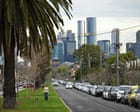
They want you to believe a council by-law is killing Melbourne's soul.
Read any local coverage of the "Free the Strip" movement, and you will get the exact same tear-jerking narrative. Plucky residents, armed with checkered blankets and sourdough loaves, are supposedly fighting an oppressive municipal machine over the right to sit on a patch of grass outside their front fences. It is framed as David versus Goliath. The little guy versus the clipboard-wielding tyrant. Meanwhile, you can explore other events here: The Structural Mechanics of Performance Art Architecture and Public Interventions.
It makes for a great headline. It is also complete nonsense.
The outrage machine surrounding Melbourne's nature strip regulations relies on a fundamental misunderstanding of what a nature strip actually is, who pays for it, and what happens to dense urban infrastructure when everyone treats public utility corridors like their personal backyard. If you think banning picnics on road verges is an attack on community spirit, you are looking at the wrong problem entirely. To explore the bigger picture, check out the detailed analysis by The Spruce.
The Myth of the "Front Yard Extension"
Let's clear up the legal and physical reality immediately. A nature strip is not a park. It is not a village green. It is not an extension of your property line that you generously allow pedestrians to walk past.
In Australian urban planning, the nature strip—technically known as the road verge—is a high-traffic utility corridor owned by the state or local council. Beneath those four meters of patchy buffalo grass sits the circulatory system of the city. High-voltage electrical conduits, pressurized water mains, NBN fiber-optic cables, storm-water drainage, and gas lines all run directly under the spot where people are currently trying to set up low-lying folding chairs and charcuterie boards.
I have spent years working alongside municipal civil engineers and urban planners, and the consensus behind closed doors is unanimous: residents have no idea how fragile—or dangerous—the ground beneath their feet actually is.
When a council restricts permanent or semi-permanent gathering setups on a nature strip, they aren't trying to ruin your Sunday afternoon. They are trying to ensure that when a water main bursts at 2:00 AM, or when an emergency crew needs immediate access to a subterranean gas valve, they don't have to navigate an obstacle course of planter boxes, fairy lights, timber decking, and territorial neighbors claiming squatter's rights over public infrastructure.
The "Free the Strip" crowd conveniently blurs the line between saying hello to a neighbor over the fence and colonizing public land. Nobody is getting arrested for standing on the grass with a cup of coffee. Councils step in when "having a picnic" turns into installing permanent seating, laying down artificial turf, blocking sightlines for reversing vehicles, and creating de facto private beer gardens on municipal property.
Why Your Local Council Actually Cares About Sightlines
Ask a traffic engineer what keeps them awake at night, and they won't say speed cameras. They will say visual clutter in the road reserve.
Every centimeter of a suburban street is engineered around predictable sightlines. When a driver backs out of a driveway, or when a cyclist navigates a narrow inner-city lane in Fitzroy, Brunswick, or South Yarra, their reaction time depends entirely on unobstructed horizontal visibility.
Now, introduce a Saturday afternoon nature strip gathering into that equation. You have clusters of adults seated at eye-level with a car's rear bumper. You have toddlers wandering toward the curb. You have dogs on retractable leads, eskies, umbrellas, and prams spilling onto the footpath.
- The Footpath Bottleneck: Melbourne's older inner-suburban footpaths are notoriously narrow, often barely exceeding 1.2 meters. When a picnic spills onto the concrete, wheelchair users, parents with double prams, and elderly residents with mobility walkers are forced onto the nature strip—or worse, onto the asphalt road itself.
- The Sightline Blindspot: Parked cars already create a visual wall along residential streets. Adding seated crowds and temporary shade structures on the verge eliminates the final buffer zone drivers use to spot oncoming pedestrians.
- The Liability Trap: If a utility worker trips over a resident's unauthorized brick border, or a cyclist swerves to avoid a stray picnic blanket and hits a parked car, who gets sued? Not the guy eating brie on the grass. The local council wears the public liability claim, funded directly by the exact same ratepayers demanding the council "stay out of their business."
Urban theorist Donald Shoup spent decades proving how cities subsidize private storage of cars on public streets at the expense of genuine public space. What we are seeing with the nature strip debate is the exact same entitlement, just wearing linen shirts instead of driving SUVs. It is the privatization of the commons disguised as grassroots community building.
What People Actually Ask About Nature Strip Rules
If you look at the public forums and local Facebook groups fueling this debate, the same predictable questions pop up every week. Most of them are built on flawed assumptions.
"If I have to mow it, why can't I use it?"
This is the single most common argument, and it collapses under five seconds of scrutiny. You mow the nature strip because of a reciprocal social contract that saves ratepayers millions of dollars a year. If local councils had to deploy crews to mow, edge, and weed every residential verge across Greater Melbourne every fortnight, your annual council rates would skyrocket to pay for the labor and fleet maintenance. Maintaining the grass is the trade-off for living on a street that doesn't look like an overgrown paddock. Paying a nominal maintenance cost in sweat equity does not grant you title deeds to the land.
"Aren't councils hypocrites for allowing parklets outside cafes?"
No, and comparing the two shows a total ignorance of commercial zoning and risk management. A cafe parklet undergoes a rigorous engineering review. It requires specific structural barriers rated to withstand vehicular impact, mandatory public liability insurance policies worth tens of millions of dollars, disability access compliance, and formal permits that can be revoked the moment the operator breaches safety codes. A bunch of neighbors throwing rugs onto an uninspected road verge next to moving traffic has none of those safeguards.
"Doesn't socializing on the street make neighborhoods safer?"
Jane Jacobs famously championed the concept of "eyes on the street" in The Death and Life of Great American Cities, arguing that active street life deters crime and builds civic trust. Jacobs was right about active streetscapes, but she was talking about wide, thriving sidewalks, front stoops, and properly designed public plazas—not narrow strips of grass wedged between parked cars and utility pits. You can achieve the exact same community connection on your front porch, in your driveway, or in an actual park without turning a road shoulder into a dining room.
The Uncomfortable Truth About Inner-City Density
Let's look at why this fight is happening right now, and why it is concentrated almost exclusively in Melbourne's gentrified inner ring.
As housing affordability pushes more residents into subdivided blocks, townhouses, and apartments with postage-stamp courtyards, private outdoor space has become a luxury good. People are desperate for breathing room. When you pay a small fortune for a terrace house with a concrete courtyard the size of a bathroom, that four-meter patch of council grass out front starts looking awfully tempting.
The impulse is completely understandable. Humans need outdoor space. We need sunlight, grass, and casual interaction with the people who live ten meters away from us.
Here is the problem: trying to solve a housing density and open-space shortage by annexing road verges is a band-aid on a broken leg. Worse, it creates a two-tiered city. Wealthy homeowners in leafy suburbs with wide, manicured nature strips get to claim bonus outdoor living rooms, while apartment dwellers on busy arterial roads get nothing but exhaust fumes and concrete.
If Melbourne residents actually want better neighborhoods, fighting local rangers over picnic blankets is a massive waste of political capital. Every hour spent campaigning to "Free the Strip" is an hour not spent demanding that councils acquire land for real pocket parks, widen footpaths, slow down residential traffic speeds to 30 km/h, and build genuine shared zones where pedestrians actually have legal priority over cars.
The Downside of Strict Enforcement
To be clear, municipal councils frequently shoot themselves in the foot with how they handle this. Heavy-handed enforcement—like sending out menacing legal notices over a couple of chairs on a quiet cul-de-sac—is terrible optics and worse governance. Bureaucrats love binary rules because binary rules are easy to enforce, even when common sense suggests looking the other way on a sleepy Sunday afternoon.
There is a massive difference between a family sitting on a blanket for an hour on a dead-end street and a resident constructing a permanent timber deck around a council street tree. When councils fail to distinguish between temporary, harmless use and permanent encroachment, they hand activists all the ammunition they need to paint the entire system as tyrannical.
How to Actually Reclaim Your Street Without Breaking the Law
If you genuinely want to build neighborhood culture and get out of your cramped living room, stop picking fights with local laws officers over the nature strip and start using the mechanisms that actually work.
- Apply for a Temporary Street Closure Permit: Almost every Melbourne council offers streamlined permits for neighborhood street parties and Play Streets. Instead of hiding behind parked cars on a narrow verge, you legally close the entire road to through-traffic for a few hours. Kids can ride bikes on the asphalt, tables go in the middle of the street, and everyone is protected by legal barricades and council insurance.
- Use Your Driveway as a Semi-Public Stoop: If you have a driveway or front porch, pull your chairs there. You remain entirely on private property, you retain full visibility of the street, you aren't obstructing the footpath, and you are just as visible and accessible to passing neighbors.
- Lobby for Pocket Parks and Traffic Calming: Channel that grassroots energy into council budget submissions. Demand the conversion of underutilized road space—like oversized slip lanes or redundant intersections—into proper, engineered micro-parks with seating, shade, and safe separation from traffic.
- Respect the Verge Guidelines: If you want to green your street, follow the council's nature strip planting guidelines. Plant low-growing native grasses and groundcovers that don't block sightlines, leave a clear buffer zone next to the curb so car doors can open, and never build rigid structures over utility access points.
Stop pretending a road shoulder is a town square. If you want a real public space, fight to build one—don't just throw a blanket over a water main and call it a revolution.