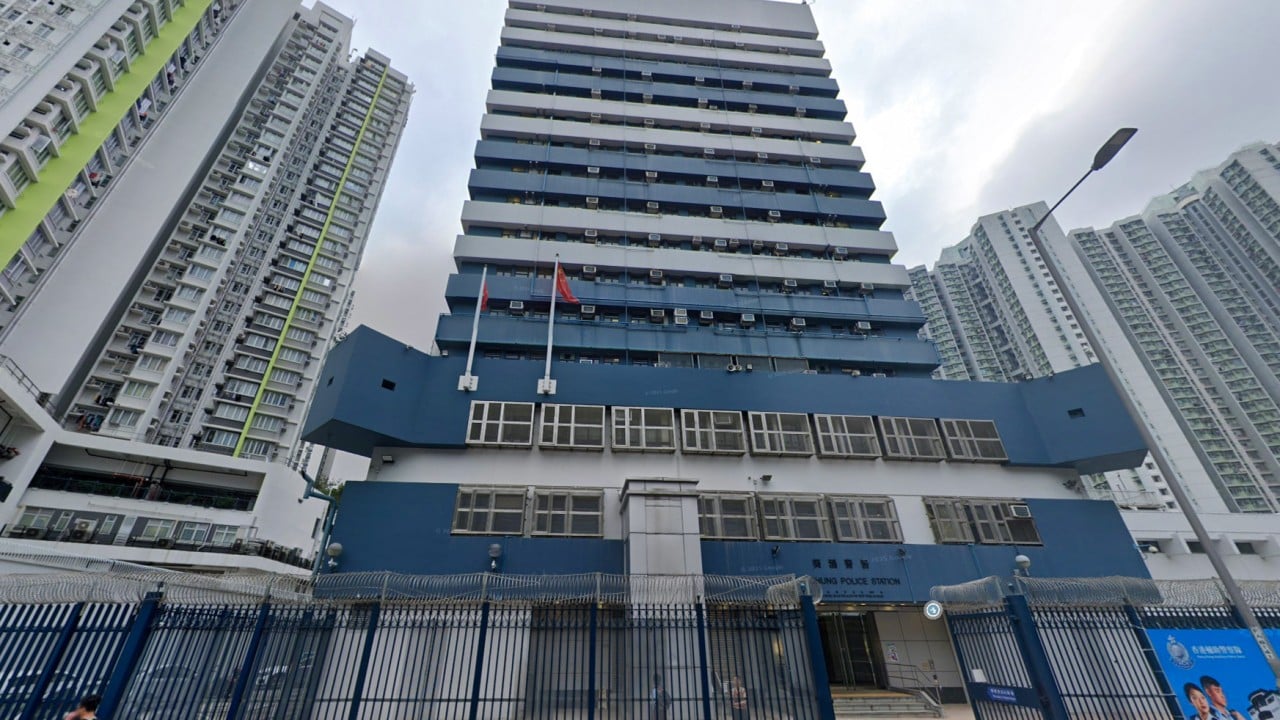
Municipal security infrastructures operate on a critical baseline: emergency response mechanisms must treat all threats as authentic until verified otherwise. When an individual initiates a bomb hoax, they exploit this asymmetric vulnerability, forcing a high-resource mobilization from public safety agencies. The recent arrest of a 19-year-old woman in Kwai Chung, Hong Kong, following a false explosive threat, highlights the friction between open public spaces and targeted malicious disruptions.
To understand the systemic impact of these events, the incident must be viewed not merely as a localized crime, but as a deliberate injection of noise into a high-stakes security apparatus. Deconstructing this event requires analyzing three distinct phases: the threat injection vector, the municipal resource allocation function, and the forensic attribution framework.
The Tripartite Structure of Hoax Exploitation
A bomb hoax succeeds operationally by forcing a security apparatus to misallocate finite resources. This exploitation relies on three sequential structural pillars.
The Asymmetric Threat Vector
The perpetrator utilizes low-barrier communication channels—frequently public payphones, burner SIM cards, or spoofed Voice over IP (VoIP) networks—to introduce a high-consequence variable into the public sphere. The cost of execution to the perpetrator approaches zero, while the immediate structural cost to the municipality is exponentially higher. In the Kwai Chung incident, the threat targeted a localized urban hub, requiring immediate containment protocols despite the absence of physical indicators.
The Mandatory Response Protocol
Public safety doctrines dictate a zero-tolerance threshold for unverified explosive risks. Security command structures cannot apply probabilistic filtering to a direct threat call; they must execute a binary response. If a threat is reported, standard operating procedures demand immediate deployment. This protocol removes tactical flexibility from first responders, making the police department highly predictable and easily manipulated by bad actors.
The Downstream Economic Bottleneck
The secondary consequences of a hoax extend far beyond the immediate deployment of police personnel. The containment perimeter causes compounding economic friction, including:
- The suspension of mass transit logistics and localized traffic arterial flows.
- The lost productivity of evacuated commercial spaces and residential high-rises.
- The diversion of specialized tactical assets, such as explosive ordnance disposal units, away from genuine high-priority operations.
The Resource Allocation Function and Operational Friction
Every false threat forces public safety command structures to execute an emergency deployment sequence. The systemic cost of a hoax can be quantified through a distinct operational cost function, which aggregates three core variables:
$$C_{total} = C_{deployment} + C_{opportunity} + C_{friction}$$
Where deployment costs represent the direct financial expenditure of mobilizing personnel, vehicles, and specialized equipment. Opportunity costs measure the vulnerability introduced by drawing emergency services away from their assigned sectors, leaving those areas under-protected. Friction costs represent the macroeconomic losses sustained by the surrounding urban ecosystem during a lockdown or evacuation.
In dense urban environments like Kwai Chung, friction costs scale non-linearly. Evacuating a single commercial block or pausing transit lines for two hours generates a logistical backlog that takes hours to clear. The security apparatus is forced to absorb these costs because the alternative—failing to respond to a live threat—carries a catastrophic downside limit. Perpetrators exploit this structural imbalance, transforming a single phone call into a tool capable of halting urban commerce.
Forensic Attribution and Digital Footprint Extraction
While executing a hoax requires minimal effort, maintaining permanent anonymity within modern urban centers is increasingly difficult. The arrest of the 19-year-old suspect in Kwai Chung underscores the efficacy of contemporary counter-hoax forensic methodologies, which rely on intersecting datasets to narrow down and identify anonymized actors.
The attribution framework operates across three distinct layers:
Telecommunications Triangulation
When a hoax call enters the emergency switching network, it leaves metadata regardless of spoofing attempts. If the call originates from a physical public telephone, law enforcement can immediately isolate the geographic coordinates of the terminal. For cellular or VoIP calls, routing tables, cell tower pings, and IP hop logs allow investigators to map the digital path back to its point of origin.
Spatial-Temporal Surveillance Correlation
Modern urban centers feature dense closed-circuit television (CCTV) coverage. Once investigators establish the precise timestamp and location of the threat vector injection (e.g., the exact second a payphone was used or a specific cellular tower sector was activated), they cross-reference this data with localized video feeds. Algorithmic sorting allows authorities to isolate individuals present at the exact coordinates during the critical time window, generating a high-probability suspect pool.
Device and Identity Mapping
If a mobile device or burner SIM card is utilized, forensic units track the hardware's unique International Mobile Equipment Identity (IMEI). Even if a suspect swaps SIM cards, the handset's distinct digital signature remains constant. By tracking where that specific device has connected to the network over time, investigators can link the hardware to the suspect's primary residence, personal social media logins, or electronic payment transactions.
The convergence of these three layers transforms what a perpetrator perceives as an anonymous act into a highly traceable sequence of physical and digital checkpoints.
Legal Deterrence and the Failure of Asymmetric Compliance
The legal frameworks governing false threats are designed to correct the economic and operational imbalances caused by hoaxes. In many jurisdictions, including Hong Kong under the Public Order Ordinance, communicating false information regarding the presence of explosives carries severe criminal penalties, including multi-year prison sentences.
However, traditional legal deterrence faces clear structural limitations when applied to specific demographic cohorts. Younger actors frequently fail to calculate the long-term legal ramifications of their actions, operating under a cognitive bias that overestimates their digital anonymity. This creates a disconnect: while the state relies on harsh penalties to deter behavior, the perpetrator's immediate motivation may be driven by localized interpersonal conflict, psychological distress, or a fundamental misunderstanding of forensic capabilities.
To counter this, public safety strategies must pivot from reactive legal deterrence to proactive technical barriers. This includes integrating automated voice-print analysis within emergency dispatch centers to instantly flag recurring hoax actors, and deploying real-time anomaly detection software across communication networks to identify and throttle spoofed emergency calls before they trigger large-scale physical deployments.
Optimizing the Municipal Security Matrix
To mitigate the systemic vulnerabilities exposed by bomb hoaxes, municipal authorities cannot rely solely on post-incident apprehension. Security architectures must evolve to minimize the operational impact of false threats while maintaining strict public safety standards.
The optimal strategy requires implementing a multi-tiered verification matrix during the initial intake phase. Emergency dispatch systems must leverage real-time digital forensics to assign a probabilistic validity score to incoming threats before ground units are fully mobilized. By instantly cross-referencing call metadata, historical geographic threat indices, and local surveillance feeds, command structures can transition from a rigid binary response to a scalable, risk-adjusted deployment model. This reduces the immediate economic friction of a hoax, protects finite public resources, and preserves operational readiness for genuine security emergencies.