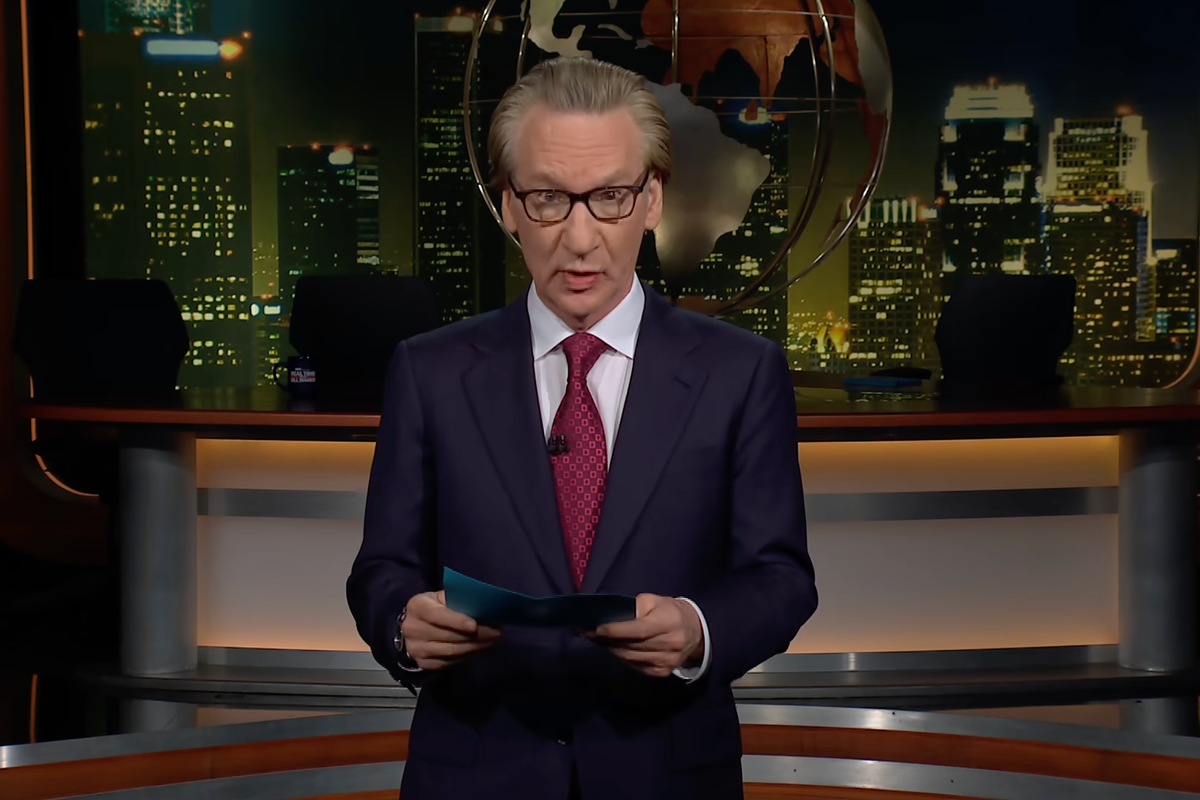
Political satire operates as an asymmetric communications mechanism that translates unscripted political stagecraft into structured comedic critique. When late-night host Bill Maher addressed Donald Trump’s convention-stage interactions with the American flag and the Pledge of Allegiance on Real Time with Bill Maher, the segment demonstrated a specific media dynamic: the collision between populist political theater and institutionalist parody.
Standard media coverage treats these moments as isolated entertainment clips, missing the underlying operational mechanics that drive both the political behavior and the comedic response. To understand why these exchanges generate sustained audience engagement, analysts must separate the event into three distinct components: the semiotic signal sent by the political actor, the deconstruction framework applied by the satirist, and the structural limitations of televised satire as a persuasive tool.
The Architecture of Populist Stagecraft
Political rallies and national conventions function as high-stakes broadcast environments where visual symbols carry greater immediate weight than policy white papers. In communication theory, this relies on semiotic condensation—the practice of compressing a complex ideological platform into a single, easily recognizable physical gesture.
When Donald Trump interacts physically with symbols of national identity—such as embracing an American flag on stage or altering the standard cadence and posture associated with the Pledge of Allegiance—the behavior serves two operational purposes within his communication strategy:
- In-Group Signaling: Physical demonstrations of patriotism bypass traditional policy debates and establish immediate emotional alignment with supporters who prioritize national sovereignty and traditional iconography.
- Attention Capture: Deviation from standard political decorum disrupts the visual monotony of televised conventions. By breaking the predictable script of standard political choreography, the gesture guarantees replay across both supportive and critical media networks.
From a media-economics perspective, this creates a self-reinforcing distribution loop. Supporters interpret the gesture as authentic, unscripted devotion, while critics view it as performative excess. Both interpretations drive engagement metrics, ensuring the footage dominates the news cycle without requiring additional campaign expenditure.
The Three Pillars of Satirical Deconstruction
Late-night political commentary, exemplified by Bill Maher’s monologue and panel segments on Real Time, operates by stripping away the intended emotional resonance of political stagecraft and reframing it as absurdity. Rather than debating the policy merits of a platform, Maher’s comedic framework relies on three analytical mechanisms to neutralize the original semiotic signal.
1. Literalization of Symbolic Gestures
Political symbols depend on shared cultural suspension of disbelief to maintain their gravity. Satirists disrupt this effect by treating the symbolic gesture as a literal, everyday physical interaction. In his commentary on Trump’s convention behavior, Maher focused on the physical mechanics of the moment—comparing the posture, facial expressions, and delivery to non-political contexts. By isolating the physical action from its patriotic framing, the monologue forces the audience to evaluate the gesture purely on its visual eccentricities.
2. Normative Contrast
Effective satire requires an implicit baseline of expected behavior against which the target is measured. Maher frequently positions his commentary from the perspective of an institutionalist or pragmatic observer. When mocking deviations in how the Pledge of Allegiance is delivered or staged, the comedic tension relies on the gap between traditional civic ritual and unorthodox personal branding. The humor is generated not by inventing a flaw, but by highlighting the friction between standard civic protocol and populist improvisation.
3. Escalation Through Absurdity
Once a behavioral quirk is identified, late-night writers apply comedic escalation—extending the logic of the political moment to an exaggerated conclusion. In Real Time monologues, this typically involves taking a real broadcast clip and projecting how that same behavior would look if pushed slightly further, exposing what the writers argue is performative insincerity. This mechanism converts a brief, ambiguous moment of stagecraft into a memorable narrative caricature that audiences can easily recall during subsequent news cycles.
The Information Asymmetry in Political Comedy
A critical flaw in standard media analysis is assuming that viral satirical clips shift voter preferences. Empirical research in political communication consistently demonstrates that late-night satire functions primarily as reinforcement rather than conversion.
This dynamic is governed by selective exposure and motivated reasoning:
- Audience Self-Selection: Viewers of Real Time with Bill Maher arrive with established expectations regarding Maher’s secular, contrarian, and anti-populist framing. Consequently, the comedic critique validates pre-existing skepticism among viewers who already view Trump’s stagecraft as performative.
- The Inoculation Effect: Conversely, supporters of Trump who encounter the clip via social media aggregators rarely interpret the satire as a substantive critique. Instead, the mockery reinforces a central populist narrative: that coastal media figures are out of touch with visceral expressions of patriotism. The satire inadvertently validates the political actor’s framing while simultaneously validating the satirist’s audience.
Because both sides extract confirming evidence from the exact same broadcast artifact, the net electoral impact of the exchange is frequently neutral, even as digital impressions and media mentions spike.
Operational Limitations of the Satirical Model
Media strategists and commentators who rely on satirical deconstruction face distinct structural constraints that limit the long-term utility of this approach:
- Diminishing Marginal Returns: Satire depends on novelty. When a political figure consistently breaks conventional decorum over multiple election cycles, the audience’s threshold for shock rises. Mocking a repetitive behavioral pattern yields progressively smaller spikes in attention, forcing writers to continually escalate their framing to achieve the same comedic impact.
- Context Collapse in Digital Distribution: Televised monologues are structured with setup, context, and punchline. When these segments are clipped into 30-second vertical videos for social distribution, the nuanced analytical framing is stripped away. What remains is a binary clash of personalities, reducing complex media criticism to partisan tribal signaling.
- Vulnerability to Counter-Framing: Mocking a political figure’s interaction with national symbols carries inherent rhetorical risk. Unlike policy critiques—which remain confined to economic or legislative data—critiquing behavior surrounding the flag or the Pledge of Allegiance allows opponents to reframe the comedian’s target from the politician to the symbol itself, creating an immediate defensive burden for the commentator.
Strategic Execution for Media Analysts and Communicators
To evaluate or counter high-visibility political stagecraft without falling into predictable engagement traps, communications teams and media analysts must shift from reactive mockery to structural framing:
- Separate the Symbol from the Actor: When analyzing or critiquing unconventional political theater, explicitly isolate the individual’s deviation from standard protocol rather than mocking the broader civic ritual. This eliminates the vulnerability to counter-framing around national symbols.
- Track Behavioral Patterns Over Isolated Clips: Treat individual convention or rally moments as data points within a broader communications strategy. Documenting the frequency and timing of symbolic gestures reveals whether an action is an unscripted anomaly or a deliberate distraction deployed to shift coverage away from unfavorable policy news.
- Measure Engagement Against Persuasion: Media teams must decouple viral social metrics from actual audience persuasion. High share counts on satirical deconstructions indicate strong in-group resonance, not cross-aisle conversion. Resource allocation should prioritize direct, substantive counter-programming over reactive comedic amplification when the objective is shifting undecided audiences.