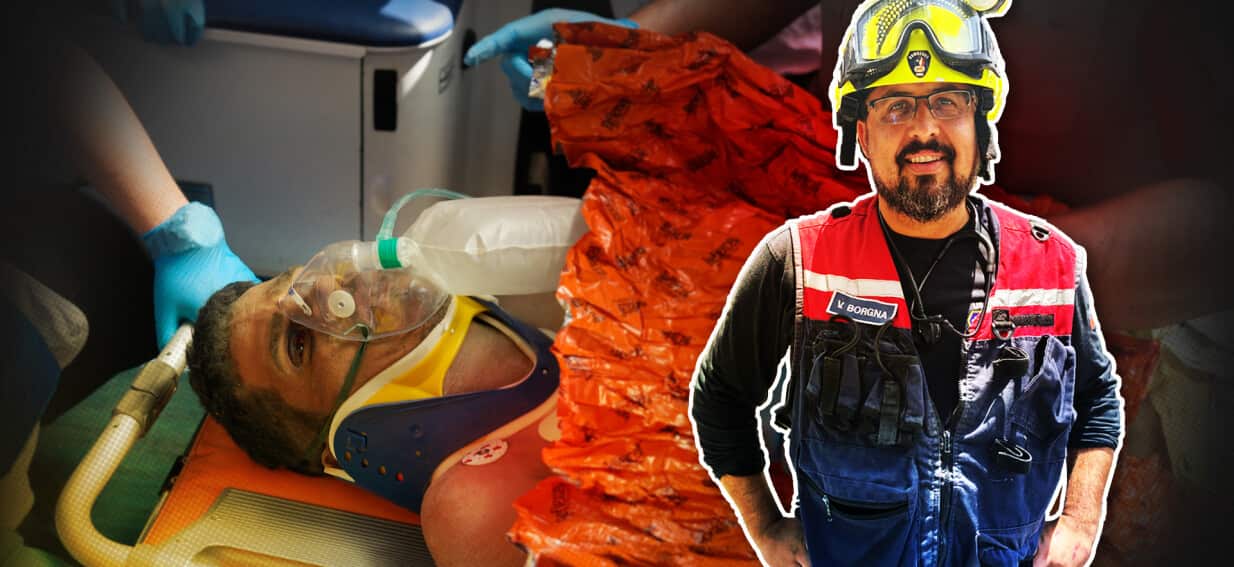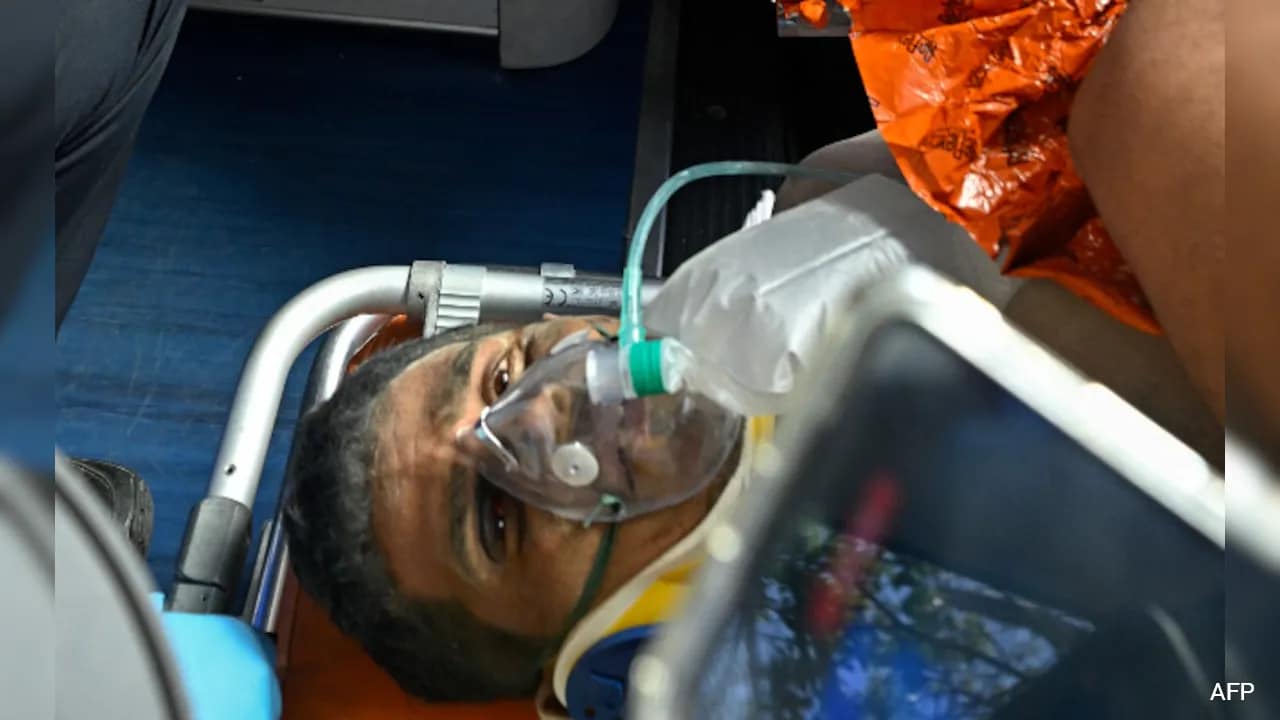
International urban search and rescue operations are complex logistical systems governed by strict time-decay functions and compounding communication friction. The extraction of an entrapped individual from reinforced concrete debris by an eight-nation coalition provides a data-rich case study for analyzing the intersection of physiological survivability limits, structural engineering constraints, and geopolitical interoperability. When seismic events cause catastrophic structural failure, the probability of victim survival does not degrade linearly; it follows a sharp exponential decay curve dictated by physical and medical variables.
Optimizing these operations requires moving past heroic narratives to dissect the mechanical, medical, and logistical protocols that determine success or failure under extreme constraints.
The Physiological Decay Function of Entrapment
The primary constraint of any urban search and rescue deployment is the biological clock of the entrapped individual. In disaster medicine, the post-collapse timeline is dictated by three primary pathologies: dehydration, crush syndrome, and positional asphyxia.
The human body can survive without water for a variable period, but under the stress of entrapment—often accompanied by high ambient temperatures, dust inhalation, and physical trauma—the dehydration timeline compresses rapidly. Within 48 to 72 hours, intracellular dehydration triggers acute kidney injury. This degradation accelerates if the patient suffers from crush syndrome.
Survival Probability = f(t) = exp(-λ * t)
where λ represents the compounding risk factors of dehydration, structural instability, and toxicological accumulation over time (t).
Crush syndrome occurs when prolonged pressure on skeletal muscle groups causes rhabdomyolysis—the breakdown of muscle tissue. The mechanical compression damages sarcolemmal membranes, releasing massive quantities of myoglobin, potassium, and phosphorus into the localized circulatory system. While the limb remains compressed, these toxins are partially contained. The moment the structural weight is lifted without proper medical counter-measures, a systemic reperfusion injury occurs.
- Myoglobin precipitates in the renal tubules, causing acute tubular necrosis and subsequent kidney failure.
- Hyperkalemia (elevated potassium levels) disrupts myocardial electrical conduction, risking sudden cardiac arrest.
- Lactic acidosis induces systemic metabolic instability.
To counteract this specific physiological sequence during an extended 100-hour extraction, rescue teams must initiate intravenous fluid resuscitation prior to extrication. Standard protocol requires establishing vascular access while the patient is still partially entrapped, administering isotonic sodium bicarbonate to alkalinize the urine and prevent myoglobin precipitation, and stabilizing cardiac membranes using calcium gluconate.
The logistical challenge lies in delivering advanced trauma life support inside a micro-space where vertical clearance may be less than 50 centimeters.
Structural Mechanics and Ingress Geometry
The physical environment of a collapsed structure presents a dynamic engineering problem. Reaching a survivor entrapped deep within structural elements requires breach-and-trench operations that modify the load paths of the failed building. Every fragment of concrete removed or shifted can alter the center of gravity of the debris pile, risking secondary collapses that endanger both the victim and the rescue technicians.
Void Space Identification and Categorization
Rescuers categorize structural collapses into specific typologies to predict where survivors are most likely to be located.
- Pancake Collapses: Occur when vertical load-bearing elements fail completely, causing upper floors to settle directly onto lower floors. Survival voids are minimal and typically restricted to spaces immediately adjacent to high-tensile structural components.
- Lean-To Collapses: Occur when one or more outer walls fail, allowing the floor slabs to drop on one side while remaining supported on the other. This creates a predictable triangular void space with higher survivability rates.
- V-Shape Collapses: Occur when heavy interior loads cause a floor slab to fracture and fail in the center, creating two distinct triangular voids on outer walls.
Locating a survivor within these configurations requires a tiered technological search strategy. Acoustic and seismic sensors are deployed in an array around the perimeter of the collapse zone. These devices filter out ambient environmental noise to detect micro-vibrations, scratching, or vocalizations transmitted through the structural steel and concrete matrix.
Once an acoustic fix is established, rescue teams deploy technical search cameras—fiber-optic or articulated articulation probes inserted through small drill holes—to visually confirm the patient's position and evaluate physical hazards.
The Engineering of Stabilization
Before heavy lifting or breaching can occur, structural stabilization must be executed through shoring. Shoring involves building temporary support systems to transfer the weight of unstable structural elements to stable ground or structural foundations.
[Unstable Overhead Slab]
          │
    ──────┴──────  <- Header Beam
     │    │    │
     │    │    │   <- Vertical Shores (Timber or Mechanical)
     │    │    │
    ──────┬──────  <- Sole Plate
          │
[Stable Foundation / Ground]
Wooden shores (such as T-shores, double-T shores, and laced shores) are constructed on-site using structural-grade lumber. These systems are calculated to bear specific structural loads: a standard 4x4-inch wooden post shore can safely support approximately 3,000 to 8,000 pounds depending on its unbraced length.
When cutting through reinforced concrete slabs to create an extraction path, rescuers employ diamond-tipped rotary saws, hydraulic impact hammers, and oxy-acetylene torches. This process introduces massive mechanical vibrations into the structure.
To mitigate the risk of secondary collapse, technicians utilize breaching techniques that involve core drilling a series of interconnected relief holes—known as stitch drilling—to cleanly isolate a section of concrete without generating the violent impact waves associated with traditional jackhammers.
Logistical Bottlenecks in Multinational Coalitions
When eight different countries deploy assets to a single disaster site, the primary barrier to operational efficiency shifts from physical engineering to organizational interoperability. Without standardized frameworks, multi-nation interventions suffer from systemic coordination failures, redundant searching, asset hoarding, and communication deadlocks.
The International Search and Rescue Advisory Group (INSARAG), a network under the United Nations framework, establishes the standard protocol to mitigate these frictions. INSARAG classifies urban search and rescue teams into Medium and Heavy categories based on their operational capabilities, language competencies, and logistical self-sufficiency. A Heavy team must be capable of operating continuously on two separate sites simultaneously for 24 hours a day for up to ten days, possessing advanced concrete breaching, structural shoring, and heavy lifting capabilities.
The operational architecture of a multinational response relies on the On-Site Operations Coordination Centre (OSOCC). The OSOCC acts as the central clearinghouse for tactical data and resource assignment.
               [ United Nations / OSOCC ]
                           │
         ┌─────────────────┴─────────────────┐
         ▼                                   ▼
[Sector Command Alpha]             [Sector Command Bravo]
         │                                   │
 ┌───────┴───────┐                   ┌───────┴───────┐
 ▼               ▼                   ▼               ▼
[Nation 1 USAR] [Nation 2 USAR]     [Nation 3 USAR] [Nation 4 USAR]
When multi-national assets arrive without integrated command-and-control structures, three distinct operational friction points manifest.
1. Equipment and Tool Incompatibility
Different nations use varying mechanical connections, voltage standards, and pressure ratings. For example, a European team utilizing hydraulic tools operating at a standard 720 bar pressure cannot easily interface with North American equipment operating at different hydraulic tolerances or utilizing distinct quick-connect couplings.
Even basic components, such as air-source connections for pneumatic lifting bags, can vary wildly by country of origin, preventing teams from sharing or pooling vital rescue apparatus.
2. Communication and Radio Frequency Overlap
Effective search operations require clear radio links across search teams, structural engineers, and medical elements. When eight countries deploy simultaneously, they bring disparate radio hardware operating on mismatched frequencies (VHF, UHF, digital trunked systems, or encrypted military channels).
The absence of a unified, pre-allocated frequency plan leads to spectrum crowding, mutual interference, or total communication isolation, forcing teams to rely on physical couriers to relay tactical status updates between the collapse face and the sector command post.
3. Language Barriers and Lexicon Discrepancies
Even when using standardized INSARAG marking systems on structures (which use specific spray-painted geometric symbols to denote hazards, victim counts, and search status), nuanced technical decisions require precise linguistic alignment. A misunderstanding regarding the terms "live victim," "confirmed structural hazard," or "stabilization complete" can lead to catastrophic misallocations of manpower or premature team withdrawals from highly viable search sectors.
To overcome these structural inefficiencies during a critical timeline, teams must implement a Liaison Officer network, embedding multi-lingual operational specialists within each nation's tactical unit to serve as a real-time human translation layer for technical commands.
Operational Metrics for Future Formations
The successful extraction of an individual at the 100-hour mark is an outlier in survival statistics, highlighting the critical importance of optimizing early-stage deployment workflows. Future disaster mitigation planning must prioritize reducing the "Time to First Breach" through systematic improvements in international deployment mechanics.
- Pre-Positioned Interoperability Kits: International aid agencies should deploy standardized adaptation manifolds at major regional logistics hubs. These kits must contain universal hydraulic couplers, pneumatic adapters, and multi-tap power distribution blocks to allow immediate mechanical synergy between arriving foreign teams.
- Unified Digital Common Operational Picture: Relying on physical paper forms or fragmented messaging applications for OSOCC updates introduces a significant data lag. Transitioning to satellite-linked, geospatial mapping platforms allows search teams to log search data, structural hazards, and live-victim contacts in real time, visible to all international actors instantaneously.
- Automated Customs and Airspace Corridors: The single greatest delay in international USAR deployment is not the transit time, but the bureaucratic friction of customs clearance, visa verification, and military airspace permissions for heavy rescue aircraft. Establishing pre-negotiated bilateral disaster transit agreements ensures that certified heavy rescue teams can bypass standard border control queues during a declared humanitarian emergency.
The survival of an entrapped victim at the outer boundary of biological endurance requires a flawless convergence of medicine, structural engineering, and organizational management. By isolating the specific failure modes of multi-nation operations, emergency planners can systematically transform random instances of survival into predictable, repeatable operational outcomes.