The traditional distinction between economic interdependence and national security has collapsed into a singular operational theater. Modern conflict is no longer defined by the kinetic exchange of munitions alone but by the calculated manipulation of systemic vulnerabilities within global supply networks. This transition—from trade as a pacifying force to trade as a medium for coercion—rests on the realization that asymmetrical dependencies are more efficient tools of statecraft than standing armies.
The strategic shift is driven by the Weaponization of Density, where the concentration of production in specific geographies creates chokepoints that can be activated to paralyze an adversary’s industrial base.
The Triad of Functional Dependencies
To analyze the current metamorphosis of warfare, one must categorize dependencies into three distinct functional layers. Each layer possesses unique decay rates and replacement costs, dictating how they are used as leverage.
1. The Compute Layer: Semiconductor Sovereignty
Semiconductors are the foundational hardware of modern power. Unlike raw materials, which are geographically fixed, the semiconductor bottleneck is intellectual and capital-intensive.
- The Lithography Moat: Ownership of the machinery required to print at sub-7nm scales is concentrated in a single entity (ASML) and a handful of supporting nations.
- Design-to-Fabrication Disconnect: The separation between firms that design chips and those that manufacture them (foundries) creates a "just-in-time" vulnerability. A disruption at a primary foundry doesn't just delay products; it halts the technological evolution of the target state.
- The Logic of Denial: Export controls are the new naval blockades. By restricting access to high-end GPUs or logic chips, an actor can effectively "cap" an adversary’s AI and cryptographic capabilities without firing a shot.
2. The Resource Layer: Critical Mineral Cartelization
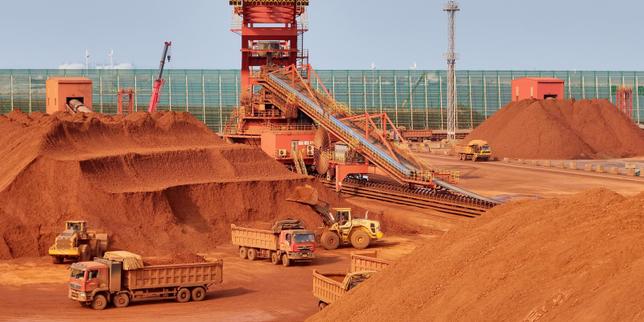
The transition to renewable energy and advanced defense systems has shifted the strategic focus from hydrocarbons to critical minerals like lithium, cobalt, and rare earth elements (REEs).
- Processing vs. Extraction: The common misconception is that the country with the mines wins. In reality, the country that controls the Refining and Processing holds the leverage. China currently processes approximately 85% of global rare earths.
- The Inventory Lag: Building a refinery takes five to seven years; opening a mine takes ten. This creates a structural "inflexibility" in the supply chain that allows the dominant processor to dictate terms for an entire decade.
3. The Financial Layer: Currency and Payment Rails
Weaponized finance moves at the speed of light. The ability to sever a nation’s access to the SWIFT messaging system or to freeze sovereign reserves transforms the global financial system into a punitive architecture.
- The Dollar Hegemony Trap: Because most global trade is denominated in USD, the U.S. Treasury acts as a global regulator. Any entity touching the dollar falls under its jurisdiction.
- The Rise of Alternative Rails: In response, we see the development of CIPS (China) and SPFS (Russia). These are not just technical alternatives; they are "economic lifeboats" designed to bypass the traditional geofence of Western finance.
The Cost Function of Decoupling
Strategic autonomy is a luxury good. For a state to "de-risk" or decouple from an adversarial supplier, it must calculate the Total Cost of Resilience (TCR). The TCR is a function of three variables:
- Redundancy Premium: The cost of maintaining "warm" standby production lines that are inefficient during peacetime but essential during a blockade.
- R&D Acceleration Cost: The capital required to bypass patents or "re-invent" a technology locally within a compressed timeframe.
- Inflationary Drag: Diversifying away from the lowest-cost producer (usually an adversary) inherently increases the price of the final good, taxing the domestic population to fund national security.
The friction in today’s geopolitics arises because private corporations optimize for Efficiency (ROIC) while states optimize for Resilience (Continuity of Government). These two incentives are currently in direct opposition.
Structural Bottlenecks in the Modern Arsenal
The "arsenalization" of everything means that any non-fungible asset becomes a weapon. To understand where the next strike will occur, one must look for high-concentration nodes with high switching costs.
The Software-as-a-Service (SaaS) Kill Switch
Industrial production now relies on cloud-based ERP and CAD software. If a provider revokes access to these tools, the physical factory—regardless of how much raw material it has—becomes a dormant asset. This "Digital Siege" is more effective than physical sabotage because it is reversible and offers the aggressor a "dial" to turn pressure up or down.
Intellectual Property as a Kinetic Barrier
The use of "Standard Essential Patents" (SEPs) allows nations to gatekeep the adoption of new technologies like 6G. By refusing to license critical IP or by inflating royalties for specific geographic regions, a state can ensure its competitors remain one generation behind in communications infrastructure.
The Calculus of Asymmetric Vulnerability
In this new environment, power is not measured by GDP, but by the Asymmetry Ratio: the degree to which you can damage an opponent compared to the damage you sustain in the process.
- Case A (Symmetrical): Two nations trade energy for food. Neither can cut the other without starving or freezing. This is the "Golden Arches" theory of peace, which has largely been proven insufficient in high-stakes territorial disputes.
- Case B (Asymmetrical): Nation X provides Nation Y with 90% of its microprocessors. Nation Y provides Nation X with 10% of its luxury textiles. Nation X holds the "Kill Switch."
Modern strategy departments are now mapping these dependencies using Directed Acyclic Graphs (DAGs) to identify the "Critical Path" of their national economy. If the critical path for a missile system or a banking network runs through an adversarial port or server, that system is functionally compromised before a conflict even begins.
Operational Reality: The End of Globalism
We are entering an era of Fractionalized Globalization. The world will not return to isolationism; instead, it will split into "Trust Blocs." Within these blocs, trade will be frictionless. Between these blocs, trade will be highly regulated, scrutinized, and subject to "Foreign Direct Product Rules."
This shift requires a fundamental redesign of corporate and national risk management. The "Just-in-Time" model, which dominated the last 30 years, is being replaced by "Just-in-Case" logic.
The Strategic Imperative:
Organizations must conduct a deep-tissue audit of their Tier 3 and Tier 4 suppliers. The risk does not lie with your direct partner; it lies with the mineral refiner or the software library that your partner relies on.
- Inventory as Defense: Accumulate strategic stockpiles of high-value, low-volume components (chips, sensors) that have long lead times.
- Vertical Integration 2.0: Re-acquire control over the most sensitive parts of the stack, even if it reduces quarterly margins.
- Algorithmic Neutrality: Develop systems that can operate on open-source frameworks or multiple cloud providers to avoid "vendor lock-in" which can be co-opted by state actors.
The final move is the transition from "Defensive Resilience" to "Offensive Interdependence." A state or firm is only secure if it possesses a "counter-leverage" asset—something the adversary cannot live without. Security is no longer the absence of dependency, but the balance of mutual vulnerability.

:max_bytes(150000):strip_icc():focal(819x186:821x188)/Murdaugh-Family-e90854a716884d608fb6fd925e18d840.jpg)
