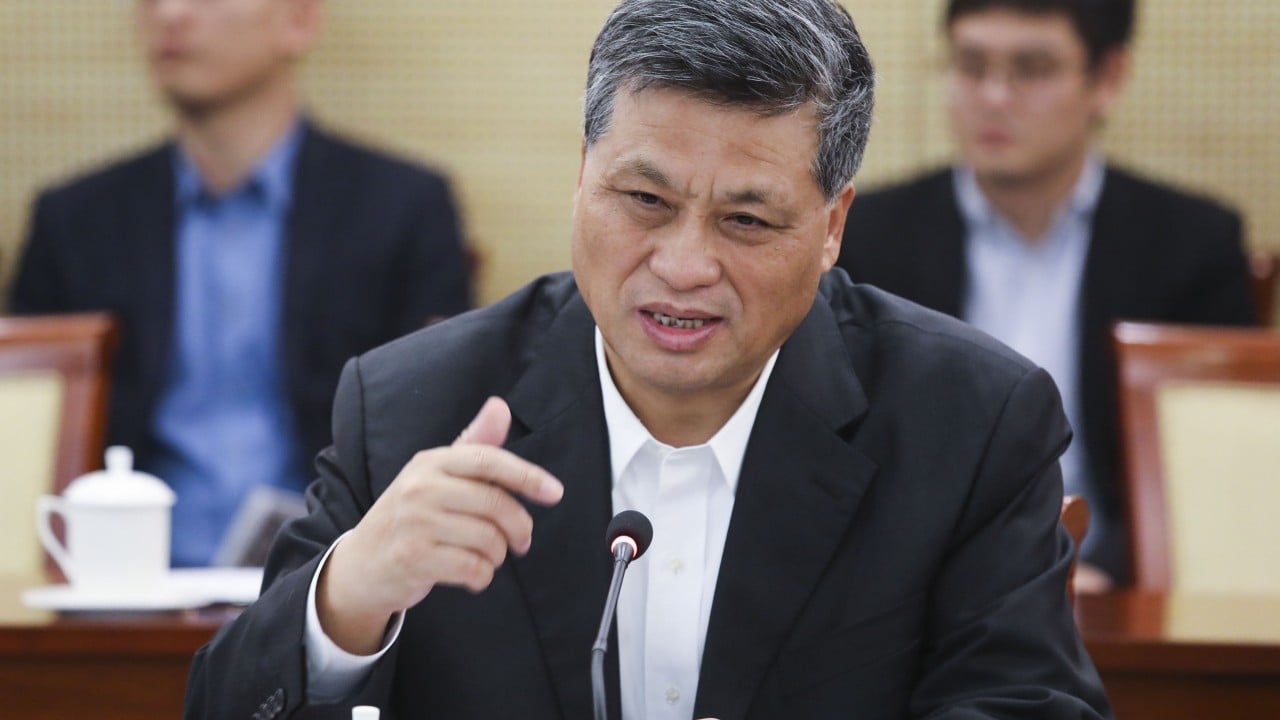
The purge of Ma Xingrui, a former member of the Political Bureau of the Communist Party of China (CPC) Central Committee and former party chief of Xinjiang, reveals the evolving operational threshold of Beijing's anti-corruption machinery. Ma’s expulsion from the party on July 14, 2026, marks the third sitting Politburo member targeted since 2025, alongside senior military figures He Weidong and Zhang Youxia. This trend indicates a systemic recalibration of political risk management within the highest echelons of the state.
Understanding this development requires moving past the superficial framing of individual moral failures. Elite corruption in highly centralized administrations functions as a transactional system. By analyzing the structural components of Ma’s charges, observers can map the specific mechanisms of rent-seeking, patronage distribution, and the institutional response designed to suppress them. Meanwhile, you can find related stories here: The False Promise of Diversity Milestones in the US Military.
The Three Vectors of Institutional Rent-Seeking
The Central Commission for Discipline Inspection (CCDI) outlined a specific set of charges against Ma. When categorized structurally, these offenses fall into three distinct transactional vectors: personnel marketization, family-intermediated asset acquisition, and administrative negligence.
Personnel Marketization and Patronage Networks
The charge that Ma sought benefits for others in the selection and appointment of officials, alongside cadre selection, represents the marketization of public administration. Within a centralized bureaucratic hierarchy, personnel appointments represent the ultimate currency. To explore the full picture, check out the detailed report by The Washington Post.
- The Mechanism: By allocating positions based on financial or political reciprocity rather than meritocratic performance metrics, an official establishes a loyal network of subordinates.
- The Systemic Risk: This practice compromises the integrity of local state organs. Subordinates who purchase or trade for appointments must subsequently engage in their own rent-seeking activities to recoup their political investments, creating a cascading cycle of administrative degradation.
Family-Intermediated Asset Acquisition
The CCDI's explicit focus on "family corruption" highlights a critical vulnerability in the regulatory framework governing public officials. Rather than accepting direct bribes—which leave obvious financial paper trails—high-ranking cadres utilize family members as intermediaries.
- The Property Arbitrage: Relatives purchasing real estate at significantly below-market prices is a classic form of value transfer. The difference between the market value and the acquisition price represents a direct, liquid transfer of wealth from private developers or local entities in exchange for administrative favor.
- The Liability Shield: By keeping assets outside the official's immediate legal ownership, this structure attempts to create a layer of deniability. However, the CCDI’s current investigative protocols treat a relative's financial gain as directly attributable to the official's regulatory influence.
Administrative Negligence and Failure of Supervision
The accusation that Ma failed to supervise his staff, leading to severe consequences, targets a broader governance issue. In large administrative zones like Xinjiang or during major central assignments, a leader's staff (mi_shu_ or personal secretaries) hold significant informal authority. When these staff members leverage their proximity to power for illegal gains without oversight, it signals a systemic breakdown in internal command and control.
The Political Economy of Elite Purges
The timing and frequency of high-level investigations since 2025 suggest a strategic shift in internal party discipline. The prosecution of three sitting Politburo members within a short window represents an unprecedented rate of elite turnover outside of major structural transitions.
The strategic rationale behind these actions can be analyzed through two primary structural hypotheses.
Counterintelligence and National Security Risks
Decades of systemic corruption create structural vulnerabilities that external actors can exploit. Financial leverage over high-ranking officials or their family members provides foreign intelligence agencies with pathways for infiltration. In an era dominated by heightened geopolitical competition, purging compromised officials is as much a counterintelligence imperative as it is a domestic governance strategy. The systemic cleanup within the military and sensitive administrative regions like Xinjiang reflects this defensive posture.
Reinforcing Executive Centralization
The institutional cost of allowing high-level corruption to persist is the dilution of central authority. When regional leaders establish independent power bases through localized patronage networks, central directives face resistance or selective implementation. The systematic removal of these figures serves to disrupt localized interest groups, ensuring that the central leadership's policy priorities are executed without friction across provincial and military structures.
The Limits of Technical Anti-Corruption Campaigns
The persistent return of corruption allegations at the Politburo level, even after years of intense scrutiny following the 18th Party Congress, underscores the structural limitations of a campaign-driven approach to clean governance.
+-----------------------------------------------------------------------------+
|                          STRUCTURAL CORRUPTION LOOP                          |
+-----------------------------------------------------------------------------+
|                                                                             |
|   1. Monopolistic Administrative Discretion                                 |
|      (State control over land, resources, and administrative approvals)     |
|                                 │                                           |
|                                 ▼                                           |
|   2. High Value Transfer Arbitrage                                          |
|      (Private capital seeks favors; officials seek wealth preservation)     |
|                                 │                                           |
|                                 ▼                                           |
|   3. Family-Intermediated Laundering                                        |
|      (Wealth diverted through relatives to bypass direct disclosures)       |
|                                 │                                           |
|                                 ▼                                           |
|   4. Systemic Personnel Compromise                                          |
|      (Subordinates promoted via patronage; campaign-driven policing begins) |
|                                                                             |
+-----------------------------------------------------------------------------+
The Absence of Independent Oversight
The CCDI operates as an internal disciplinary organ under the direct supervision of the party leadership. While highly efficient at executing targeted purges, this model lacks the structural independence of external judicial or civic oversight. The enforcement priorities are inherently tied to political objectives, meaning the risk of corruption is suppressed rather than systematically eliminated.
Discretionary Power and Resource Allocation
As long as state officials retain vast discretionary power over resource allocation, project contracting, and land approvals, the economic incentive for private capital to bribe public officials remains high. The structural solution requires reducing the state's footprint in market operations, a direction that runs counter to current economic policy trends emphasizing state-led development and industrial planning.
Strategic Implications for Global Analysts
For sovereign risk analysts, corporate strategists, and foreign policymakers, the purge of Ma Xingrui offers a clear predictive framework for assessing China's internal stability and policy direction.
First, expect heightened regulatory volatility in sectors historically associated with Ma's tenure or family networks, particularly real estate, infrastructure contracting, and provincial development projects in Xinjiang and Guangdong. Companies partnering with local state-owned enterprises in these regions must conduct deep-dive audits of their local partners to identify potential exposure to secondary investigations.
Second, the political consolidation under way indicates that central directives regarding national security and economic self-reliance will be enforced with absolute compliance. Local officials, fearing the career-ending implications of administrative negligence or perceived disloyalty, are highly likely to prioritize political alignment over local economic growth. This shift will manifest as slower approvals for foreign investments and more rigid adherence to state-directed economic mandates.