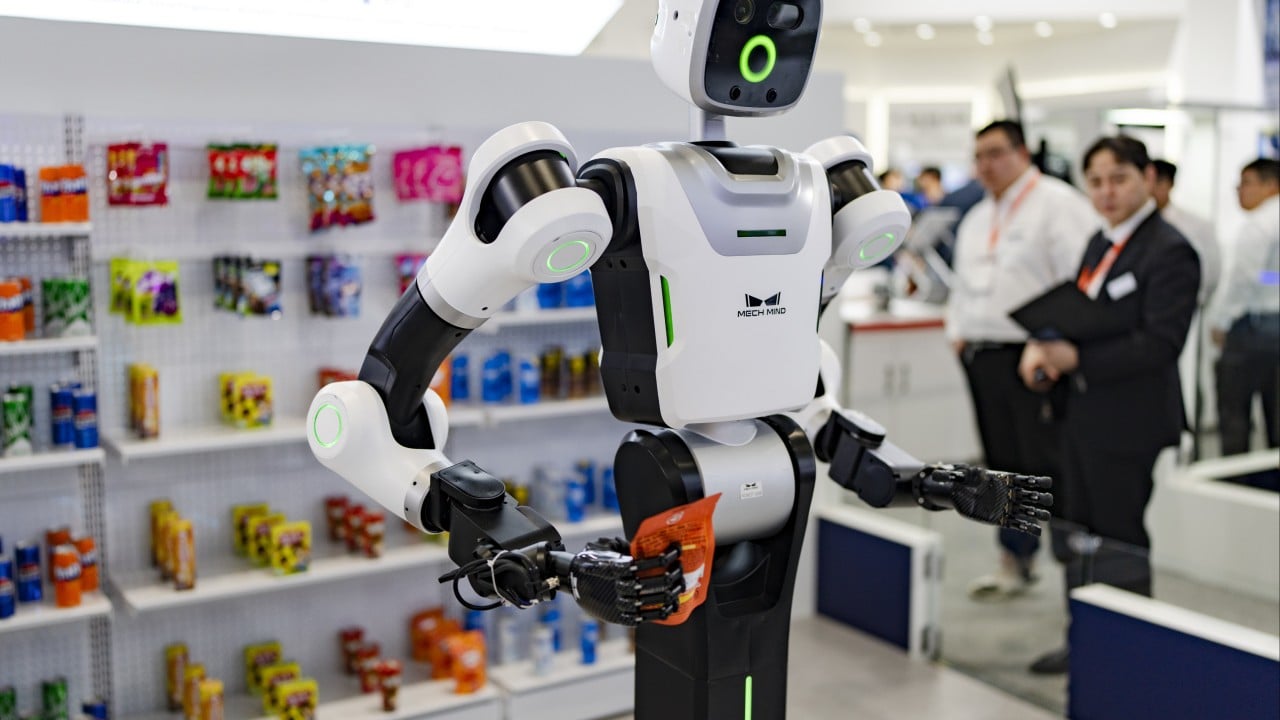
Wall Street and Beijing venture syndicates are popping champagne over Mech-Mind Robotics lining up a three hundred million dollar initial public offering. The lazy consensus across financial media treats this capital injection as proof that 3D vision and artificial intelligence for industrial arms have finally crossed the chasm.
Every mainstream commentator is parroting the same tired narrative. They claim funding equals adoption, valuation equals market utility, and Chinese hardware startups are eating the world through sheer volume.
They are dead wrong.
I have spent the last decade watching venture capitalists throw billions of dollars at factory floor automation startups that solved problems nobody actually had, while ignoring the operational bottlenecks bleeding manufacturers dry. Throwing nine figures at an AI robotics vendor does not mean the underlying unit economics of factory automation suddenly make sense for ninety percent of the industrial base.
Let us look past the headline valuation and examine why this massive cash grab signals deep structural distress in the industrial autonomy sector rather than a triumphant victory lap.
The Software Wrapper Delusion
The core pitch of modern 3D vision companies is that AI acts as a universal translator for factory automation. Traditional industrial robots require rigid fixtures, exact part positioning, and painstaking manual programming by certified engineers. Companies like Mech-Mind sell software and camera systems designed to let robotic arms handle random bin picking, complex assembly, and erratic material handling without breaking a sweat.
Here is what the prospectuses leave out.
The marginal cost of deployment remains astronomical. When a tech journalist visits a showcase booth, they see a bin-picking demo operating at ninety-nine percent accuracy under pristine laboratory lighting. When that same system hits a dusty automotive plant in Anhui or a Tier-2 supplier in Ohio, reality intervenes. Ambient lighting shifts. Part tolerances drift by fractions of a millimeter. Oil residue on metal stampings changes the optical reflectivity.
Suddenly, your intelligent vision system starts failing five percent of the time. In a high-speed production line, a five percent failure rate means a human worker has to stand guard over the machine, constantly clearing jams and resetting exceptions.
You did not automate the job. You just replaced a predictable mechanical task with an unpredictable babysitting chore.
When a startup raises three hundred million dollars, they are not raising it because their software prints money out of the box. They are raising it because supporting, custom-tuning, and maintaining these deployments requires an army of field service engineers. The business model scales like a consultancy, not a software enterprise.
The Unit Economics Nobody Wants to Calculate
Let us talk about return on investment because the numbers behind high-end 3D vision robotics rarely pencil out for mid-market manufacturers.
A standard industrial robot arm is a commodity. You can buy a reliable six-axis arm from established heavyweights for twenty to thirty thousand dollars. It will run for twenty years with minimal maintenance.
Now add the Mech-Mind stack. High-end industrial 3D cameras, specialized processing units, proprietary software licensing, and custom integration services easily double or triple the upfront capital expenditure of the cell. For a contract manufacturer operating on razor-thin four percent operating margins, the payback period on a complex AI vision cell stretches past five or six years.
Equipment depreciation eats you alive before you ever see a net profit.
Large consumer electronics assemblers and massive automotive conglomerates can absorb these capital expenses because they amortize custom engineering costs across millions of identical units. But they also bully their suppliers on price, squeezing margins until the hardware vendors make all their money on maintenance contracts rather than initial unit sales.
When a company goes public with a massive valuation, retail investors are buying the promise that small and medium manufacturers will magically find millions of dollars in spare capital to digitize their assembly lines. They will not. They are too busy trying to cover rising labor and material costs in a high-interest-rate environment.
The Localization Trap
Another favorite talking point of the financial press is how Chinese robotics firms are bypassing Western sanctions and market barriers through sheer technical superiority.
The truth is much more mundane and political. Domestic Chinese industrial policy subsidizes automation hardware to offset a shrinking domestic labor force and a real estate crisis that dried up traditional manufacturing financing. Local governments hand out cheap land, tax holidays, and state-backed loans to keep factories buying domestic tech.
That works brilliantly inside a protected domestic ecosystem where foreign competitors face regulatory friction. It creates a massive domestic revenue baseline that looks impressive on an IPO prospectus.
Try exporting that model to Europe or North America. Western plants demand rigorous safety certifications, ironclad cybersecurity audits for factory floor networks, and local support teams that can answer a service call at two in the morning. When a Chinese hardware vendor tries to scale globally, their margins get crushed by the cost of building localized compliance and support infrastructure from scratch.
I have seen companies blow millions trying to crack the North American tier-one manufacturing market with cheap imported vision hardware, only to pull back because they could not service the warranties when things went sideways in rural Ohio or Tennessee.
The Real Question You Should Be Asking
People look at these massive funding rounds and ask, "How fast will artificial intelligence take over every factory floor?"
That is the wrong question entirely.
The right question is, "How many factories can actually afford the downtime and integration risk required to make fragile AI vision systems work in production?"
The answer is a tiny fraction of the global industrial economy.
True factory automation does not look like a sci-fi movie with AI-powered arms improvising tasks on the fly. It looks like boring, deterministic mechanical engineering. It looks like redesigning the part so it always lands in the exact same orientation. It looks like gravity feeders, vibratory bowls, and hard automation that runs for forty years without needing a software update or a cloud connection.
Mech-Mind will likely get its public listing away. The bankers will collect their fees, early-stage venture capital funds will cash out their shares onto public market retail investors, and financial pundits will declare it a watershed moment for industrial tech.
Do not buy the hype.
When an automation vendor has to raise hundreds of millions of dollars just to keep selling hardware into a low-margin, high-friction market, you are not looking at the future of manufacturing. You are looking at an expensive band-aid masking the fact that building software for the physical world is still a miserable, low-margin grind.
Stop betting on intelligent cameras to save broken factory workflows. Fix the workflow first, or accept that human hands are still the cheapest, most adaptable automation tool ever invented.