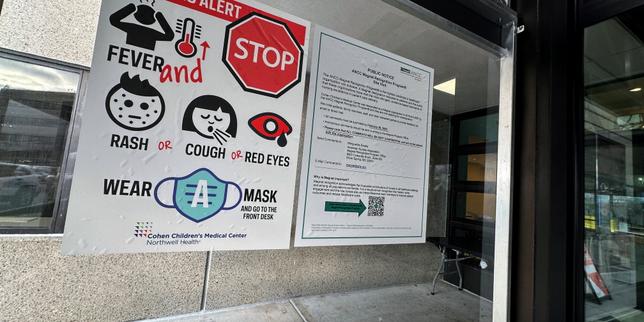
Epidemiological containment operates on strict mathematical thresholds. When vaccination coverage drops below the herd immunity threshold for measles, which requires approximately ninety-five percent population immunity given the virus's exceptionally high basic reproduction number, exponential transmission kinetics take over. The recent crossing of the three thousand case threshold in the United States, accompanied by two documented fatalities among unvaccinated individuals, represents a predictable failure of public health infrastructure rather than a random stochastic event. This threshold breach demonstrates how localized policy exemptions, administrative friction, and declining trust compound into systemic epidemiological risk.
Understanding this resurgence requires dismantling the phenomenon through a structural framework. The spread of highly contagious airborne pathogens is governed by network topology, susceptibility clustering, and spatial mixing patterns. Traditional reporting focuses on raw case counts and individual clinical outcomes, ignoring the underlying transmission mechanics and economic externalities that allow preventable diseases to resurge in modern populations.
The Reproduction Number and the Network Effect of Susceptibility
The basic reproduction number, denoted as $R_0$, quantifies the average number of secondary infections generated by a single infected individual in a completely susceptible population. For measles, $R_0$ ranges between twelve and eighteen, making it one of the most infectious human pathogens known. In a fully vaccinated population, transmission chains terminate rapidly because the probability that an infected person encounters another susceptible host approaches zero.
When coverage drops, susceptibility no longer distributes randomly across the population. Instead, it clusters geographically and socially. These clusters form demographic pockets where exemption rates exceed regional averages. Within these networks, the effective reproduction number, $R$, remains well above one even if national coverage averages ninety-two percent. Transmission accelerates locally because high-density susceptible networks lower the resistance required for sustained viral propagation.
[Infected Individual]
       │
       ├─► [Susceptible Cluster A] ──► Exponential Growth ($R > 1$)
       ├─► [Vaccinated Individual] ──► Transmission Terminated
       └─► [Susceptible Cluster B] ──► Exponential Growth ($R > 1$)
This spatial clustering explains why national aggregate numbers mask true vulnerability. A state or county with an overall ninety-four percent vaccination rate may harbor school districts or religious communities where coverage sits below eighty percent. These sub-networks act as primary accelerators, driving regional outbreaks that eventually spill over into medically vulnerable populations, including infants too young to receive the first dose and immunocompromised individuals.
The Friction Cost Model of Vaccine Uptake
Public health interventions fail when the friction cost of compliance exceeds the perceived immediate threat of the disease. The friction cost model separates vaccine acquisition into three distinct vectors: informational, administrative, and psychological.
Informational friction arises when individuals must navigate conflicting data environments. Misinformation campaigns exploit cognitive biases, framing vaccine risks as immediate and personal while framing disease risks as distant and abstract. When baseline incidence rates are low due to decades of successful immunization, the perceived probability of contracting measles approaches zero. Consequently, the denominator of the risk-benefit equation shifts entirely toward the minor, temporary side effects of the vaccine.
Administrative friction involves logistical barriers: scheduling constraints, geographical distance to clinics, lack of paid sick leave, and complex state exemption paperwork. Paradoxically, obtaining a non-medical exemption often requires less administrative effort than clearing bureaucratic hurdles for immunization in under-resourced settings. When bureaucratic pathways favor exemption over compliance, public health policy inadvertently subsidizes disease propagation.
Psychological friction stems from erosion of institutional trust. When public health communications rely on moralizing language rather than transparent statistical probabilities, skepticism hardens into identity-driven resistance. Reversing this dynamic requires lowering administrative friction to zero while increasing the clarity and accessibility of localized risk data.
Economic Externalities and the Cost of Outbreak Mitigation
An outbreak of this magnitude imposes massive economic externalities on healthcare systems, local economies, and municipal budgets. Unlike chronic conditions with predictable expenditures, infectious disease outbreaks trigger emergency response costs that scale non-linearly.
The containment cost function includes:
- Rapid contact tracing and epidemiological investigation across multiple jurisdictions.
- Mandatory quarantines resulting in lost economic productivity for affected families.
- Emergency room isolation protocols and specialized inpatient care for severe presentations, such as subacute sclerosing panencephalitis or acute encephalomyelitis.
- Supply chain expenditures for post-exposure prophylaxis and immunoglobulin distribution.
When two unvaccinated individuals die from a disease with an available, highly effective preventative countermeasure, the mortality metric serves as a lagging indicator of system-wide failure. The direct medical costs associated with treating three thousand measles cases—many requiring hospitalization for complications like pneumonia and otitis media—dwarf the preventative investment required to maintain herd immunity thresholds across vulnerable school districts.
Strategic Interventions for Epidemic Suppression
Addressing the systemic drivers of measles resurgence requires shifting from reactive containment to proactive structural hardening. Traditional public health campaigns that rely solely on educational brochures fail to alter transmission dynamics in clustered susceptible networks.
The primary operational lever involves tightening non-medical exemption criteria at the state legislative level. Eliminating philosophical and personal belief exemptions while maintaining tightly audited medical exemptions immediately reduces clustering in high-risk schools and childcare facilities. States that have restricted non-medical exemptions consistently demonstrate higher subsequent coverage rates and lower outbreak frequencies.
Simultaneously, public health agencies must deploy targeted mobile vaccination units directly into identified low-coverage pockets. By removing transportation and scheduling friction, these units lower the barrier to entry for hesitant or underserved populations. Outreach must be conducted by trusted local community leaders rather than centralized bureaucratic entities, bypassing institutional distrust and addressing localized concerns directly.
Finally, surveillance architectures require modernization. Traditional passive reporting systems introduce latency, allowing transmission chains to multiply before public health officials detect an anomaly. Integrating real-time electronic health record data with automated cluster detection algorithms enables rapid identification of anomalous drop-offs in local immunization rates, shifting response time from weeks to hours.
The trajectory of the current outbreak will depend entirely on the speed and precision with which public health authorities dismantle localized susceptibility clusters. Without structural reform of exemption policies and targeted friction reduction in vaccine delivery, the threshold crossing to three thousand cases will serve as a baseline for future epidemiological acceleration rather than an isolated peak.