Seventy-five tonnes.
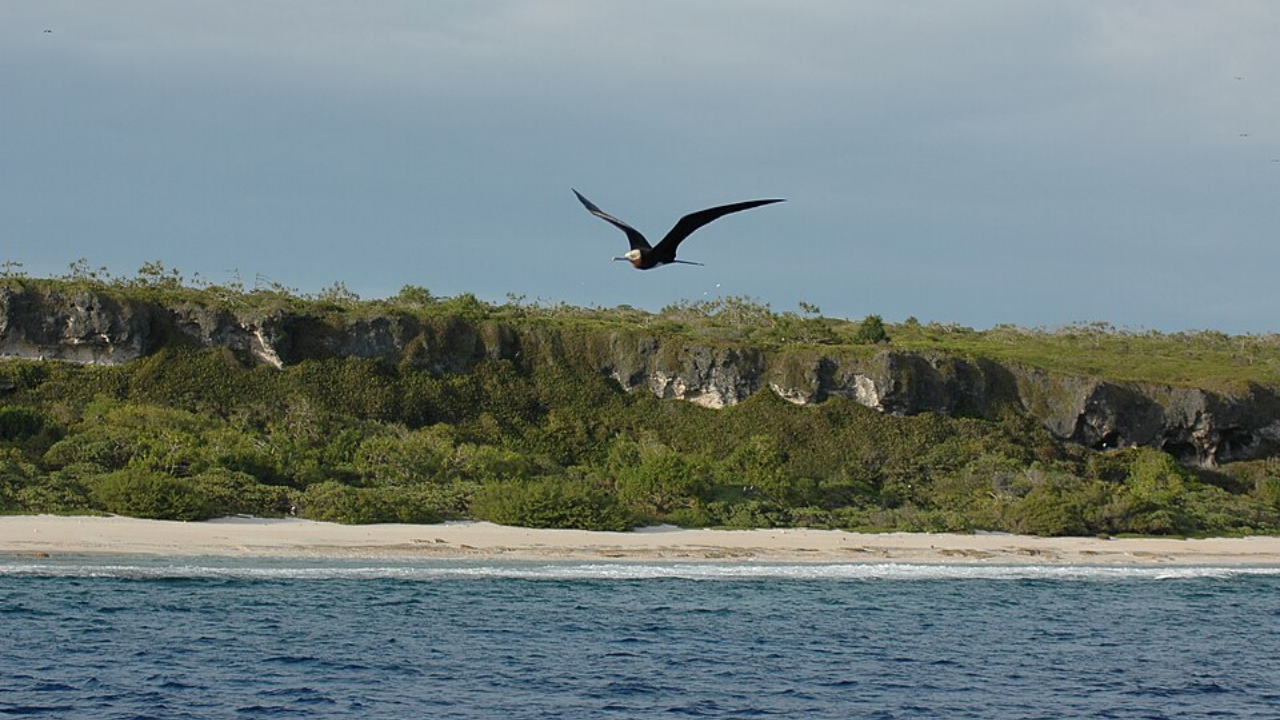
That is how much packaged, poison-laced cereal dropped from the sky over Henderson Island in August of 2011. Helicopters roared over the jagged limestone cliffs of the South Pacific, scattering millions of green pellets across every acre of the isolated atoll. The mission was clear, expensive, and absolute. Conservationists had spent roughly two million dollars aiming to wipe every single invasive Pacific rat off the island. For a brief, haunting window, it looked like it had worked. Silence settled over the forest floor. No rustling in the underbrush. No tiny footprints in the dust.
Then came the math.
Consider what happens when nature encounters an absolute decree. We often think of ecological restoration as a ledger, a simple subtraction problem where you introduce a lethal variable and subtract the pests until you reach zero. But biology does not operate like a spreadsheet. Biology is a relentless, sprawling accumulator.
For months, the island remained eerily quiet. Researchers walked the dense canopy trails and found nothing. They dared to hope. The ground-nesting petrels, birds that had evolved without knowing how to defend their defenseless chicks against sharp incisors, finally experienced a breeding season free from carnage. The sea turtles hauled themselves onto the sand without interference.
Then a single small shadow darted across a fallen branch.
By the time geneticists and field teams unraveled what had happened, the numbers told an astonishing story of survival. The massive aerial assault had killed more than ninety-nine percent of the island's rat population. Out of tens of thousands of rodents, only about sixty to eighty individuals remained.
Think about that margin. An operation can achieve staggering, jaw-dropping efficacy, destroying thousands of targets across a rugged forty-three-square-kilometer terrain, and still fall entirely short of its ultimate goal. Eradication does not care about averages. Eradication demands perfection.
Why did those few dozen escape? Imagine walking through a forest floor choked with wild, flourishing vegetation after an unseasonal rain. The island was a riot of natural food sources, seeds, and insects. To a rat with an abundance of fresh, organic options, an artificial green pellet might simply have looked like background noise. Or perhaps they lived inside deep limestone fissures that the helicopter drop lines missed by mere meters. They didn't need to be immune to the poison; they just needed to miss it.
They missed it. And in doing so, they stepped into the crucible of evolutionary bottlenecking.
When the survivors looked around at a depopulated island, they found a paradise emptied of competition. No rivals for nesting space. No shortage of fallen seeds. An open buffet stretching across every square acre.
A female rat can bear half a dozen pups every few months, and those female pups can reproduce within two to three months of birth.
Do the arithmetic.
The population didn't just grow; it exploded. Within two short years, those sixty to eighty survivors multiplied until the island's population bounced back to roughly two-thirds of its former density. Today, tens of thousands of rats scurry through the brush of Henderson Island once again, their genetic diversity permanently scarred by the 2011 bottleneck, yet entirely resilient to the human ambition that tried to erase them.
The story of Henderson Island is often filed away as a technical failure, an expensive lesson in island biogeography and logistics. But look closer at what it reveals about the world we live in. We routinely underestimate the sheer, stubborn velocity of life when it is pushed into a corner. We build systems of control, mapping out campaigns down to the last decimal point, forgetting that survival is an ancient art form practiced by creatures who do not care about our blueprints.
The seventy-five tonnes of poison proved that humans can alter an entire ecosystem in a matter of hours. The fifty rats proved that life will spend the next two years figuring out how to write the sequel.