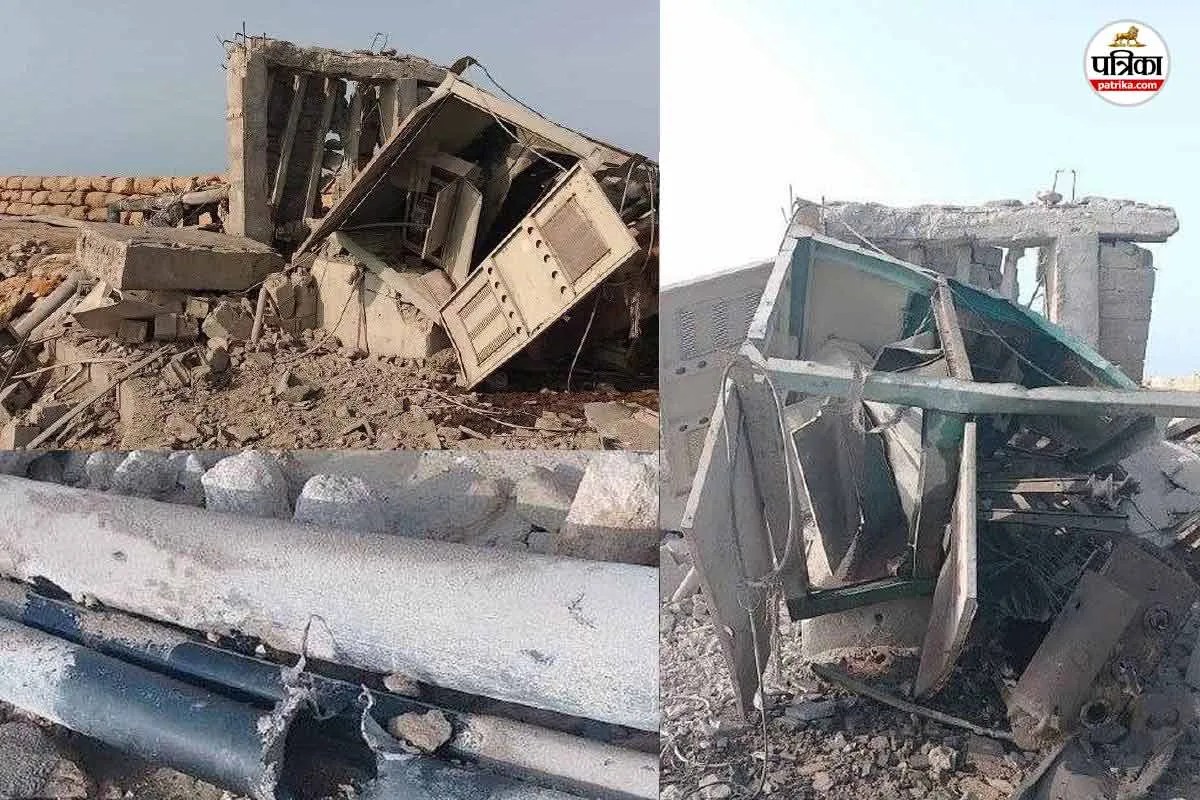
Mainstream news outlets love a neat, predictable narrative. When Iran claims that the United States launched 95 attacks in a mere ten days, resulting in eight deaths, the press runs the numbers without a single second of critical thought. They paint a picture of an aggressive, overwhelming American kinetic campaign met by tragic, localized martyrdom.
They are missing the entire point.
If you believe the official reports coming out of Tehran, you are falling for a carefully engineered piece of theater designed to hide a brutal reality: Iran is losing its asymmetric leverage, and its regional proxy network is suffering from a massive operational deficit.
Let’s look at the actual math. Ninety-five airstrikes over a ten-day period is a high-tempo operational rhythm. If an advanced military superpower like the United States executes nearly one hundred precision strikes and the resulting casualty count is stuck in the single digits, only two scenarios exist. Either American smart munitions have suddenly become historically incompetent, or—much more likely—the target selection was deeply calculated, and Iran is intentionally inflating the "attack" numbers while suppressing the true extent of its leadership losses to save face.
The Flawed Premise of Counting Crosshairs
The media constantly asks the wrong question: "Is the US trying to start a war?"
The real question we should be asking is: "Why is Iran working so hard to look like a victim instead of retaliating?"
For decades, Tehran’s entire defense strategy relied on deterrence through its proxy network—the so-called Axis of Resistance. The moment they start crying foul to international observers about the sheer volume of strikes, they admit that their deterrence framework has collapsed.
I have spent years analyzing Middle Eastern security architectures, watching analysts echo the same tired talking points every time a missile hits an ammunition depot in Syria or western Iraq. The lazy consensus insists that every American strike pack is a step toward total regional conflagration. It isn't. It is a highly calibrated janitorial effort. The US isn't trying to topple the regime with these 95 strikes; it is systematically dismantling the logistics hubs that keep the proxy supply lines moving.
When you strip away the emotional rhetoric, you find a stark logistical truth.
- The Logistics Deficit: Precision strikes do not target personnel; they target infrastructure. Command nodes, drone assembly workshops, and underground weapons caches take months to build and seconds to vaporize.
- The Intelligence Gap: To hit 95 distinct targets in 240 hours requires real-time, granular intelligence. The fact that these strikes landed means Western intelligence has thoroughly penetrated the communication networks of these militias.
- The Performance Myth: Iran claims eight dead to signal to its domestic audience that the American attacks are ineffective. It’s a coping mechanism disguised as a press release.
Dismantling the Victimhood Doctrine
Let’s address the elephant in the room. The state-run media apparatus in Tehran thrives on managed escalation. If they admit that the strikes completely wiped out a critical shipment of advanced guidance kits intended for precision-guided missiles, they look weak. If they claim the strikes hit empty warehouses and killed a few low-level guards, they maintain the illusion of resilience.
Imagine a scenario where a corporate competitor successfully sabotages 95 of your supply trucks, and your only response to your board of directors is, "It's fine, they barely scratched the paint on most of them." You would be fired on the spot. Yet, when geopolitical actors use this exact corporate spin, the defense press corps treats it like gospel.
The reality of modern kinetic warfare is that empty buildings are rarely targeted by accident. Tomahawk cruise missiles and JDAMs are too expensive to waste on dirt piles. If 95 strikes occurred, 95 high-value assets were taken off the board. The low casualty count isn’t a sign of American restraint or Iranian luck; it is a sign that the targets were logistical, not operational personnel.
The downside to this contrarian view? It forces us to acknowledge that the conflict is far from over. By focusing heavily on degrading infrastructure rather than neutralizing leadership cadres, the US is playing a long-term containment game. It is a slow, grinding strategy that costs billions and guarantees a permanent state of low-level friction. It lacks the clean finality that politicians like to promise.
The Proxy Network is Out of Options
Stop looking at the map of the Middle East as a collection of sovereign borders. Look at it as a network of pipelines. Iran’s power doesn't come from its conventional army; it flows through the geographic corridors stretching from Tehran to the Mediterranean.
Every time a strike hits a junction point in that pipeline, the pressure drops. Ninety-five strikes in ten days means the pipeline is leaking from a hundred different holes. The militias can't patch them fast enough. They lack the technical sophistication to replace advanced radar and electronic warfare suites without direct resupply from the Islamic Revolutionary Guard Corps (IRGC), and those resupply routes are precisely what is burning.
The next time you see a headline breathlessly repeating casualty stats and strike counts provided directly by a state information ministry, ignore the narrative. Look at the operational silence that follows. Notice what Iran doesn't do next. They aren't closing the straits. They aren't launching mass retaliatory swarms. They are filing complaints and updating the state media tickers.
That isn't the behavior of a regional power ready to fight. It’s the behavior of an entity running out of moves, praying that the international community steps in to force a ceasefire before the rest of its infrastructure goes up in smoke. Stop measuring the conflict by the body count; start measuring it by the smoking ruins of the supply lines.