We have spent centuries building machines out of things that do not want to move.
Iron, silicon, hardened plastics. We force them into submission with gears, hinges, micro-actuators, and electrical currents. We demand flexibility from dead matter, and when it inevitably breaks under the strain of friction and fatigue, we act surprised. Every piece of machinery we own carries the invisible tax of its own rigidity. It wears down. It resists.
Think about the human wrist. It does not contain miniature steel pistons. It twists, stretches, and adapts fluidly through a complex architecture of cartilage, muscle, and water. For decades, engineers watched biology solve this problem with effortless grace while staring helplessly at their rigid circuit boards.
Then came a beaker in a laboratory in China.
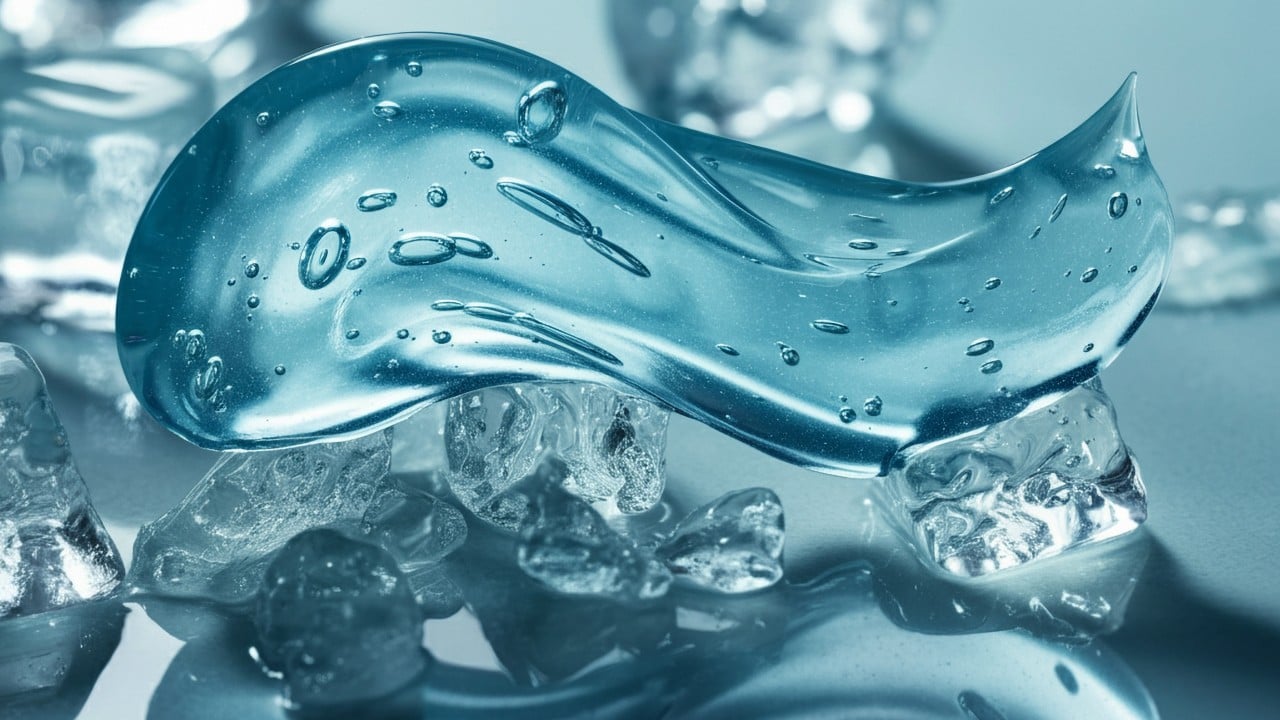
A research team did something quiet. They stopped trying to force technology to bend and instead taught it how to feel. They engineered a hydrogel. Not the static, jelly-like goo used in temporary wound dressings or cheap toys, but an intelligent, morphing material capable of altering its shape, shifting its form, and reacting to its environment with startling autonomy.
It changes shape. It remembers geometry. It behaves less like a manufactured product and more like a living tissue.
Consider what happens next.
Imagine a soft robotic gripper designed for delicate surgical procedures. A rigid steel clamp can shatter a fragile blood vessel or bruise delicate organ tissue if a surgeon’s hand slips by a millimeter. But a hydrogel-based actuator adjusts its own tension in real time. It senses resistance. It softens its grip. It cradles living tissue with the gentle caution of an open palm.
This is not just a clever chemical trick. It is a fundamental shift in how we interface with the physical world.
To understand why this matters, you have to look at the physics of what makes us tick. Water is the secret ingredient. Inside this newly developed hydrogel, polymer networks trap moisture in a delicate, highly organized molecular embrace. When stimulated by external triggers—temperature shifts, chemical imbalances, or electrical fields—these polymers reconfigure themselves. They swell in one area, contract in another. They twist into spirals, fold into flat sheets, or ripple like muscle fibers.
It is motion without motors. It is computation executed through chemistry.
We have lived through an era where smart devices meant glass screens, lithium-ion batteries, and microchips glued to circuit boards. If it didn't beep or light up, we didn't consider it smart. That definition is dying. The future belongs to materials that are intelligent all the way through.
Picture a tiny, hydrogel-based valve implanted deep within the human body, designed to deliver targeted medication. In a static world, a mechanical pump requires a battery, a motor, and a computerized trigger—each component a potential point of failure, each material foreign enough to provoke an aggressive immune response. But a hydrogel valve can respond directly to the chemical signature of a fever or a localized infection. It expands or contracts autonomously, opening a microscopic gateway only when the body asks for relief.
No battery. No wires. Just chemistry responding to biology in a silent dialogue.
Of course, getting here was not easy. The researchers faced a brutal wall of engineering paradoxes. Make a hydrogel strong enough to lift weight, and it loses its flexibility. Make it flexible enough to fluidly morph, and it tears apart under its own moisture loss. Water evaporates. Gels dry out, crack, and turn into brittle flakes.
For years, the field was plagued by this fragility. Laboratories littered with failed prototypes that worked brilliantly for ten minutes before turning into useless dust on a workbench. It is easy to look at a successful breakthrough in a journal and forget the thousands of ruined batches that preceded it. The quiet frustration of chemists watching their brilliant molecular designs dissolve into sludge overnight.
Progress is rarely a straight line. It is a graveyard of things that didn't work, punctuated by moments where someone finally balances the molecular equation just right.
By reinforcing the polymer network with dual-crosslinked structures—combining covalent bonds for strength with hydrogen bonds for energy dissipation—the team found a way to lock moisture inside while maintaining elasticity. The material could stretch, twist, and hold heavy loads without losing its structural integrity. It stopped drying out. It started surviving.
And once a material survives, it begins to work.
We are standing on the edge of a new paradigm where the boundary between hardware and biology blurs entirely. Wearable health monitors will no longer be rigid plastic bands strapped to your wrist. They will be soft, hydrogel patches that integrate seamlessly with your skin, stretching as you move, measuring hydration, glucose, or muscle fatigue directly through electrochemical reactions, powered entirely by your own body heat.
Soft robotics will crawl into tight spaces after an earthquake, squeezing through rubble where wheeled drones cannot go, powered by pressure differentials and smart materials that navigate obstacles instinctively.
This is the quiet revolution. It does not happen with the flash of a keynote presentation or the launch of a sleek titanium smartphone. It happens in the microscopic reorganization of polymer chains, in the deliberate, patient work of scientists watching water molecules rearrange themselves into the shape of the future.
The rigid age is giving way. The world is getting soft. And for the first time, our machines are learning how to breathe.