Ink on old parchment behaves differently than ink on digital glass. On paper, it sinks into the grain, stubborn and permanent, preserving the exact coordinate where a nation’s ego once collided with the sea. On a screen, however, borders are weightless. They drift. A keystroke in a basement office across an ocean can redraw an archipelago, shift a maritime shelf, or transform a patch of volcanic rock into a geopolitical tripwire.
Consider a mapmaker in Paris leaning over a drafting table half a century ago. To him, every blue line representing a French overseas territory was an umbilical cord stretching back to the metropole. It was proof of a global footprint, a reminder that the sun never quite set on the tricolor. Those islands—scattered across the Caribbean, the Indian Ocean, and the Pacific—were not just dots on a chart. They were anchors.
Now, fast forward to a podium in Washington.
When a former American president casually drops a remark about French territory—labeling it with that deceptively soft, dismissive adjective, strange—he is not merely commenting on geography. He is performing an old, familiar ritual of the powerful: reducing a sovereign reality to a punchline, a curiosity, a bargaining chip in an invisible ledger.
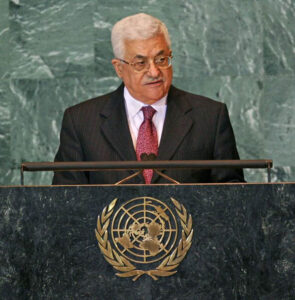
Emmanuel Macron did not roar. That is not how modern diplomacy operates. Instead, he smiled with his teeth, corrected the record with the surgical precision of a philosophy professor, and quietly reminded the room that sovereignty is not subject to casual real estate appraisals.
Maps are stories we tell ourselves to feel safe about who owns the dirt. But what happens when someone tries to rewrite the story while you are still standing on the ground?
The Geography of Memory
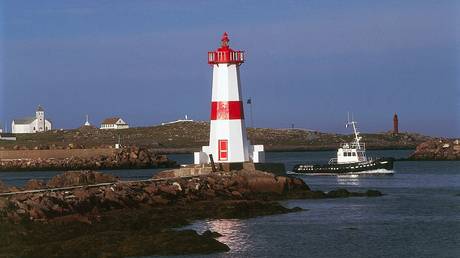
To understand why a throwaway comment about French soil can set diplomatic switchboards ablaze, you have to walk the streets of Saint Pierre and Miquelon on a raw November morning.
Imagine standing on the gray basalt docks where the salt spray freezes on your eyelashes. The wind smells of cod and diesel. For generations, the people here have hauled fish from the cold Atlantic trenches, flying the French flag not as an abstract political gesture, but as the literal architecture of their daily lives—their schools, their currency, their laws.
When someone thousands of miles away calls your home strange, they are erasing the human labor required to keep a civilization alive in the middle of nowhere.
Territory is never just empty space on a GIS dashboard. It is graves. It is lighthouses built by men who died of pneumonia. It is treaties signed in smoke-filled rooms in Vienna or Versailles. When a foreign leader looks at a map and squints at a distant island, he is looking through the wrong end of a telescope. He sees smallness. The people living there see infinity.
Diplomacy is largely an exercise in managing these conflicting optical illusions.
Macron’s response was a masterclass in boundary-setting. He understood the tactical weight of the word strange. In the lexicon of modern populism, calling something strange is a way of delegitimizing it without having to mount an actual argument. It is linguistic deflation. If you can make an ally’s sovereign possession sound eccentric or obsolete, you have already half-conquered it in the court of public opinion.
The Architecture of Alliance
We pretend that alliances between great powers are held together by shared values, mutual defense pacts, and solemn handshakes under crystal chandeliers. They are not. They are held together by a fragile, grinding friction of egos, trade deficits, and historical pride.
France occupies a singular, lonely psychological space in Western politics. It is a middle power with a hyper-power memory. It possesses a nuclear arsenal, a permanent seat on the United Nations Security Council, and a cultural stubbornness that refuses to fold into the Anglo-American slipstream. This independence—what the French call la grande nation reflex—is simultaneously its greatest shield and its most reliable irritant to its allies.
When an American president pokes at France's global footprint, he is prodding a bruise that has been tender since the Suez Crisis. He is testing the seams of the postwar order.
We are living through an era where the grammar of international relations is shifting from multilateral cooperation to transactional brawling. In this new ecosystem, historic allies are treated like landlords you are trying to squeeze out of a commercial lease. Every island, every trade route, every maritime economic zone is constantly being re-evaluated on a spreadsheet of short-term utility.
What’s the ROI on a volcanic rock in the South Pacific?
Why do we care about a speck of land in the Caribbean?
These questions sound pragmatic. They are actually profoundly dangerous. Because once you reduce a nation to a profit-and-loss statement, you lose the invisible glue that stops global politics from degenerating into a bar fight in a dark alley.
The Weight of Words
Language in diplomacy is armor. Every syllable is vetted, weighed, and measured for kinetic potential.
When Macron hit back, his strategy was not to escalate into a shouting match, but to reassert the dignity of law. International law is notoriously bloodless. It is composed of dense conventions, maritime boundaries measured in nautical miles, and endless clauses about continental shelves. Yet, it is the only thing standing between civilization and the law of the jungle.
Think of the Law of the Sea. It is dry, technical, and intensely boring to anyone who has never tried to navigate a cargo ship through contested waters. But it is also the sacred text that keeps empires from gobbling up the blue commons.
When a leader of a superpower brushes aside the legitimacy of allied territories with a smirk, he chips away at the foundations of that legal order. If France's borders are negotiable or "strange," whose are next?
This is why Macron’s reaction mattered. It was not about vanity. It was about structural integrity. If you let one pillar of the global map be mocked into irrelevance, the entire roof begins to sag.
The Horizon
The sea does not care about presidential elections.
Out past the territorial waters of Guadeloupe, or Réunion, or French Polynesia, the dark water rolls in long, indifferent swells. Albatrosses dip into the troughs. Beneath the surface, tectonic plates grind against each other in total silence, completely indifferent to what men in suits are saying on cable television.
We crave permanence in a world that feels increasingly like it is dissolving into digital noise. We want our borders to mean something. We want our histories to anchor us.
Macron’s sharp, polite pushback was a reminder that Europe’s old nations—for all their flaws, their bureaucratic fatigue, and their internal divisions—still remember how to draw a hard line in the sand. They are not ghosts yet.
The map remains. The ink is dry. And somewhere out on the open ocean, the blue flag still snaps in the wind, defying anyone who thinks they can laugh it out of existence.