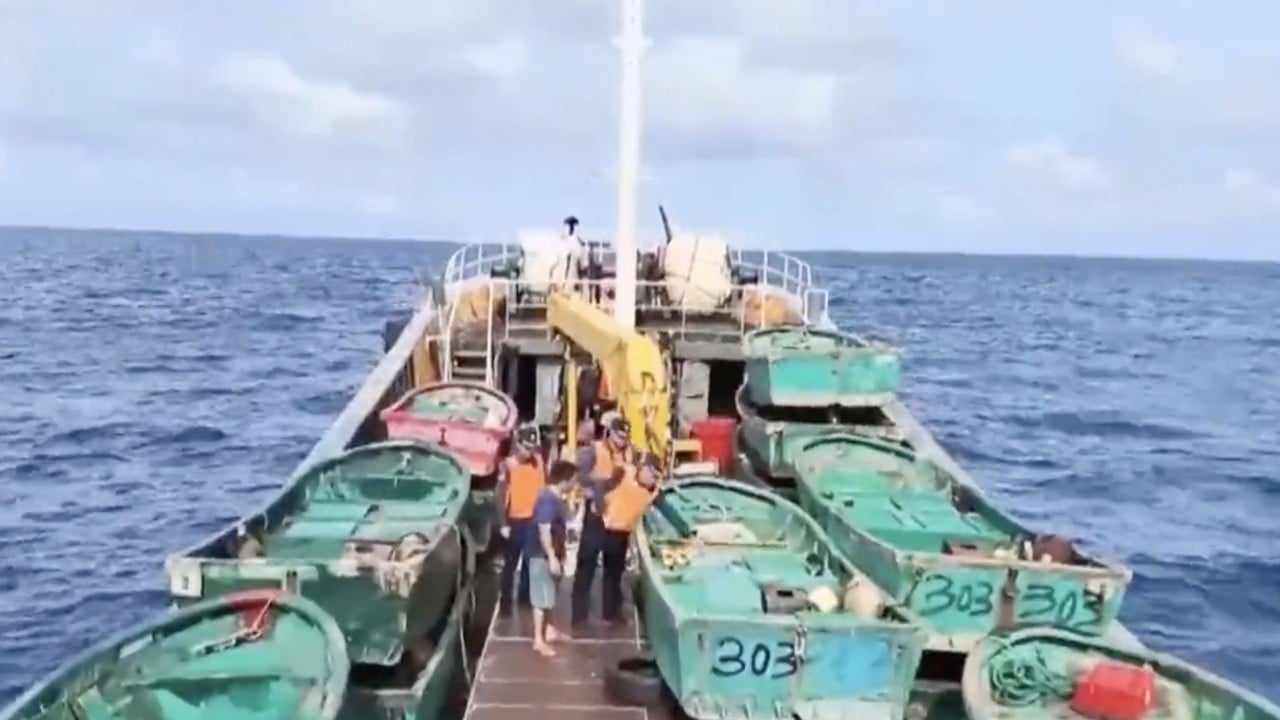
Manila is dialing back its public anti-China rhetoric ahead of crucial ASEAN talks not out of sudden diplomatic weakness, but because loud confrontation alienates the very regional neighbors it needs to sign a binding maritime code. For over two years, the Philippine government pursued an aggressive strategy of public exposure, broadcasting every water cannon blast and laser incident in the South China Sea to the global press. Now, as Southeast Asian leaders prepare to sit across the negotiating table, President Ferdinand Marcos Jr. and his foreign policy team have abruptly shifted gears, trading megaphone diplomacy for calculated restraint to prevent ASEAN consensus from fracturing entirely.
To understand why this sudden quiet matters, you have to look at how ASEAN actually operates. Unlike NATO or the European Union, the Association of Southeast Asian Nations runs strictly on consensus-based decision-making and non-interference. A single member state can veto or water down a joint communique until it becomes diplomatic wallpaper. When Manila spent months loudly calling out Beijing's maritime militia, nations like Cambodia, Laos, and even Indonesia and Malaysia grew visibly uncomfortable. They do not want to be forced into choosing between Washington and Beijing, nor do they want their own billion-dollar Chinese infrastructure loans jeopardized by a neighbor's escalating maritime standoffs.
The Death of Megaphone Diplomacy
For the past few years, the Philippine Coast Guard operated like a floating newsroom. Under the banner of assertive transparency, Manila invited international journalists onto supply boats heading toward Second Thomas Shoal, ensuring that every collision and water cannon assault by the China Coast Guard landed on front pages from Washington to Tokyo. The tactic worked brilliantly for rallying Western allies and winning domestic approval ratings. It turned a remote, submerged reef into a global symbol of authoritarian overreach.
Yet every diplomatic tool has a shelf life. By late 2024 and into 2025, the diminishing returns of public shaming became impossible for Manila's career diplomats to ignore. Beijing did not back down under the glare of international cameras; instead, it escalated its gray-zone tactics, deploying larger coast guard cutters and ramming Philippine vessels with brazen regularity. More importantly, the constant public friction began creating fatigue inside Southeast Asia. Regional neighbors viewed the escalating war of words as a bilateral flashpoint spiraling out of control, threatening the broader economic stability of the entire bloc.
Quiet channels had to replace public broadcasts. If Manila kept shouting, ASEAN diplomats would spend the entire summit drafting watered-down statements begging "all parties to exercise self-restraint"—diplomatic shorthand that equates the aggressor with the victim. By lowering the volume before the summit begins, the Philippines removes Beijing's favorite talking point: that Manila is a reckless proxy acting at the behest of the United States to destabilize the region.
Inside the ASEAN Consensus Trap
Most outside observers misunderstand what ASEAN can realistically deliver on the South China Sea. It is not a mutual defense pact. When Philippine officials walk into a summit hall in Vientiane, Kuala Lumpur, or Manila, they are sitting next to leaders whose economic survival is tightly wired into Beijing's supply chains.
Consider the stark divide within the ten-member bloc:
- The Frontline Claimants: The Philippines and Vietnam face direct, daily friction with Chinese vessels over overlapping Exclusive Economic Zones. Both want a legally binding Code of Conduct that carries real enforcement mechanisms.
- The Hedgers: Malaysia and Indonesia have their own maritime run-ins with Chinese survey ships near the Natuna Islands and Sarawak, yet they fiercely guard their non-aligned status and rely heavily on Chinese trade and tech investment.
- The Beijing-Aligned: Cambodia and Laos maintain deep political and financial ties to China, historically blocking or softening any ASEAN statement that directly criticizes Beijing's island-building or maritime claims.
When Manila blasts Beijing in the press days before a summit, it hands the hedgers and the Beijing-aligned states an easy excuse to stall. They argue that the diplomatic atmosphere is too poisoned for constructive progress on the Code of Conduct. Muzzling the loudest voices in Manila is a tactical concession designed to strip away those excuses and force neighbors to engage with the actual legal text of maritime agreements.
What Happened Behind Closed Doors
The shift in tone did not happen in a vacuum. It followed a series of tense, unpublicized backchannel meetings between Philippine and Chinese diplomats aimed at managing the flashpoint around Second Thomas Shoal, known locally as Ayungin Shoal. After violent clashes left Filipino sailors injured and vessels damaged, both capitals realized they were one miscalculation away from triggering the 1951 Mutual Defense Treaty between Manila and Washington—a scenario neither side actually wants to test in open combat.
What emerged was a fragile, provisional arrangement allowing the Philippines to resupply the BRP Sierra Madre, a grounded World War II-era warship serving as a makeshift military outpost, without triggering immediate coast guard blockades. Part of the unwritten price for that breathing room is rhetorical restraint. If Philippine officials publicly gloat that they forced China to blink, Beijing loses face domestically and immediately tears up the understanding.
Diplomats in Manila's Department of Foreign Affairs have long clashed quietly with the security establishment over this exact dynamic. While military spokespeople and coast guard officials favored aggressive public messaging to deter Chinese harassment, veteran foreign service officers warned that cornering Beijing publicly leaves the Chinese leadership with zero room to compromise. Ahead of ASEAN talks, the diplomats clearly won the internal debate.
The Economic Reality Nobody Mentions
Geopolitics grabs the headlines, but trade ledgers dictate policy. Even at the height of maritime tensions, China remained one of the Philippines' largest trading partners and a critical source of imported raw materials, electronics components, and agricultural goods. Furthermore, Philippine business conglomerates have watched nervously as Chinese tourism numbers stagnated and pledged infrastructure funding dried up, shifting toward rival Southeast Asian economies like Vietnam and Thailand.
The Marcos administration faces mounting domestic pressure to deliver tangible economic growth, tame inflation, and modernize creaking domestic infrastructure. Confrontation with Beijing brought generous security pledges from Washington, Tokyo, and Canberra, but military hardware does not immediately lower rice prices or build commuter rail lines. By softening its tone ahead of regional summits, Manila is signaling to regional investors and Beijing alike that it wants to compartmentalize its disputes—keeping maritime sovereignty firm while reopening doors for trade, tourism, and economic cooperation.
This is a delicate high-wire act. If the administration appears too conciliatory, it risks fierce backlash at home from a public that remains overwhelmingly skeptical of Beijing's intentions, as well as criticism from political rivals who will accuse Marcos of repeating the overly accommodating posture of his predecessor, Rodrigo Duterte.
Why Beijing Loves the Silence
There is a dangerous downside to Manila's sudden quiet, and seasoned analysts in Southeast Asia see it clearly. Beijing excels at exploiting diplomatic pauses. Throughout the past two decades, China has repeatedly agreed to "de-escalate" and "resume dialogue" ahead of major regional summits, only to use the quiet period to cement its physical control over disputed reefs, expand coast guard patrols, and normalize its presence inside neighbors' waters.
When Manila stops broadcasting incidents to the international press, the global spotlight dims. Without daily video footage of water cannons hitting wooden supply boats, the South China Sea quickly slips off the front pages in Washington and Brussels, replaced by crises in Eastern Europe or the Middle East. Beijing knows that international attention is finite. A quiet ASEAN summit produces polite communiques, warm handshakes, and zero tangible penalties for the massive grey-hulled ships continuing to patrol inside the Philippines' Exclusive Economic Zone.
Moreover, muzzling anti-China rhetoric creates an asymmetry in information warfare. While Philippine officials bite their tongues to preserve summit decorum, Chinese state media and diplomatic channels continue pushing their own narrative—portraying Manila as the instigator that finally came to its senses under regional pressure.
The High-Stakes Gamble on the Code of Conduct
Everything hinges on whether this tactical silence produces actual movement on the long-stalled South China Sea Code of Conduct. Negotiators have been discussing this framework for over twenty years, trapped in an endless loop of working-group meetings that never resolve the core issues: whether the code will be legally binding, what geographic area it covers, and how violations will be punished.
Manila's calculation is straightforward. If it enters the ASEAN talks with lowered rhetoric, it gains the moral high ground among Southeast Asian peers. It can look fellow leaders in the eye and say it has done everything possible to lower the temperature, putting the burden squarely on Beijing to prove it negotiates in good faith. If China still stonewalls on basic maritime rules despite Manila's restraint, ASEAN's fence-sitters will have a much harder time blaming Philippine "provocations" for the deadlock.
Yet betting on ASEAN unity has historically been a losing wager for frontline states. In 2012, for the first time in its history, ASEAN failed to issue a joint communique at the end of a summit because host nation Cambodia refused to allow any mention of maritime disputes with China. Twelve years later, Beijing's economic grip on the region is vastly stronger than it was then.
Manila has temporarily holstered its loudest weapon—public exposure—in hopes that quiet diplomacy can unlock regional solidarity. If the upcoming ASEAN talks end with yet another toothless statement urging restraint while Chinese cutters remain anchored off Philippine reefs, the silence in Manila will not last long.