He sat in the quiet of a midnight boardroom, staring at a miniature plastic joints assembly on his desk. Outside the window, the neon lights of Guangzhou’s tech district blurred through a sudden downpour. For He Xiaopeng, the billionaire founder of electric vehicle giant Xpeng, the silence was loud. For a decade, his life had been measured in wheelbase lengths, battery range efficiency, and autonomous driving algorithms. Cars were his religion.
Then came the realization that a car is just a cage with wheels.
The global automotive market was shifting from a gold rush to a meat grinder. Profit margins were thinning. EV startups were scrambling. Yet, down the hall in a secretive wing of his corporate empire, a different kind of project was humming to life. It didn't have tires. It had ankles.
When He Xiaopeng officially stepped up to take the direct reins of Xpeng’s robotics division, Xpeng Robotics, it wasn't just a corporate reshuffle. It was an admission of a deeper truth. The race to build the smartest car was over; the race to build the surrogate human had begun.
The Glass Wall at the Assembly Line
Walk through any modern automotive factory and you will feel an eerie sense of isolation. Massive orange robotic arms swing with terrifying, millimeter-perfect precision. They weld. They paint. They lift chassis weighing thousands of pounds without breathing heavily.
But look closer.
Watch a human worker named Chen. Chen stands at the end of the line, gingerly threading a delicate wiring harness through a rubber grommet in the door frame. His fingers twist, feel for resistance, and snap the plastic clip into place. It is a task a five-year-old child could manage in seconds. To the multi-million-dollar robotic arms nearby, it is an impossible riddle.
The arms are blind, rigid, and stupid. They know only the coordinates programmed into their cold memory banks. If a door frame is misaligned by a fraction of an inch, the robot will crash into it.
This is the bottleneck holding back the next industrial revolution. We have built machines that can mimic muscle, but we have failed to build machines that can mimic touch.
When Xpeng’s boss took over the robotics unit, he was betting everything on bridging this gap. The goal is no longer just to make a car that drives itself to the factory gate. The goal is to build a pair of legs and hands that can walk inside, pick up a wrench, and finish the job.
The Software is Already Alive
The secret weapon in this transition is sitting right under our noses, hidden inside the dashboards of modern electric vehicles.
For years, automotive engineers have poured billions into artificial intelligence for autonomous driving. A self-driving car must perceive a chaotic world in real-time. It tracks a pedestrian stepping off a curb, calculates the trajectory of a speeding scooter, interprets a faded lane marking, and reacts in milliseconds.
Consider the sheer computational weight of that process. The car is constantly creating a three-dimensional map of reality, predicting the future behavior of moving objects, and making life-or-death decisions.
Now, take that exact same AI brain. Remove it from the car. Put it inside a bipedal aluminum frame that stands five-foot-eight.
Suddenly, the robot doesn't need to learn how to see the world from scratch. It already knows how. The cameras in its head read the room just like the sensors in a front bumper read the highway. The neural networks that once steered around a pothole now steer a metal foot around a stray power cord on a warehouse floor.
The pivot from smart cars to humanoid robots isn't a leap into the unknown. It is a reuse of a weapon already forged in the fires of the EV wars.
The Weight of a Simulated Step
Building a machine that walks on two legs is an exercise in controlled falling.
Every time you take a step, your brain performs a magnificent, subconscious calculation. You lean forward, letting gravity pull you down, and then your opposing foot swings out to catch you at precisely the right moment. Your ankles flex to adjust for the slope of the ground. Your inner ear monitors your balance.
For a machine, this is a nightmare of physics.
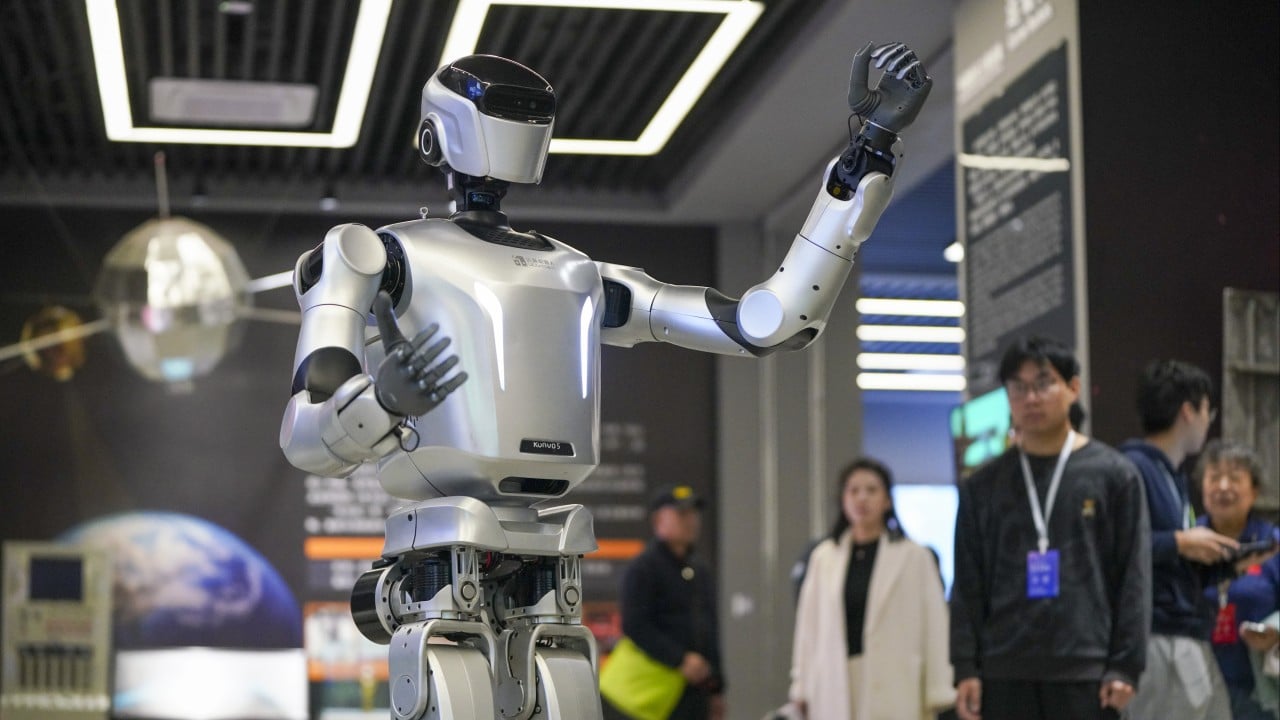
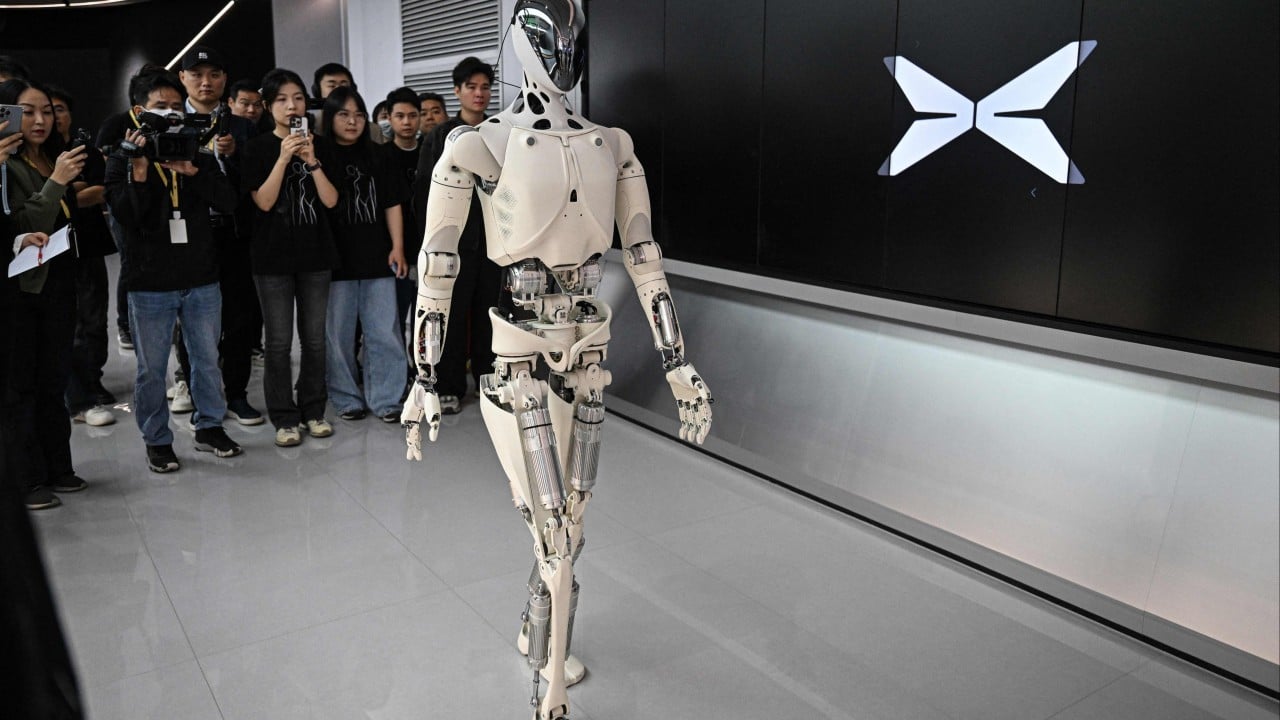
Engineers spend months programming a robot just to stand still on a shifting surface. Early prototypes of Xpeng’s bipedal machines looked clumsy, their metallic knees bent in a permanent, awkward squat, their actuators whining under the strain of keeping balance. Critics laughed. They called them expensive toys.
But the critics missed the compounding nature of technology. Every stumble teaches the simulation. Every time a prototype falls over in a virtual testing lab, the software adjusts the center of gravity by a fraction of a millimeter. The machine learns at a rate of millions of cycles per hour.
The turning point happens quietly. One afternoon, a technician pushes the robot from behind. Instead of toppling like a felled tree, the machine stumbles forward, catches its balance on one foot, stabilizes its torso, and looks back around.
It feels less like a machine rebooting and more like an awakening.
The Quiet Crisis of Human Hands
The true battleground isn't the legs. It is the fingers.
The human hand is a masterpiece of evolutionary engineering. It can crush an aluminum can, and it can cradle a raw egg without cracking the shell. This duality requires tactile feedback—thousands of tiny sensors telling the brain exactly how hard to press.
Current industrial grippers are largely pneumatic claws. They grab with a pre-set force. If you give them a metal bolt, they hold it tight. If you give them a plastic dashboard trim piece, they shatter it.
To make a humanoid robot useful in a domestic or industrial setting, it must possess tactile intelligence. Engineers are currently layering robotic fingertips with synthetic membranes that measure electrical resistance when compressed. This mimics the human sense of pressure.
The implications stretch far beyond the factory floor.
We live in an aging world. In countries across Asia and Europe, demographic charts are tipping into a dangerous inversion. There are more retirees than young workers to support them. The care crisis is looming, a heavy shadow over the next two decades. Who will help the elderly out of bed? Who will restock the grocery shelves at dawn when there are no hands left to do the work?
This is the invisible stake behind the corporate announcements. It is not about selling a high-tech luxury item to the wealthy. It is about building the infrastructure of survival for an aging species.
The Danger of the Uncanny Valley
As these machines grow more capable, they cross into a strange psychological territory.
When a machine looks like a box with arms, we view it as a tool. When it assumes a human silhouette—two arms, two legs, a head-mounted camera array—our brains instinctively begin to judge it as a peer. We expect it to move with grace. When it moves with jerky, mechanical precision, it triggers a deep-seated revulsion.
There is an emotional risk here that businesses rarely talk about. If the public fears the machine, the market dies.
During internal testing phases, engineers noticed that workers felt uncomfortable when a humanoid prototype stood completely still behind them. The silence was menacing. The team had to program artificial "micro-movements"—slight, natural shifts in weight, subtle turns of the head—just to make the machine's presence tolerable to the humans working alongside it.
We are forcing these machines to learn the choreography of human politeness before they have even mastered the art of holding a coffee mug.
Beyond the Horizon of the Steering Wheel
The transition of leadership at the top of Xpeng’s robotics project signals that the experiment is over. The hobby phase has ended. The capital is moving in.
The ultimate goal is an ecosystem where the car and the robot are two halves of the same coin. Your vehicle drives you home; your robot opens the front door, takes your briefcase, and plugs the car into the charger. They share the same data cloud, speak the same language, and anticipate your needs based on the same behavioral models.
It is a grand vision, but the path is littered with the ghosts of over-ambitious tech projects. The hardware is still too expensive. The batteries die too quickly. The public is still deeply skeptical.
On that rainy night in Guangzhou, the plastic joints on He Xiaopeng's desk remained still. They didn't possess a digital pulse yet. But as the founder looked out over the sprawling city, the future felt inevitable. The cars downstairs in the showroom were beautiful, polished, and fast. But they were ultimately a prelude to something much larger.
The metal had learned to drive. Now, it was learning to walk.