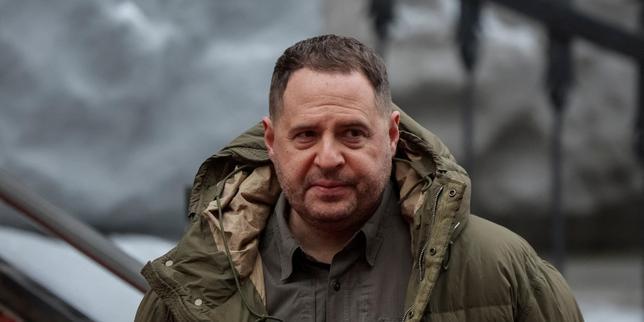
The air in Kyiv has a specific weight now. It tastes of diesel, old stone dust, and the metallic tang of constant alertness. In the center of this pressurized world stands the Bankova, the presidential administration building, a fortress of sandbags and darkened windows. Inside, the geography of power has narrowed to a few hallways. At the end of those hallways, before you reach the President, you must pass Andriy Yermak.
To understand Ukraine is to understand the gatekeeper. While Volodymyr Zelensky became the face of global resistance, Yermak became the hands. He is the one who answers the phones at 3:00 AM. He is the one who negotiates the grain deals, the prisoner swaps, and the delicate logistics of a nation fighting for its breath. But power that is concentrated so tightly, so invisibly, creates a friction that heat-seeks its way to the surface.
Lately, that heat has turned into a firestorm of allegations.
The Weight of the Signature
Corruption in a time of peace is a systemic failure. Corruption in a time of existential war is a different beast entirely—it feels like a betrayal of the blood spilled on the front lines. The recent reports surrounding Yermak do not just describe missing funds or bureaucratic shortcuts. They describe a fundamental crack in the shield.
The core of the controversy stems from a series of investigations into state procurement and the influence of the presidential office over judicial and investigative bodies. It’s a story of numbers, yes, but those numbers represent winter coats that don't arrive, shells that aren't bought, and a trust that is being spent faster than international aid.
Consider a hypothetical soldier, let’s call him Roman, sitting in a trench in the Donbas. To Roman, "state procurement" isn't a dry term in a ledger. It is the quality of the drone hovering over his head. If the money meant for that drone’s battery ended up in a suburban villa or a hidden offshore account, Roman doesn't just lose a tool. He loses the belief that the men in the suits in Kyiv are fighting the same war he is.
The allegations against Yermak suggest that his influence has created a "shadow cabinet" that bypasses traditional checks and balances. Critics argue that his grip on the apparatus of the state has allowed certain figures to operate with an impunity that feels uncomfortably like the old ways—the ways Ukraine promised to leave behind in the smoke of the Maidan revolution.
The Architecture of Influence
Yermak is not a career politician in the traditional sense. He is a film producer and a lawyer. He understands optics. He understands the narrative. This makes the current accusations particularly stinging. He knows exactly how this looks: the "gray cardinal" whispering in the ear of the hero, while the machinery of the state grinds through scandals involving inflated food contracts for the military.
The problem isn't just one man. It’s the vacuum. When a country is under siege, power naturally flows toward the center. It has to. Decisions need to be made in seconds, not months of parliamentary debate. But that efficiency is a double-edged sword. When you remove the red tape to save the country, you also remove the tripwires that catch the thieves.
We see this pattern throughout history. In moments of great national peril, the "strongman’s deputy" often becomes more powerful than the ministries themselves. They become the indispensable fixer. But as the fixer fixes the big problems—the missiles, the alliances, the energy grid—they often ignore the rot growing in the basement.
The Invisible Toll on the Home Front
The tragedy of these allegations is that they provide the perfect ammunition for those looking to turn away. In the halls of Washington and the parliaments of Europe, the word "Ukraine" is increasingly followed by the word "fatigue." Skeptics use the headlines about Yermak to argue that the house is too broken to save.
But the house isn't just a building; it’s forty million people.
When we talk about Yermak’s alleged involvement in shielding questionable figures from prosecution, we aren't just talking about legal theory. We are talking about the mother in Lviv who sends her last few hryvnias to a volunteer fund because she doesn't trust the government’s logistics. We are talking about the international donor who pauses before hitting "send" on a billion-dollar package, wondering if the money will actually buy the generators it’s intended for.
The stakes are visceral.
If the gatekeeper is compromised, the gate is open. Not to the enemy's tanks—the army is holding those back—but to the internal decay that has historically been Ukraine's greatest vulnerability. For decades, the country has fought a two-front war: one against the imperial ambitions of its neighbor, and one against the oligarchic ghosts of its own past.
The Silence and the Storm
Yermak has, predictably, denied the accusations. He paints them as part of a coordinated disinformation campaign designed to destabilize the presidency. In some ways, he is right. The enemy certainly benefits from the chaos. But the most effective lies are built on a foundation of truth, or at least, on the silence where truth should be.
The lack of transparency in how the Office of the President operates has created a fog. In that fog, suspicion grows like mold. When investigative journalists like those at Bihus.Info or Ukrainska Pravda dig into the assets of government officials and find wealth that doesn't match their salaries, the public doesn't want "narrative." They want heads on a metaphorical platter.
They want to know that the sacrifice is shared.
Zelensky faces an impossible choice. To fire Yermak is to cut off his right hand in the middle of a surge. To keep him is to risk the moral authority that has been his greatest weapon since February 2022. The "servant of the people" is now being asked who he truly serves: his most loyal friend, or the people who are dying for the dream of a clean country.
The Echo in the Trench
The sun sets over the Dnipro, casting long, golden shadows across a city that refuses to go dark. In the cafes, people still talk. They don't talk about the grand strategy of the counter-offensive as much as they used to. They talk about the cost of eggs. They talk about who is getting rich while they are getting tired.
This is the human element that cold news reports miss. Corruption isn't a victimless crime of accounting. It is a psychological weight. It makes the air heavier. It makes the siren sound a little more hollow.
If Ukraine wins the war but loses its soul to the same backroom deals that defined its pre-war era, what was the victory for? The struggle isn't just about borders on a map. It’s about the distance between the government and the governed.
Andriy Yermak remains in the bunker. He remains on the calls. He remains the man who must be seen. But the questions are no longer staying outside the sandbags. They are seeped into the carpet. They are in the room.
The battle for Ukraine’s future is being fought in the trenches of Bakhmut, but it is also being fought in the quiet offices of the Bankova. One requires courage; the other requires something much rarer in the history of power: the willingness to let the light in, even if it burns.
The soldier Roman waits for his drone. The mother in Lviv waits for her change. The world waits to see if the hero’s shadow is longer than the hero himself.