There are players who wear a club’s colors, and then there are players who become the thread.
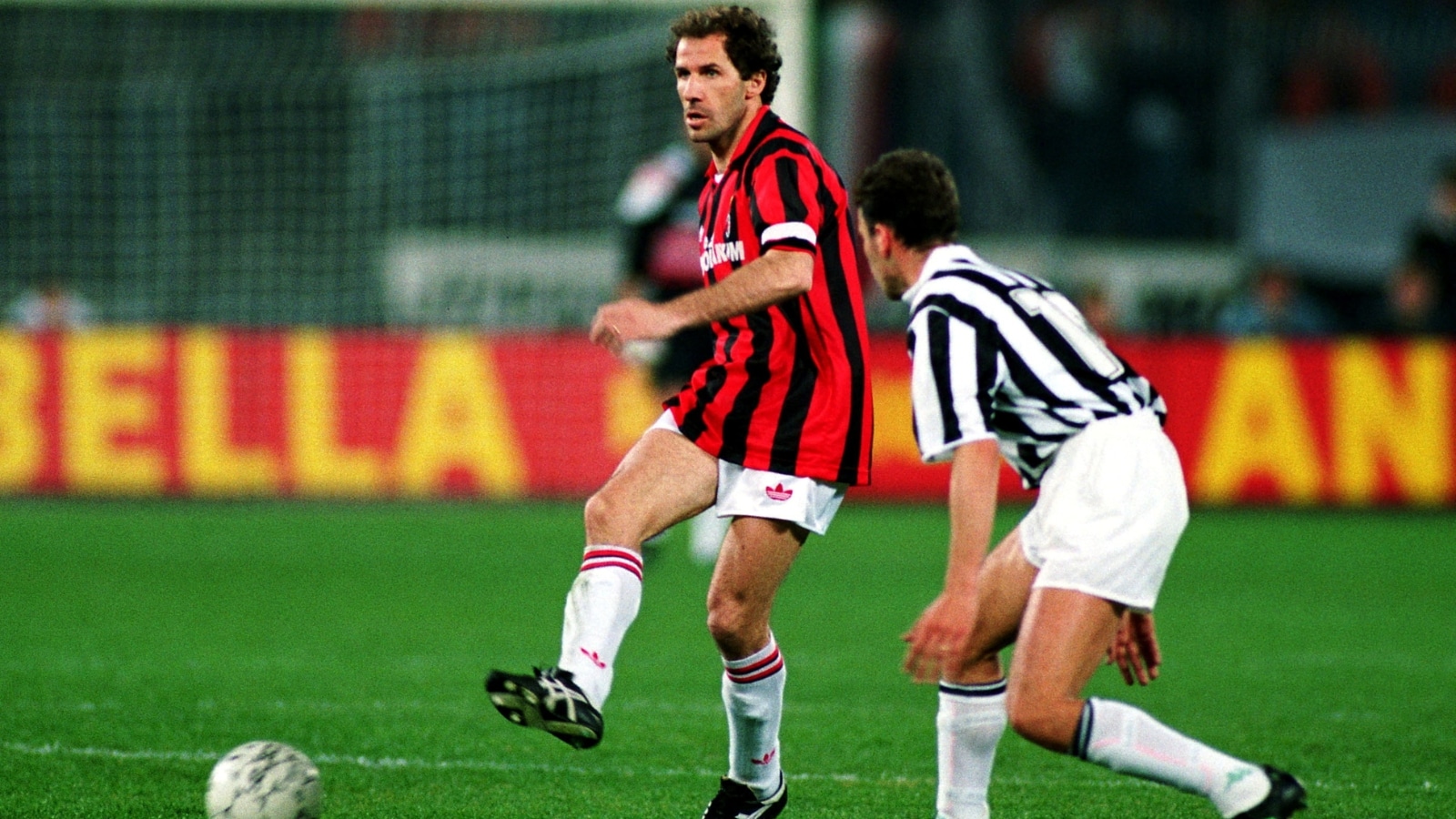
When Franco Baresi stepped onto a football pitch, he did not look like a titan of central defense. He was not blessed with the towering, imposing frame of a modern enforcer. Early on, coaches looked at his slight stature and gave him a gentle, dismissive nickname: Piscinin, the Little One. But stature is a poor substitute for geometry. Baresi understood space before the man passing the ball did. He saw the geometry of a counter-attack unfold three seconds before it happened, gliding across the turf to intercept danger with an eerie, quiet elegance. He did not need to crash into opponents because he was already standing precisely where the ball was heading.
Now, the silence has arrived.
At sixty-six years old, Baresi has passed away. Following a private, courageous battle with illness that began after lung surgery in late 2025, the heart of AC Milan has stopped beating. For a global football community that watched him anchor the Rossoneri backline through 719 matches, the news feels less like an obituary and more like the shifting of an tectonic plate.
Consider what loyalty actually means in modern sports. Today, players change crests the way seasons change coats, chasing the highest bidder or the easiest trophy. But long before multi-million-euro contracts dictated absolute mobility, Baresi made a different choice.
In 1982, AC Milan suffered a catastrophic relegation to Serie B. The club was fractured, cash-strapped, and drifting into obscurity. For a young player who had already tasted the glory of winning a FIFA World Cup with Italy earlier that summer, the temptation to walk away was immense. Big clubs came calling. Agents whispered about greener pastures.
Baresi said no.
He stayed. At just twenty-two years old, an age when most young men are still figuring out how to navigate their twenties, he accepted the captain's armband for a sinking ship. He dropped down into the gritty trenches of Italy's second tier, rolled up his sleeves, and dragged his club back to the light. That decision forged an unbreakable covenant between a player and a city. He didn't just play for Milan; he became the blueprint of what it meant to be a Milanista.
Alongside iconic teammates like Paolo Maldini, Alessandro Costacurta, and Mauro Tassotti, Baresi helped orchestrate a defensive revolution under coaches like Arrigo Sacchi and Fabio Capello. They perfected the suffocating high line and the masterclass offside trap, anchoring an untouchable defense that birthed Gli Invincibili—the legendary squad that stitched together a staggering 58-match unbeaten run in Serie A. They collected six Serie A titles and three European Cups, turning San Siro into a fortress of red and black dominance.
Yet, the human story of Franco Baresi is defined just as much by heartbreak as it is by silverware.
Think back to the scorching summer of 1994 in Pasadena, California. The World Cup final. Just twenty-five days prior to the biggest match of his life, Baresi underwent grueling knee surgery. Any normal athlete would have been watching from a hospital bed or a television screen. Instead, Baresi engineered a medical miracle, stepping onto the pitch to play all 120 minutes of a suffocating, scoreless tactical chess match against Brazil.
For two hours under the blazing sun, he put on an absolute defensive masterclass, marshaling Italy's backline with heroic defiance. When the match finally drifted into a tense penalty shootout, fate turned cruel. Baresi missed his penalty, Brazil claimed the trophy, and the great captain knelt on the grass, weeping tears of pure, unadulterated exhaustion and despair.
It was a devastating moment, but it revealed his true character. Baresi was never a machine. He bled, he hurt, and he cared deeply.
The last time the world saw him on a grand global stage was back in February 2026. Frail, visibly weathered by his health struggles, but carrying himself with that same unyielding posture, he stepped onto the turf of San Siro to carry the Olympic torch into the opening ceremony of the Milano Cortina Winter Games. Standing alongside his old rival and friend Beppe Bergomi, he raised the flame as a stadium roared its collective gratitude. It was a poetic, heartbreaking final bow for a man who belonged to Milan and to Italy in a way few athletes ever do.
AC Milan announced that his iconic number six shirt will forever remain etched into the DNA of the club. But numbers fade, and fabric eventually frays. What remains is the memory of a slight young man from Lombardy who refused to run away when the walls came down, choosing instead to stand his ground, build a legacy out of pure integrity, and teach the world how to defend with dignity.