The morning air in Beijing carries a biting grit, the kind that settles deep in the wool of an old winter coat and stays there for hours. Back in the late nineteen-nineties, standing on a street corner near the financial district, you could feel a different kind of pressure in that air. It was not just the dust blowing down from the northern steppes. It was the crushing weight of a billion people waiting to see if an entire economic experiment would collapse under its own heavy bureaucracy.
Into that suffocating room stepped a man known widely by a nickname that terrified the corrupt and galvanized the desperate: the Iron Face.
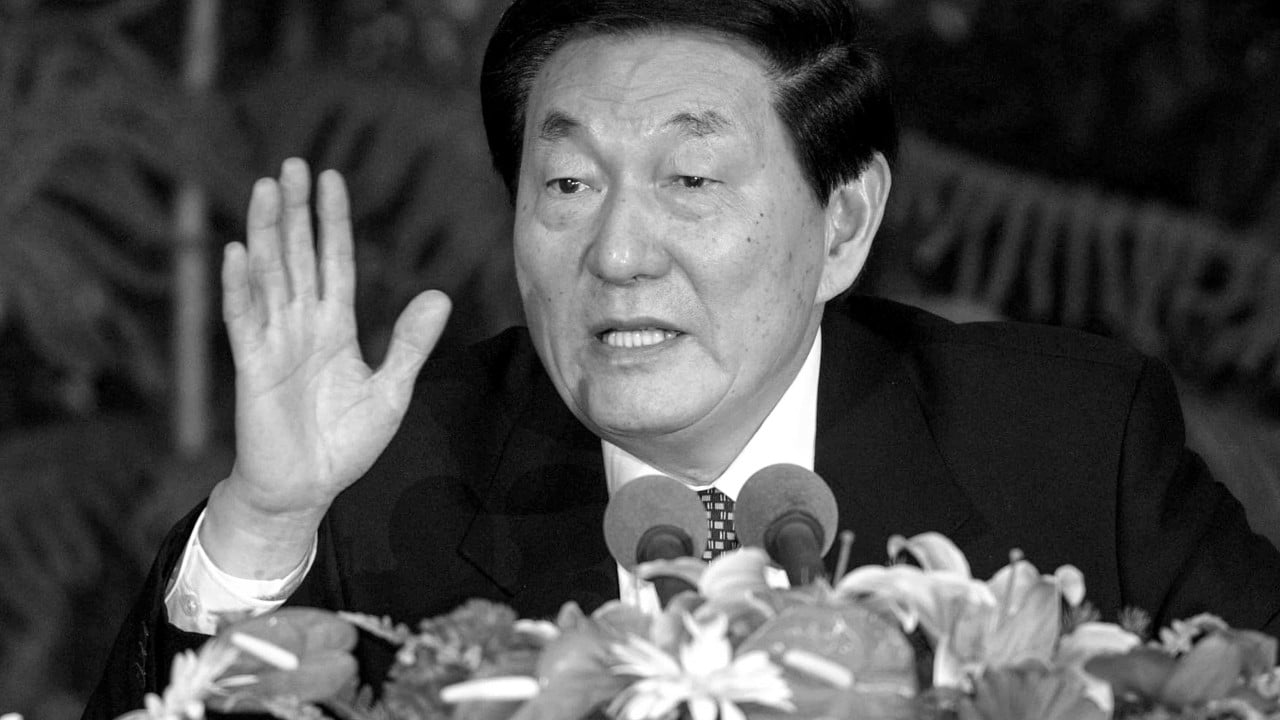
Zhu Rongji did not look like a revolutionary. He looked like an accountant who had survived a shipwreck and decided to fix the ocean. With wire-rimmed glasses, a sharp jawline, and a demeanor that suggested he had very little patience for excuses, Zhu took the helm as premier at a moment when China stood at a precarious precipice. State-owned enterprises were bleeding money, inflation threatened to run away like a wild horse, and the global markets watched with a mixture of skepticism and predatory hunger.
To understand what Zhu achieved, you have to look past the dry economic ledgers. You have to look at the human cost of a country trying to leap from a rigid, planned past into a chaotic, modern future without breaking apart at the seams.
Consider what happens next in any massive system transformation: panic.
Millions of workers in state-owned factories faced the sudden, terrifying reality that the iron rice bowl—the cradle-to-grave guarantee of housing, medical care, and employment—was about to shatter. For decades, a worker in a state mill in the northeast knew that even if the machine broke, the state would feed his family. It was a stifling existence, but it was predictable. Zhu understood that predictability was a luxury the nation could no longer afford. If every factory was subsidized to keep up appearances, the whole country would eventually go bankrupt.
So he took a deep, steady breath and swung the axe.
Millions of jobs vanished from the state ledgers. Protests flickered like dry brushfires across the industrial rust belt. In boardrooms and smoky back rooms, critics called him reckless. They warned that the social fabric would tear completely. But Zhu possessed a rare brand of stubborn courage. He did not blink.
Instead of letting the economy drown in its own red ink, he centralized tax collection, reined in rampant speculation, and forced inefficient state behemoths either to compete or to step aside. He was relentless. When local officials tried to fudge their numbers, his inspectors arrived unannounced like a sudden frost. He famously declared that he was prepared for a hundred coffins, and even one for himself, if it meant wiping out corruption and saving the nation's financial soul.
That was not political theater. That was a man staring down the barrel of history and deciding that hard truth was better than a comfortable lie.
By the time China entered the World Trade Organization at the turn of the millennium, the structural plumbing had been completely overhauled. The frantic hum of private enterprise began to drown out the sluggish drone of the old command economy. Cranes spiked the skylines of Shanghai and Shenzhen. A new middle class was born out of the chaos, clutching cell phones and balancing checking accounts for the very first time.
Yet, history rarely offers clean victories. The very reforms that built the modern Chinese economic engine also unleashed severe wealth inequality, environmental strains, and a relentless pressure to produce that would eventually define the twenty-first-century worker's existence. Zhu knew the risks. He walked the razor's edge deliberately, calculating that the pain of motion was infinitely preferable to the rot of stagnation.
Now, at ninety-seven, the man with the iron face has closed his eyes for the last time.
The news of his passing arrives quietly, filtered through decades of rapid, dizzying transformation. Today's towering glass skyscrapers in Beijing and the hyper-connected digital markets of modern trade cast long shadows over the era he helped forge. Younger generations tap on glowing screens, ordering goods across continents in seconds, rarely pausing to think about the bureaucratic trench warfare fought in smoky conference rooms thirty years ago.
The storm he weathered has faded into the background hum of global commerce. But walk down a Beijing alley on a crisp autumn evening, listen to the low murmur of an aging retiree recalling the bitter cold of the nineties, and you can still feel the structural spine he welded into place.
The ledger is finally closed. The iron has cooled.