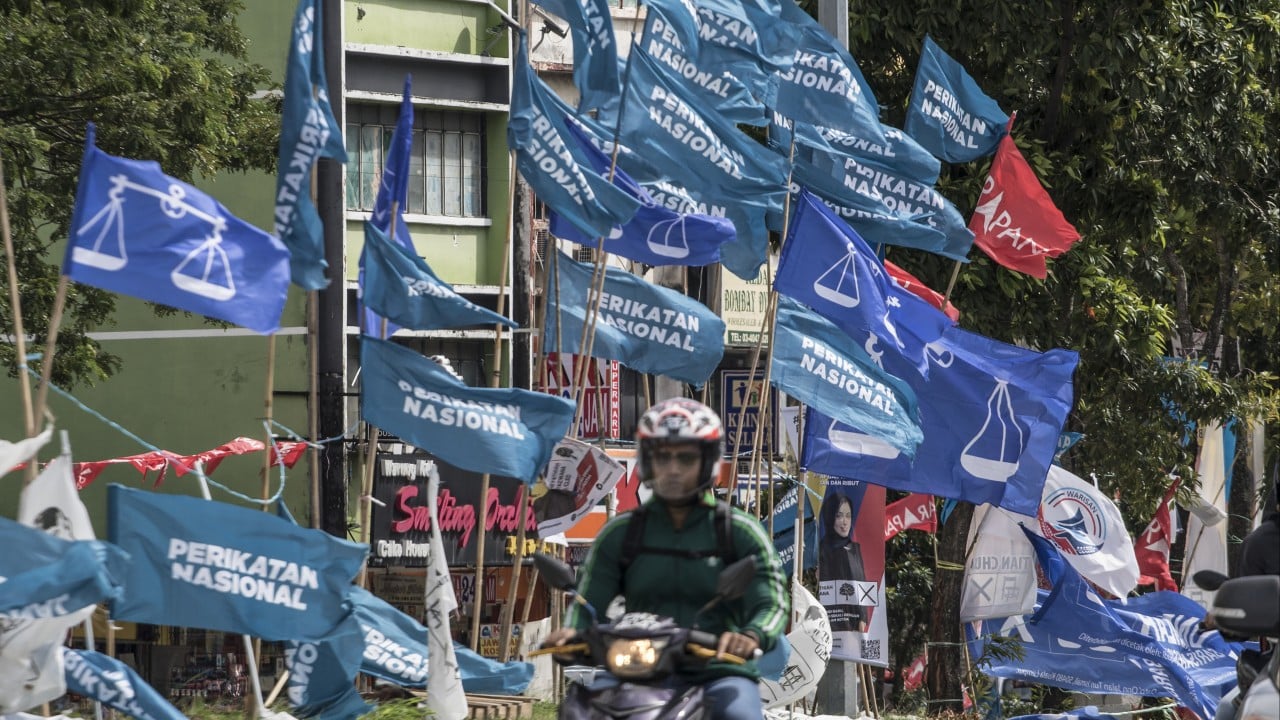
Malaysia's main opposition bloc, Perikatan Nasional, lost its legal registration in October 2026 after the Registrar of Societies canceled its status under the Societies Act 1966, yet Prime Minister Anwar Ibrahim gained remarkably little political relief from the blow. Deregistration stripped the coalition of its formal institutional shield just ahead of state elections, but fracturing loyalty within Anwar's own governing camp and a coordinated electoral understanding between rival Malay blocs prevented Putrajaya from turning a rival's legal crisis into a lasting mandate.
Watch closely what happened in the weeks around the cancellation order. A paper ruling erased a coalition logo on government registers, not the underlying grievances driving Malay voters away from Pakatan Harapan. You might also find this related article insightful: Inside the Gaza Militia Crisis Nobody Is Talking About.
How a Societies Act Ruling Became a Campaign Weapon
On paper, the deregistration of Perikatan Nasional read like a bureaucratic compliance audit. The Registrar of Societies issued a show-cause notice in late September 2026 under Subsection 13(2) of the Societies Act 1966, following an earlier suspension and complaints tied to disputes over internal governance and representation—specifically grievances raised by Bersatu regarding exclusion from a July 2026 Supreme Council meeting. By October 20, 2026, the Registrar confirmed that the coalition's explanation failed to refute the grounds for cancellation, invoking Subparagraph 13(1)(c)(iv) to cancel its registration.
In Malaysian politics, administrative power rarely sits in a vacuum. Opposition leaders immediately questioned the timing as state polling approached in Melaka, alleging selective pressure and government bias. Defenders of the regulator insisted the office enforced existing statutory rules after office-bearers failed to provide adequate justification. As highlighted in latest coverage by The Washington Post, the implications are widespread.
Both claims miss a deeper structural truth. Malaysia still regulates political parties and coalitions under the Societies Act 1966, a legacy law designed for clubs, associations, and civic groups rather than competitive parliamentary coalitions. Electoral watchdog Bersih renewed calls for a dedicated Political Parties Act precisely because leaving coalition survival and logo eligibility to an executive-linked registry invites suspicion whenever a ruling administration faces electoral headwinds.
A coalition can lose its registration file in Putrajaya and still command fierce loyalty on the ground if its rival's own coalition is bleeding credibility.
Even the court battle undercut any clean knockout blow for the ruling coalition. Perikatan Nasional component secretaries-general (excluding Bersatu) moved for judicial review, and the Kuala Lumpur High Court granted a stay pending review—allowing the coalition to contest the November 14, 2026 Melaka state election under its banner despite the Registrar's cancellation order and subsequent appeal.
Why Anwar's Gains Stayed Narrow
Anyone expecting deregistration to rescue Anwar Ibrahim's coalition misread the arithmetic of Malaysian state politics. By late 2026, Pakatan Harapan had already absorbed painful state setbacks in Johor and Negeri Sembilan, exposing strain across a unity arrangement assembled after the 2022 general election.
Fractures Inside the Unity Camp
Anwar has kept his federal administration standing through years of delicate bargaining, often prioritizing coalition survival over sweeping institutional reform. That balancing act carries steep costs. Reformist supporters have grown restless over stalled pledges and perceived compromises with former rivals, while Democratic Action Party secretary-general Anthony Loke moved to resign as transport minister in September 2026 to protest the conditional royal pardon and house arrest arrangement for former prime minister Najib Razak—a dispute that left leadership friction visible right into the November campaign season.
High-profile departures and internal rebukes weaken a ruling bloc's momentum far more than a rival's administrative headache helps it. Voters who feel betrayed on anti-corruption or reform promises rarely switch to Pakatan Harapan simply because Perikatan Nasional's paperwork ran into trouble with the Registrar of Societies.
The Pragmatic Pact Between Old Rivals
The sharpest check on Anwar's gains came from Barisan Nasional and Perikatan Nasional avoiding direct seat-splitting collisions in key state contests. Even as Perikatan Nasional wrestled with internal rifts between PAS and Bersatu earlier in 2026 and fought its deregistration battle in court, tactical non-aggression and seat coordination with Barisan Nasional concentrated the anti-Pakatan Harapan vote.
In the November 14, 2026 Melaka state election, Barisan Nasional captured 21 of the 28 seats to retain power with a two-thirds majority, while Perikatan Nasional edged up from two seats to three and Pakatan Harapan finished with four. Worse still for Anwar's camp, Pakatan Harapan's Melaka chief minister candidate and former chief minister Adly Zahari lost his Bukit Katil seat to a Perikatan Nasional challenger.
| Factor | Effect on Perikatan Nasional | Effect on Anwar and Pakatan Harapan |
|---|---|---|
| RoS deregistration order | Strips formal registry status and triggers legal distraction, though court stay preserves campaign use | Offers no durable vote transfer; fuels allegations of institutional overreach |
| Internal coalition friction | PAS–Bersatu tension and leadership churn complicate unified messaging | Reform fatigue and Najib pardon fallout erode core supporter enthusiasm |
| Electoral coordination with BN | Avoids split Malay tickets in state polls and keeps seats in play | Squeezes PH's seat count and costs high-profile state candidates |
The Economic Paradox Putrajaya Cannot Cash In
Here is the irony veteran observers in Kuala Lumpur know well. Macro stability does not automatically rescue a prime minister whose political coalition looks fragile.
Malaysia posted strong GDP expansion in 2025, saw the ringgit stage a multi-year recovery against the US dollar, and attracted record foreign direct investment in key hubs such as Johor. Those figures give Putrajaya credible talking points on trade positioning and investment inflows.
Yet household cost-of-living pressures, cultural and religious sensitivities, and skepticism toward backroom political deals weigh heavily in state and parliamentary contests. When voters judge a coalition's cohesion, spreadsheet growth rarely overrides doubts about who actually holds the reins.
Consider a hypothetical scenario where a mid-sized manufacturing supplier in Penang or Johor delays a capital expansion until after state and federal signals stabilize. Even if macroeconomic data looks healthy on paper, uncertainty over coalition durability and policy execution makes corporate boards cautious—a dynamic analysts note becomes sharper as Malaysia moves closer to the 16th general election window ahead of February 2028.
What Comes Next for the Rival Blocs
Deregistration did not kill Perikatan Nasional's street-level base, nor did it hand Anwar Ibrahim a decisive reset. Barisan Nasional chairman Ahmad Zahid Hamidi signaled right after the Melaka vote that cooperation with Perikatan Nasional was a tactical understanding for recent state polls rather than a locked-in national alliance for the next general election, keeping leverage squarely in Barisan Nasional's hands.
For Anwar, the lesson is unforgiving. Legal maneuvers against an embattled rival buy time at best; winning back disillusioned voters before the next general election requires visible unity at home and credible follow-through on the promises that brought his coalition to power.