The traditional urban commute functions on a deterministic model of congestion
The Logistical Economics of Personal Aviation for Air Traffic Controllers
travel, technology, business
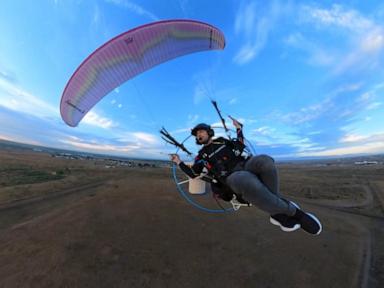
Air traffic control is governed by strict temporal constraints. A controller managing active sectors operates under zero-tolerance operational windows where tardiness introduces systemic tail risks across national airspace grids. This operational reality frames an unusual edge case in commuter logistics: aviation professionals who bypass traditional highway infrastructure by piloting their own aircraft directly to work.
Analyzing this commute model requires deconstructing three variables: the direct operating costs of light aviation versus ground transport depreciation, the time-recovery function of point-to-point flight paths over congested arterial roads, and the regulatory environment governing airport-adjacent employment facilities.
The Cost Function of General Aviation Commuting
The economic rationale for flying to work appears counterintuitive when evaluating nominal hourly operating costs. A standard single-engine aircraft, such as a Cessna 172 or Piper Cherokee, incurs direct operating expenses consisting of fuel burn, engine reserve funds, routine maintenance inspections, and hull insurance.
When evaluating these variables against a ground commute, the financial equation divides into two distinct cost structures. Ground commuting relies on vehicle depreciation, fuel, and the hidden economic loss of time spent stationary in traffic. Personal aviation shifts the cost profile from continuous wear on an automobile to fixed hourly maintenance schedules and fuel burn rates measured in gallons per hour.
The economic break-even point depends entirely on geographical distance and road network efficiency. For short distances under thirty miles, general aviation fails basic economic scrutiny due to pre-flight preparation times, engine warm-up protocols, and taxi delays. The cost per mile spikes prohibitively. However, when distance exceeds fifty miles across regions with severe geographic barriers or congested highway corridors, the cost curve flattens. The aircraft amortizes fixed overhead across a high-speed vector, neutralizing the variable time-loss penalties inherent to highway driving.
Time-Recovery Mechanics and Route Optimization
The primary advantage of piloting an aircraft to an air traffic facility is route linearity. Highway systems operate on grid networks burdened by bottleneck nodes, traffic signal latency, and volume-induced friction. These factors introduce high variance into commute duration, making arrival times probabilistic rather than deterministic.
Air travel operates on Euclidean vectors. A flight path from a residential airpark to an airport adjacent to a major terminal control center or en route facility bypasses ground-level chokepoints entirely.
Highway Commute: Origin -> Node Bottleneck -> Congestion Delay -> Facility (High Variance)
Aviation Commute: Origin Airpark -> Vector Line -> Facility Adjacent Airfield (Low Variance)
This structural shift reduces arrival variance. For an air traffic controller, predictability supersedes raw speed. Missing a highway window by twenty minutes due to an accident creates severe shift-handover friction. An aircraft flying a direct line maintains a predictable ground speed profile dictated by meteorological conditions rather than human driver behavior.
This predictability relies on operational contingencies. Low-instrument meteorological conditions introduce delays that ground transport avoids. A controller who flies to work must maintain an instrument rating and an aircraft equipped for flight under instrument flight rules. Without these capabilities, the aviation model collapses during inclement weather, forcing reliance on fallback ground transport and negating the primary scheduling advantage.
Infrastructure Alignment and Facility Siting
The structural viability of this commute model depends on the physical geography of aviation infrastructure relative to employment nodes. Major air traffic control facilities—such as Air Route Traffic Control Centers or large terminal radar approach control facilities—are frequently situated near or directly on municipal, county, or federal airports to facilitate administrative coordination and logistical support.
This co-location creates a structural alignment. The end point of the flight vector terminates within walking distance or a short airfield-side transfer from the workplace entrance. This minimizes the multi-modal friction that typically plagues mixed-mode commuting, where a traveler must transition from flight to car or public transit.
Conversely, facilities located in dense urban cores or constrained environments lack adjacent runways. In those instances, the aviation commute model fails entirely because the secondary ground transit leg from a distant general aviation airport back to the urban facility reintroduces the exact highway delays the flight was intended to bypass.
Operational Risk Management and Fatigue Mitigation
Commuting via light aircraft introduces cognitive and physiological demands that traditional driving does not. Operating an aircraft requires active spatial awareness, meteorological monitoring, and communication protocols within controlled airspace.
For a professional whose primary occupation involves high-density cognitive load and vigilance management, executing a flight immediately prior to a demanding shift introduces cumulative fatigue vectors. The transition from pilot-in-command decision-making to controller workload management requires cognitive recovery time that standard ground commutes do not demand.
Mitigating this risk requires strict standardization. Flight planning must be executed prior to the rest period, weather minimums must be codified without emotional override, and alternative ground transportation must remain pre-arranged to eliminate decision fatigue when meteorological conditions deteriorate below personal or regulatory thresholds.
The viability of flying to an air traffic control shift is not a generalized lifestyle choice or an easily scalable transit method. It is a specialized logistical calculation that requires specific geographical alignment, advanced pilot ratings, disciplined risk management, and an economic tolerance for the fixed overhead of general aviation. When these variables align, it transforms an unpredictable highway transit challenge into a controlled, linear vector. When they do not, it introduces unnecessary operational friction into a profession where precision is mandatory.