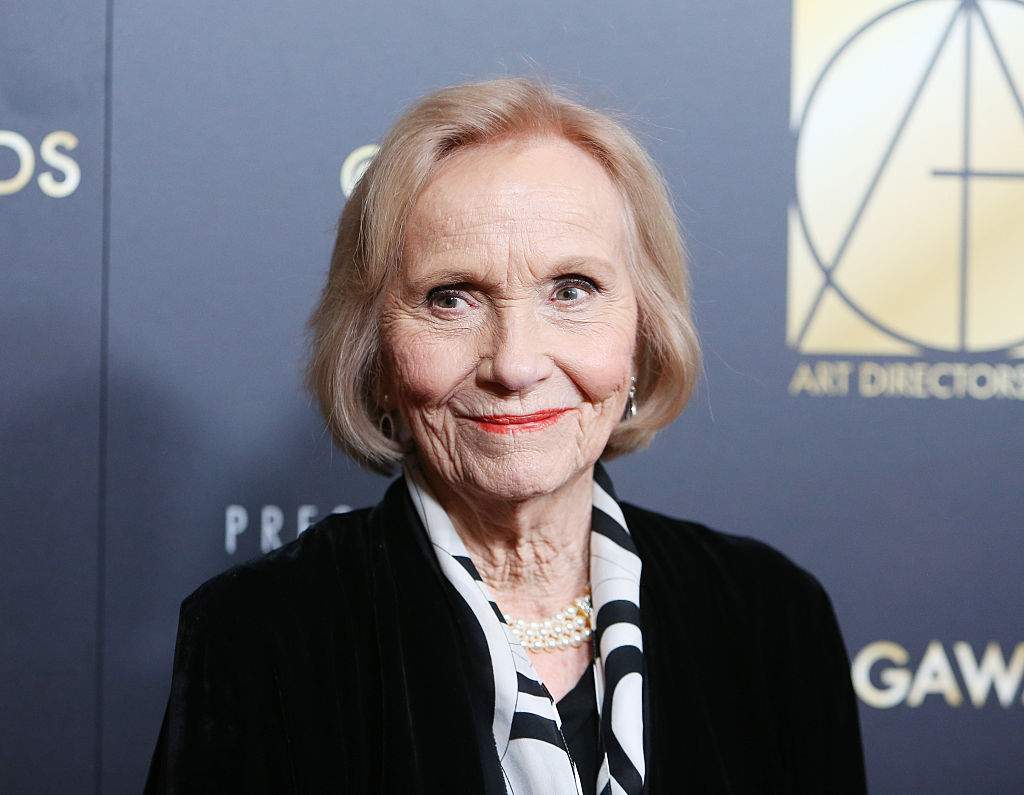
The death of Eva Marie Saint at 102 marks the termination of a rare institutional lineage within American cinema. In an industry governed by high attrition rates and rapid capital depreciation of human talent, Saint maintained professional relevance across eight distinct decades. Her career cannot be understood through the romanticized lens of classical Hollywood stardom; instead, it represents a masterclass in tactical career diversification, script selection discipline, and economic risk mitigation within a volatile studio ecosystem.
When evaluating centenarian creative longevity, media analysts frequently misattribute persistence to raw talent or favorable cultural timing. A rigorous structural breakdown reveals three foundational variables that dictated Saint's trajectory: the strategic avoidance of typecasting through genre arbitrage, the optimization of risk-adjusted returns across theatrical and television mediums, and an ironclad boundary between commercial output and private equity.
The Mechanics of Genre Arbitrage
In the late studio era, actors were locked into restrictive long-term contracts designed to maximize studio leverage and minimize talent optionality. Saint's early trajectory under contract systems could easily have mirrored the fate of contemporaries who were funneled into repetitive archetypes. She avoided this structural trap by executing a calculated form of genre arbitrage.
Her breakout role in On the Waterfront required an immediate pivot from her theatrical grounding under Lee Strasberg at the Actors Studio to a raw, naturalistic realism that challenged studio norms. Rather than capitalizing on this Academy Award win by chaining herself to melodramatic ingénue parts, she systematically shifted across disparate systemic verticals:
- The Psychological Thriller: Working within Alfred Hitchcock's high-tension narrative architecture in North by Northwest, demonstrating a capacity to carry subtext-heavy dialogue inside elaborate physical set pieces.
- The Epic Historical Drama: Anchoring large-scale productions like Exodus, navigating complex geopolitical narrative frameworks without losing character interiority.
- The Domestic Character Study: Transitioning smoothly into television and independent features that prioritized character study over box-office blockbuster metrics.
By refusing to anchor her market value to a single genre, she insulated herself against shifts in audience taste and studio production priorities. When the studio system collapsed in the late 1960s, performers reliant on single-genre pipelines experienced catastrophic career contraction. Saint’s diversified portfolio allowed her to absorb industry shocks and transition smoothly into the emerging television mini-series and streaming ecosystems decades later.
The Economic Efficiency of Script Selection
A critical failure mode for elite performers is the degradation of critical filtering over time. As actors accumulate cultural capital, they frequently succumb to vanity projects or high-budget commercial ventures with negative risk-adjusted returns on their personal brand.
Saint operated with a remarkably disciplined acceptance threshold. Her filmography is characterized by gaps that correlate with periods of low creative quality in major studio slates. Rather than maintaining constant market presence through low-tier projects—a strategy that triggers brand dilution—she optimized for project impact.
This selective scarcity created an artificial supply constraint around her talent. Producers understood that securing her involvement signaled narrative gravity and prestige, which in turn elevated the overall perceived value of the production. This is the inverse of the saturation strategy employed by modern digital influencers; it treats acting talent as a scarce financial asset whose yield is maximized through deliberate non-participation during unfavorable market cycles.
The Preservation of Institutional Memory
As the last surviving major star of the golden age of studio filmmaking, Saint occupied a unique node in cinematic history. Modern discourse often treats historical eras in film as isolated epochs separated by technological breakthroughs. However, continuity of practice is maintained through human capital.
Saint’s bridge across generations—from working alongside Marlon Brando and Cary Grant to collaborating with contemporary prestige directors—provided a direct conduit for traditional craft execution. The methodologies of the Group Theatre, characterized by psychological justification and rigorous textual analysis, were preserved and transmitted not through academic textbooks, but through active performance execution in high-stakes commercial environments.
This longevity offers a blueprint for modern talent management in the digital entertainment economy. Performers who treat their careers as finite sprints burn out within a decade. Those who apply structural diversification, maintain rigorous quality filters, and treat their brand assets with long-term macroeconomic perspective can sustain relevance across sweeping technological and cultural transformations.
The exit of a figure like Saint does not merely close a chapter of Hollywood history; it finalizes a case study in how to navigate systemic industry collapse and emerge with institutional integrity fully intact.