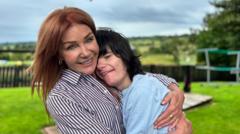
Sarah doesn't think about health policy when she wakes up. She thinks about the distance between her bed and the bathroom. It’s exactly twelve steps. On a good day, she makes it. On a bad day, those twelve steps feel like a marathon through deep sand, punctuated by the sharp, twisting heat of Crohn’s disease.
In British Columbia, Sarah’s reality is increasingly common, though rarely seen. She represents thousands of patients living in a province that prides itself on natural beauty and progressive values, yet sits at the very bottom of the list for something life-altering: access to new gastrointestinal medications.
When Health Canada approves a drug, they are essentially saying, "This is safe, and it works." But for a patient in Vancouver or Kelowna, that federal stamp of approval is a whisper in a storm. Before Sarah can actually get that medicine, the provincial government has to decide if they want to pay for it. In B.C., that decision-making process isn’t just slow. It’s glacial.
While patients in Ontario or Quebec might wait a few months to access a newly approved biologic—a sophisticated class of drug grown from living cells—British Columbians often wait years. The Canadian Gastrointestinal Society has been shouting into this void for a long time. Their message is simple: B.C. is failing the very people it is sworn to protect.
The Geography of Pain
Imagine two people, both diagnosed with Ulcerative Colitis on the same day. One lives in Ottawa. The other lives in Victoria.
The patient in Ottawa sees their specialist, tries the standard treatments, and when those fail, they are moved onto a new, highly effective medication that was approved by Health Canada eighteen months ago. They return to work. They attend their daughter’s soccer games. They live.
The patient in Victoria follows the same path, but when they reach the end of the standard treatments, they hit a wall. The new drug exists. It is sitting on shelves in other provinces. But the B.C. Ministry of Health hasn't finished its paperwork. They are "reviewing the data."
[Image of the human digestive system]
That review period isn't just a bureaucratic delay. It is a period of active physical deterioration. For someone with Inflammatory Bowel Disease (IBD), time is tissue. Every month spent waiting for a drug that works is a month where the body is attacking itself. Scarring happens. Internal damage becomes permanent. Eventually, the option for a pill or an injection disappears, replaced by the cold reality of a surgical suite and a life-changing resection.
The Math of Suffering
The argument for delay is almost always framed around fiscal responsibility. Drugs are expensive. Biologics can cost tens of thousands of dollars per year. The government argues that they need to ensure every dollar is spent wisely, negotiating with pharmaceutical companies to get the best possible price for the taxpayer.
But this is a hollow kind of math.
When we deny a patient a drug that could keep them in the workforce, we lose their tax revenue. When we force a patient to rely on emergency room visits because their condition has flared out of control, we incur massive hospital costs. A single surgical intervention for IBD can cost the province more than several years of the medication that might have prevented it.
We are saving pennies on the pharmacy budget while throwing gold bars out the window of the surgical ward.
Beyond the ledger, there is the human cost. Chronic illness is a thief. It steals the ability to plan a vacation, to commit to a full-time job, or to maintain a relationship. When the province drags its feet on drug approvals, it isn't just managing a budget. It is managing the limits of Sarah’s life. It is deciding that her ability to walk those twelve steps without fear is less important than a line item in a quarterly report.
The Invisible Queue
British Columbia currently has the longest wait times in the country for the reimbursement of new GI medicines. It’s a strange paradox. We have some of the best researchers and clinicians in the world working at UBC and through the provincial health authorities. We have the expertise. We just don't have the will to move the pen.
The Canadian Gastrointestinal Society points out that B.C. often waits for every other province to act first. We watch. We wait. We let others lead while our residents suffer. This "wait and see" approach might work for purchasing office supplies, but it is a cruel strategy for medical care.
Medical science is moving faster than ever before. We are in an era of precision medicine where we can target the specific pathways of inflammation with incredible accuracy. These aren't "me-too" drugs that offer marginal improvements. Many are breakthroughs that offer hope to people who have failed every other available therapy.
When the government ignores the pleas of the GI Society, they aren't just ignoring a group of doctors. They are ignoring the evidence. They are ignoring the screams of patients who are trapped in their own homes, tethered to a bathroom, waiting for a bureaucrat to finish a spreadsheet.
The Weight of the Silence
There is a specific kind of exhaustion that comes with being a patient in B.C. right now. It’s the exhaustion of knowing that help exists, but it’s stuck behind a velvet rope.
Sarah’s doctor told her about a new treatment six months ago. It’s a targeted therapy that could potentially put her into deep remission. It’s already being used in the United States, Europe, and even in Alberta. But in B.C., it remains "under review."
She checks the news. She looks for updates from patient advocacy groups. Mostly, she just waits. She adjusts her life to the rhythm of her flares. She learns to hide the grimace when she stands up. She masters the art of the "invisible illness," looking fine on the outside while her insides are a war zone.
The GI Society isn't asking for special treatment. They are asking for parity. They are asking that a Canadian citizen’s access to life-changing medicine shouldn't depend on which side of the Rockies they call home.
The silence from the Ministry of Health is a heavy thing. It’s a silence that suggests the status quo is acceptable. But if you talk to the people living with these diseases, you realize the status quo is a slow-motion disaster.
Sarah sits at her kitchen table, a glass of water and a handful of older, less effective pills in front of her. She looks out the window at the mountains, the beautiful, rugged landscape of British Columbia that she is currently too sick to explore. Somewhere in an office in Victoria, a file sits on a desk. It contains the names of drugs that could change her life.
She just needs someone to pick up the pen.
The twelve steps back to the bedroom feel longer tonight.