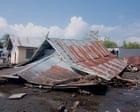
The earth does not warn you. It arrives without footsteps, without a knock, without the courtesy of a distant rumble that might give a mother time to scoop up her child or a shopkeeper time to dive beneath a sturdy wooden counter. It simply shatters. In less than ten seconds, the floor turns to liquid, concrete beams turn to dust, and the familiar geography of a neighborhood vanishes into an unrecognizable heap of grey rubble.
Consider what happens next.
Silence.
For a terrifying, suspended heartbeat, the world holds its breath. Then come the cries. Far beneath the fractured slabs of concrete and twisted corrugated iron, human voices pierce the dust-choked air. They call out for names they love. They tap rhythmically against hollow pipes, praying that someone, somewhere, is listening.
Indonesia knows this silence intimately. Straddling the volatile collision points of tectonic plates known as the Pacific Ring of Fire, the archipelago is a cradle of breathtaking beauty built upon an unyielding fault line. Earthquakes here are not anomalies; they are a periodic, violent reshaping of the earth. When a powerful quake strikes—such as the recent disaster that sent rescue teams scrambling across shattered provinces—the immediate struggle is not merely about pulling people from the debris. It is a desperate race against time, physics, and geography.
Imagine standing on a mound of pulverized brick where a bustling marketplace stood only hours prior. The air tastes of dry cement and raw fear. Heavy machinery sits idle on blocked roads because bridges have buckled into the rivers below, leaving rescue columns stranded miles away. In these critical opening hours, technology alone cannot save the day. Human hands, bruised and bleeding, become the primary tools of survival.
Villagers and neighbors are always the first responders. Long before professional search and rescue units can navigate landslide-blocked mountain passes or ferry heavy equipment across fractured bays, grandfathers, teenagers, and local shopkeepers are already digging. They use bare fingers, iron rebar, and sheer adrenaline to lift heavy debris. Every shattered tile moved is a gamble. Every shout into a dark cavity is an invitation to hope.
This is the hidden cost of living on an active seismic boundary. The vulnerability is structural, but the resilience is deeply cultural. Communities here have inherited generations of survival lore. They know how to read the aftershocks. They know the exact pitch of a child's cry muffled by concrete. Yet, courage cannot defy gravity forever.
As night falls over the disaster zones, the temperature plummets, and the shadows lengthen across the ruins, the logistical nightmare deepens. Power grids are down. Hospitals are overflowing onto lawns under makeshift tarpaulins. Medical supplies must be hand-carried through narrow paths carved by bulldozer blades. Specialized urban search and rescue teams, equipped with acoustic listening devices and thermal imaging cameras, step into the fray. These experts listen for the faint heartbeat of hope buried beneath tons of dead weight.
The statistics will eventually be written down. Magnitude numbers, casualty counts, displaced families, millions in structural damage. But numbers fail to capture the weight of a single lost afternoon, the sudden emptiness of a schoolroom, or the quiet dignity of a survivor clutching a framed photograph pulled from the dust.
Rescue operations will continue for days, stretching into weeks, shifting gradually from frantic extraction to recovery, and finally, to the agonizing process of rebuilding. Foundations will be poured once more. New homes will rise, perhaps slightly sturdier, perhaps built with a wary eye toward the horizon.
The earth will sleep for now. But deep beneath the surface, the ancient stone remains awake, shifting slowly, waiting for the future.


