The desert air of Nevada in September carries a specific kind of heat. It is dry, heavy, and clings to the skin long after the sun dips below the horizon. On the night of September 7, 1996, that heat was pierced by the sharp, rhythmic crack of a white Cadillac rolling up beside a silver BMW at a red light near the Las Vegas Strip.
Four shots.
Just four shots tore through the passenger door. In the back seat, twenty-five-year-old Tupac Shakur absorbed the force of bullets meant to silence a cultural earthquake. He lingered for six days on a hospital bed, a machine breathing for him, before his heart finally gave out on September 13.
Silence followed. Not the peaceful kind, but the suffocating quiet that settles when a giant falls and the world waits to see what rushes in to fill the vacuum.
For nearly thirty years, that silence held. Conspiracy theories bloomed in the void, fed by internet sleuths, documentary crews, and the bitter grief of millions who felt they had lost a prophet disguised as a rap star. People whispered names. People pointed fingers at shadowy corners of the music industry and street corners of Compton. The official investigation stuttered, stalled, and eventually collected dust in a municipal archive, categorized as an unsolved tragedy.
Time passed. Cassettes turned to CDs, CDs dissolved into algorithms, and the boy from the poetry notebooks became a bronze statue in memory, yet the question remained suspended in the amber of 1996: Who pulled the trigger?
Then came the year 2023.
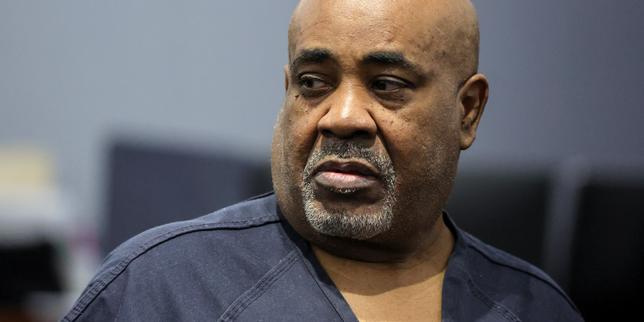
Consider what happens when a secret is kept too long in a tight circle. It rots. It demands an audience. Duane Davis, known on the streets as Keffe D, had spent years talking around the edges of the murder. In podcasts, in interviews, and eventually in a self-published memoir, he positioned himself as a central figure in the orchestration of that night. He was the uncle of Orlando Anderson, a man who had been involved in a casino altercation with Shakur hours before the shooting.
Law enforcement, long criticized for lethargy and institutional indifference, listened. Grand juries convened. Detectives who had been rookie cops when the bullets flew were now veterans eyeing retirement, unwilling to let the case slip into total oblivion.
A courtroom trial now looms over this decades-old wound.
To understand why this matters thirty years later, you have to look beyond the celebrity headlines and the gritty mythology of West Coast versus East Coast hip-hop. This is not merely about a famous dead man. It is about the terrifying durability of justice. It is about the terrifying reality that time does not heal all wounds; sometimes, it merely hardens them into monuments of accountability.
Imagine walking into a courtroom where the primary physical evidence is nearly three decades old. The ballistics reports are yellowed at the edges. The witnesses are older, their memories eroded by decades of survival, trauma, and street code. The city of Las Vegas has transformed completely, its neon skyline swallowing the memory of the intersection where history changed course.
Yet, the core human mechanics remain unchanged. Grief does not expire. Anger does not age out.
When we talk about unsolved murders in marginalized communities, a pattern emerges. They are treated with a tragic economy of attention. Cases open, chill, and freeze. The victims are reduced to cautionary tales, and their families are left to navigate the labyrinth of bureaucracy alone. The Shakur case, by virtue of his global icon status, bypassed some of this neglect, but it still suffered from the systemic inertia that plagues countless violent crimes across America.
The impending trial forces a reckoning. It asks a society obsessed with consuming art to confront the human cost of the violence that birthed it. Tupac was not just a symbol of resistance, an actor, or a chart-topping artist. He was a son whose mother, Afeni Shakur, spent her remaining years fighting to preserve his legacy while carrying the unbearable weight of his early grave. She did not live to see this courtroom drama unfold. She passed away in 2016, carrying her unanswered questions to the next world.
We live in an era that treats history as disposable content. We scroll past tragedy in seconds, seeking the next dopamine hit of outrage or entertainment. But some stories refuse to stay buried. They claw their way back to the surface, demanding that we look at them, not as legends, but as raw, bleeding reality.
The gavel is about to fall in a Nevada courtroom. Whether it brings legal closure or merely exposes more jagged edges of an imperfect system, the trial itself is a statement. It declares that twenty-five years of life, extinguished in a hail of bullets on a desert boulevard, cannot be quietly filed away into the archives of history without a final accounting.
The music still plays through headphones on crowded trains, gym speakers, and dusty car stereos around the globe. The voice is urgent, furious, and prophetic. And now, the men who tried to end that voice find themselves cornered not by conspiracy, but by the relentless, grinding wheels of time and truth.
_Steam_Key-GLOBAL_1.webp)