The earth remembers everything. We carve highways into its skin, plant vineyards along its sun-drenched hills, and build quiet stone cottages where children chase stray dogs through the tall grass. We call these places home. We forget that underneath the topsoil, past the roots of the olive trees and the dark, tangled veins of ancient roots, lies an archive of iron and fury left behind by our grandfathers.
Fire brings it all back to the surface.
When the summer heat turns the pine forests of Southern Europe into a tinderbox, the danger is rarely confined to the smoke on the horizon. As dry lightning strikes and wind whips through parched valleys, a secondary threat detonates in the dirt. Unexploded ordnance, buried deep during the great conflicts of the twentieth century, is waking up.
Consider the silence of a Mediterranean pine forest at dawn. The air smells of resin and ash. A forestry worker named Mateo steps carefully through the charred remains of a ridge in southern Italy, his heavy boots crunching against blackened pine needles. Only a week ago, a ferocious wildfire swept through this exact slope, devouring centuries-old trees and stripping the mountainside bare. Now, the ground is naked. The protective blanket of earth and root has vanished, baked away by temperatures that melted aluminum and turned topsoil into glass.
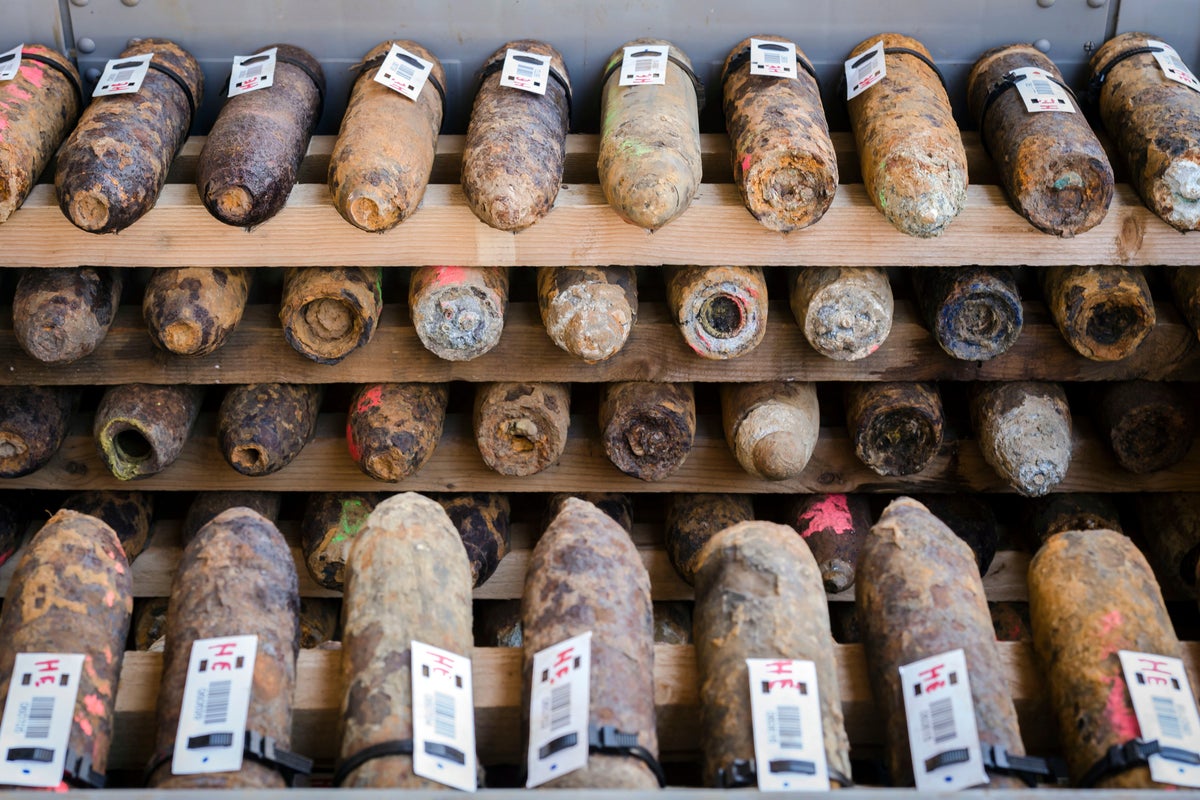
Mateo stops. He bends down, wiping a layer of gray dust from a cylindrical object half-exposed in the dirt. It is a British-made aerial bomb, dropped in the summer of 1943, waiting eighty years for the right combination of heat and exposure to remind the living of the dead.
This is not an isolated ghost story. Across France, Italy, Germany, and the Balkans, millions of tons of unexploded munitions from the First and Second World Wars remain unaccounted for. For decades, they lay dormant. Deeply buried beneath layers of humus, clay, and dense vegetation, they were insulated from the elements. Forest canopies kept the ground cool. Regular rainfall stabilized the soil. Nature, in its quiet, persistent way, tried to bury our violence.
Climate change has broken that truce.
As prolonged droughts bake the European continent and severe heatwaves shatter historical records, the soil undergoes mechanical stress. It cracks. It shrinks. And when a wildfire rips through the canopy—reaching temperatures that can exceed one thousand degrees Celsius—the physics of the underground change entirely.
To understand the hazard, look at how an unexploded artillery shell or mortar is constructed. Inside the thick steel casing sits a chemical payload, often composed of TNT or Amatol. Over decades underground, the metal rusts. Fuses become fragile. The explosive compound itself can crystallize, becoming hyper-sensitive to thermal shock.
When a wildfire rolls over a hidden munition, it does not gently warm the earth. It delivers a massive, rapid injection of heat. The metal casing expands unevenly. The unstable chemical compounds inside reach their auto-ignition threshold. Without warning, a stretch of forest designated as a national park or a popular hiking trail becomes a combat zone once more.
Firefighters face an impossible calculus. Imagine driving a heavy water tanker up a steep mountain track to save a village, knowing that the very ground beneath your tires might be mined by history. Across Greece and Spain in recent summers, emergency crews have reported hearing muffled, subterranean detonations as fires sweep through historical battlegrounds. Sometimes, it sounds like thunder rolling through a clear sky. Sometimes, it is a sharp, concussive crack that rattles the windows of nearby farmhouses miles away.
The risk extends far beyond the active blaze.
Once the flames are extinguished and the smoke clears, the landscape is left defenseless. Without root systems to anchor the earth, autumn rains trigger massive mudslides and erosion. These torrents wash tons of displaced sediment down the mountainsides, carrying unexploded bombs into riverbeds, agricultural fields, and the edges of suburban towns. A farmer plowing a vineyard in the spring might strike steel that was washed down from the heights three months prior during a November storm.
Governments and bomb disposal units are locked in an invisible, exhausting race against time and climate. EOD technicians walk the charred ridges with metal detectors and ground-penetrating radar, scanning the blackened earth before re-forestation efforts can even begin. They work in silence, acutely aware that a single misstep on a unstable slope could trigger a relic from an era they were born long after.
The tragedy of these buried munitions is their absolute indifference to time. They do not care that treaties were signed, that borders were redrawn, or that generations have grown up in peace. They wait for energy. They wait for the catalyst.
And as the summers grow hotter and the dry seasons stretch longer, the earth gives them what they are waiting for.
We walk upon a battlefield disguised as a paradise. Every footstep through a sunlit forest is a quiet gamble with history, a reminder that the scars of human conflict are never truly healed—they are merely covered over, waiting for the spark that brings them back to life.