Silence is a heavy thing. In a quiet apartment in America, that silence has lasted for over seven hundred days. It is not the peaceful quiet of a country retreat or the restful quiet of a Sunday morning. It is an anxious, jagged silence filled with unanswered emails, unanswered phone calls, and the relentless ticking of a clock that seems stuck in perpetual suspense.
Thousands of miles away, behind the guarded gates of a foreign detention facility in China, an American scientist sits in a room where the hours bleed together. His name is not just a statistic on a diplomatic ledger. He is a man who once looked through microscopes, charted data points, and believed that science was a language that crossed borders. Now, those borders are made of concrete, steel, and uncompromising geopolitical friction.
For two years, the world moved on. Markets fluctuated, elections were fought and won, and headlines shifted like sand in the wind. But inside that cell, time stopped.
The Weight of an Open Door
Diplomacy is often discussed in grand terms. We talk about summits, trade deficits, and strategic leverage. We forget that behind every major international standoff are human beings caught in the machinery of statecraft.
When a scientist travels abroad, they carry notebooks, curiosity, and the naive assumption that intellectual pursuit transcends political hostility. They assume the laboratory is a sanctuary. But sanctuaries can transform into cages overnight when the political winds shift.
Consider what happens when a government decides that a researcher is no longer a guest, but a bargaining chip. The transition is swift. One day you are presenting papers at a conference; the next, your passport is confiscated, your communications are monitored, and your freedom becomes a footnote in a larger power struggle.
Back home, the phone becomes an enemy. Every ring brings a jolt of hope followed by the crushing weight of another automated voice or a diplomatic spokesperson offering polite condolences and very little progress.
A Plea Across Oceans
In the middle of this protracted nightmare stands a wife. Her life has been cleaved neatly into two distinct parts: before the detention, and after.
She has spent countless hours navigating the labyrinth of international relations. She has learned the names of bureaucrats she never knew existed. She has drafted letters, appeared on news programs, and channeled every ounce of her remaining energy into a single, desperate objective: keeping her husband's name alive in the public consciousness.
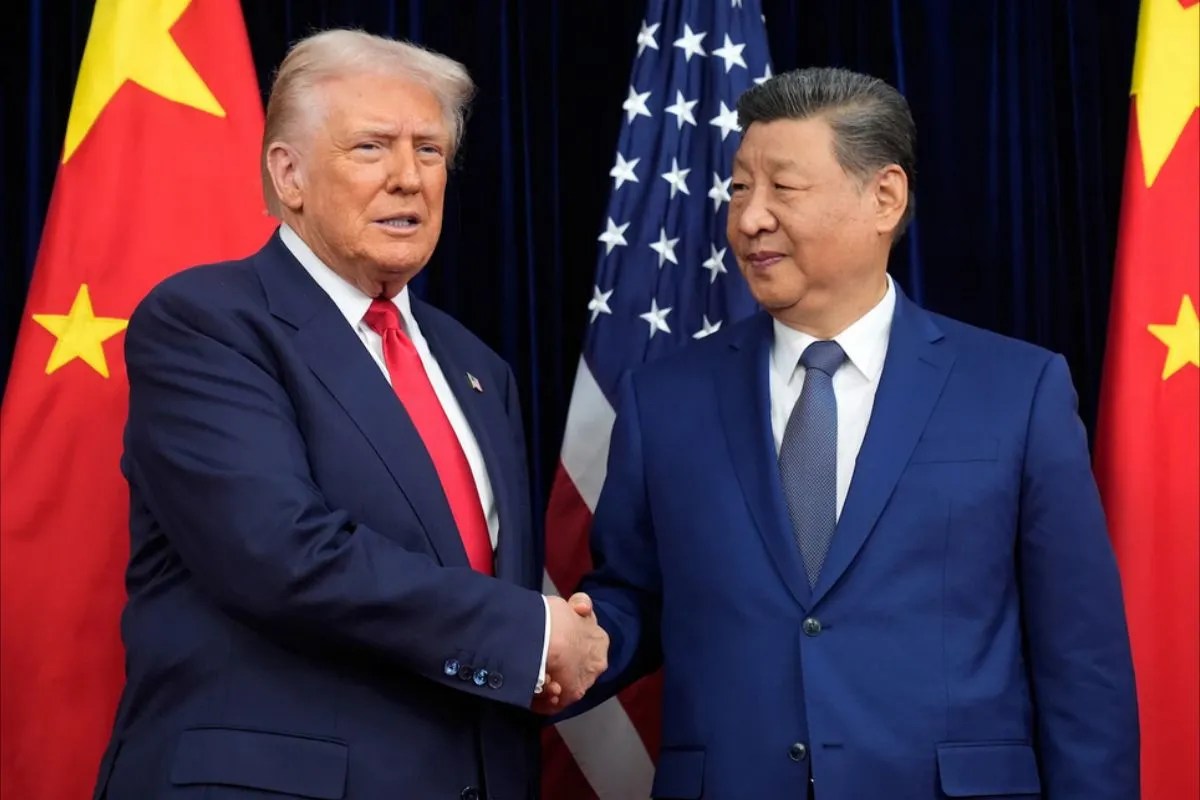
Now, the political landscape shifts again. New leaders take the oath of office in Washington. Campaign promises echo through the media channels. Among those voices is Donald Trump, whose relationship with Beijing has always been defined by high-stakes bargaining, tariffs, and direct confrontation.
The wife's strategy shifts with the political tides. She steps forward with a public appeal, turning her gaze directly toward the incoming administration. Her message is direct and unapologetic. She plans to ask the returning president to use his unique brand of personal diplomacy to secure her husband's release.
It is a gamble. In the realm of international high stakes, human appeals must compete with billions of dollars in trade negotiations, military posturing, and territorial disputes. Can a personal plea pierce the armor of a superpower? History suggests it is difficult, but not impossible. Personal relationships between heads of state have occasionally unlocked doors that years of quiet bureaucratic negotiation could not budge.
The Anatomy of Detained Diplomacy
Why do scientists become targets?
To understand this, we have to look past the rhetoric and examine how modern nations view information. In an era where technological supremacy dictates global power, scientific research is no longer viewed as purely altruistic. Data is strategic. Knowledge is security.
When cross-border collaborations sour, researchers working in sensitive fields often find themselves under a microscope. Vague accusations replace transparent legal proceedings. Bureaucracies move at a glacial pace, designed to exhaust families and silence advocates.
The psychological toll is immense. For the prisoner, isolation is a daily battle against despair. For the family left behind, the uncertainty is a slow burn. You cannot mourn, because they are not gone. You cannot celebrate, because they are not here. You exist in an agonizing suspension, waiting for a phone call that might finally change everything.
The Final Variable
As the world watches the diplomatic chessboard reset, the human cost remains the ultimate measure of any foreign policy strategy.
Power is measured in aircraft carriers, semiconductor chips, and economic growth rates. Yet, history often remembers leaders not just by their economic policies, but by how they handle the individual souls caught in the crossfire.
The letters are written. The cameras are rolling. The incoming administration inherits a chess game where one of the pieces is a human life, waiting in a quiet room across the ocean. The question hanging in the air is not whether governments have the power to intervene. They always do. The question is whether they will choose to use it before the silence becomes permanent.