The air inside a specialized government transport plane feels different than the recycled oxygen of a commercial jet. It is sterile, pressurized, and carries the faint scent of expensive leather and old security protocols. Somewhere over the Pacific, thousands of feet above a dark and indifferent ocean, a date was circled on a calendar. May. That is when the metal tires of Air Force One will hit the tarmac in Beijing, signaling a moment that is far more than a diplomatic checkbox.
White House officials confirmed the visit with the usual brevity of a press release. It was a skeleton of a story. But the marrow of the situation involves two men, two ideologies, and a global economy that holds its breath every time they occupy the same room.
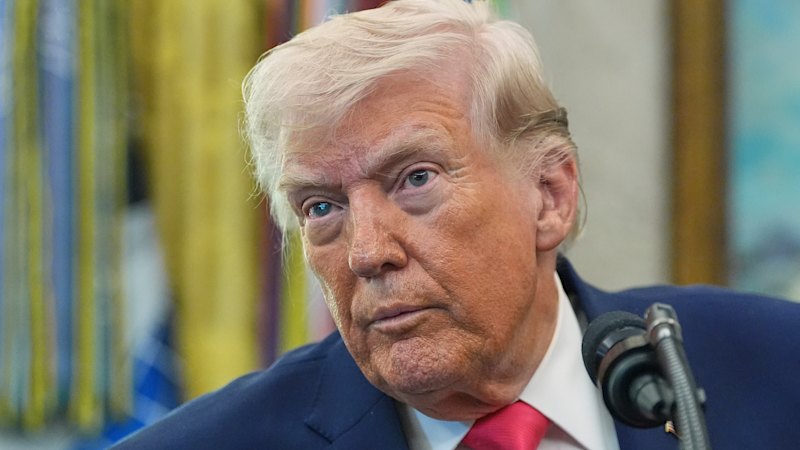
Donald Trump is headed back to China.
To understand why this matters, you have to look past the podiums. Think of a soy farmer in Iowa named Elias. Elias doesn't care about the high-gloss sheen of a state dinner or the choreographed handshakes in the Great Hall of the People. He cares about the price of a bushel. He cares about the grain elevators that sit full because of a sudden shift in trade winds. For him, this trip isn't a headline. It is a lifeline. Or a noose.
Every word whispered in a private meeting between Trump and Xi Jinping ripples outward. It travels from the gilded ceilings of Beijing to the muddy fields of the American Midwest and the neon-lit factories of Shenzhen. We often treat international relations like a game of Risk, moving plastic pieces across a board. In reality, it is a high-wire act performed without a net, and the performers are carrying the livelihoods of billions of people in their pockets.
The Art of the Table
Negotiation is a sensory experience. It is the sound of a pen clicking. It is the way a translator pauses to find the exact linguistic equivalent of a threat or a promise. When the American delegation arrives in May, they won't just be bringing folders full of trade data and intellectual property complaints. They are bringing a specific brand of American volatility that both fascinates and frustrates the Chinese leadership.
Beijing prefers the long game. They build in decades. They think in centuries. They are a slow-moving glacier, massive and seemingly unstoppable. Then comes Trump, a man who functions on the energy of the next five minutes. He is a lightning storm. When the glacier meets the storm, the atmosphere becomes electric.
There is a specific tension in these high-level summits that the public rarely sees. Imagine a room where the air conditioning is set slightly too low to keep everyone sharp. The chairs are heavy. The tea is hot. On one side, you have the representatives of an established superpower trying to navigate a shifting identity. On the other, a rising titan that believes its time has finally arrived.
The stakes aren't just about "trade." That word is too small. It’s too dry. We are talking about the soul of the 21st century. Will the world operate on a system of open markets and Western-aligned democratic values, or will the gravity shift toward a model of state-led capitalism and digital authoritarianism?
The Invisible Architect
If you walked through a shipyard in Ningbo today, you would see the physical manifestation of this conflict. Massive containers, stacked like colorful LEGO bricks, waiting to be sent across the sea. Each one represents a transaction, a job, and a piece of a complex puzzle that has been fractured over the last few years.
The "trade war" was never just about steel or aluminum. It was a struggle for the steering wheel of the future. By announcing a May visit, the White House is signaling a desire to perhaps put a hand back on that wheel together. But trust is a fragile currency. It’s easily spent and agonizingly difficult to earn back.
Consider the hypothetical case of Sarah, a software engineer in California. Her company relies on a supply chain that snakes through three different Chinese provinces. For her, a "successful" visit in May means her project doesn't get canceled because of a new round of tariffs. It means her mortgage stays paid. She is a silent stakeholder in a meeting she will never attend.
The complexity is staggering. How do you balance the need for cheap consumer goods with the necessity of national security? How do you demand fair play from a partner who views the rules of the game differently? These are the questions that will haunt the hallways of the West Wing as the departure date approaches.
There is a tendency to view these events as scripted theater. We see the photos of the leaders walking down a red carpet and assume the ending is already written. It isn't. Diplomacy at this level is a live performance. One wrong word, one perceived slight, or one "tough" tweet can derail months of quiet work by career diplomats who live in the shadows of the giants.
The Ghost in the Machine
We often forget that these leaders are human beings. They get tired. They get jet-lagged. They have egos that can be bruised and ambitions that can be exploited. When Trump lands in Beijing, he will be looking for a "win" he can bring back to a fractured domestic audience. Xi will be looking to project a sense of unshakable stability to a world that is increasingly wary of China's reach.
The friction between these two goals is where the danger lies.
If the May visit results in nothing but a vague joint statement and a few photo opportunities, the markets will notice. The silence will be deafening. Investors are like gazelles on a savannah; they are constantly sniffing the air for the scent of a predator. Uncertainty is the predator. A lack of concrete progress in May could signal a long, cold winter for global commerce.
But there is also the possibility of a breakthrough. Not a perfect one—those don't exist in politics—but a functional one. A "good enough" peace that allows the gears of the world to keep turning without grinding to a halt.
The Long Shadow of May
History doesn't happen in a vacuum. It happens in the small moments between the big ones. It happens when a staffer stays up until 3:00 AM refining a single paragraph of a trade agreement. It happens when a CEO decides to delay a factory opening until they see how the wind blows in Beijing.
The trip in May is a pivot point. We are standing on a ridge, looking down at two very different valleys. One leads toward a managed competition where both sides find a way to coexist despite deep-seated grievances. The other leads toward a decoupling that could tear the global economy apart at the seams.
It is easy to be cynical. It is easy to say that these meetings are just for show. But for the people whose lives are tethered to the outcome—the farmers, the engineers, the dockworkers, and the families trying to afford a new laptop—this is the only show that matters.
As the sun sets over the Forbidden City in May, two men will sit across from each other. They will be surrounded by history, by advisors, and by the crushing weight of expectation. They will talk about numbers and percentages, about borders and breakthroughs. But underneath the data, they will be deciding what kind of world the rest of us get to live in.
The engines of Air Force One will eventually cool on the tarmac. The red carpets will be rolled up and stored away. The headlines will move on to the next crisis, the next scandal, the next bright and shiny object. Yet the echoes of those conversations in Beijing will linger. They will be heard in the quiet of a farmhouse in the dark hours of the morning and felt in the vibration of a smartphone held in a hand halfway across the globe.
We are all passengers on that flight, whether we have a ticket or not.