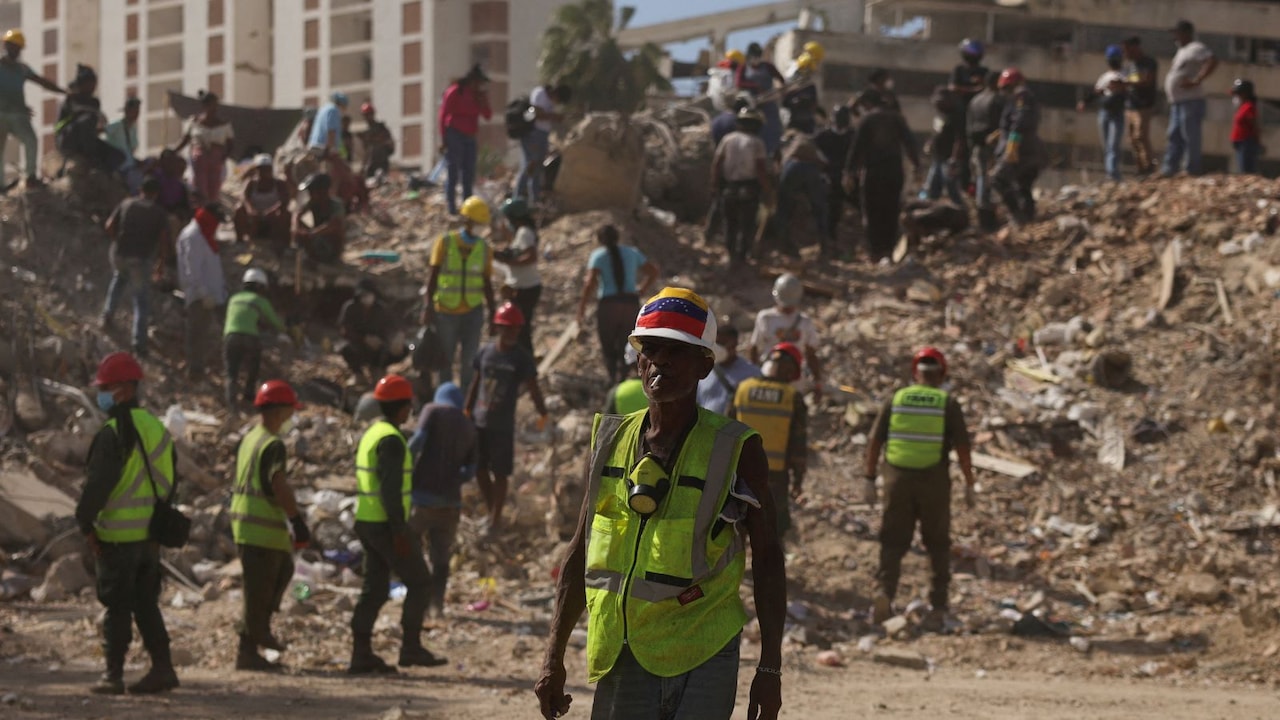
The media loves a supply chain tragedy. When a major earthquake rattles a vulnerable region, the post-mortem narrative writes itself: delayed cargo ships, bureaucratic red tape, and empty warehouse shelves. The conventional consensus blames missing tactical gear and late shipments for the breakdown in disaster relief.
It is a comfortable lie. It suggests that if we just buy more drones, ship more thermal cameras, and optimize the shipping manifests, we can engineering our way out of a catastrophe.
I spent a decade managing field logistics in high-risk zones, watching international agencies throw millions of dollars of sophisticated equipment at broken systems. The hard truth is that gear does not save lives during the first critical 72 hours of a disaster. Local capacity does. The failure in Venezuela was not a failure of procurement; it was a structural collapse of institutional trust and local autonomy.
The Fallacy of the High-Tech Rescue
Mainstream analysis points to the lack of specialized seismic listening devices and heavy extraction machinery as the primary bottleneck. This argument ignores the basic physics of disaster response.
During a major seismic event, the survival rate for trapped individuals drops exponentially every hour.
- First 6 Hours: Survival rate sits above 85% if extracted.
- 24 Hours: Survival rate plummets below 30%.
- 72 Hours: Survival rate hits single digits.
International aid shipments, even under flawless logistical conditions, rarely clear customs, clear blocked roads, and deploy to the field within the first 48 hours. By the time a cargo plane lands with advanced search-and-rescue equipment, the window for saving the vast majority of victims has closed.
Imagine a scenario where a community has ten units of advanced radar equipment sitting in a central port, but the local neighborhood civil defense teams have no fuel, no basic medical training, and no radio interoperability. The equipment is useless. The obsession with "missing gear" is a distraction from the reality that the first responders are always the people standing next to the rubble.
The Decentralization Directive
The real culprit in the breakdown of relief efforts is the hyper-centralization of command structures. When every decision—from dispatching an ambulance to distributing clean water—must flow through a centralized top-down authority, response times slow to a crawl.
In Venezuela, the insistence on routing international aid through tight, state-controlled bottleneck channels strangled the agility of local networks. True resilience requires radical decentralization.
The Fragility of Top-Down Relief
When a central command node goes offline due to power grid failure or communication blackouts, the entire response system paralyzes. Field operators wait for orders that never arrive, while stockpiles sit idle in centralized hubs.
The Power of Edge Operations
Resilient systems empower local communities, neighborhood associations, and regional fire departments with immediate decision-making authority. They do not wait for a shipment from overseas because they are trained and equipped with basic, low-tech tools to stabilize casualties immediately.
The fix isn't buying more high-tech toys for a central authority. The fix is distributing basic rescue capabilities down to the municipal level long before the ground ever shakes.
What the Pundits Get Wrong About Resource Scarcity
People frequently ask: "How can a nation respond to an earthquake without a modern fleet of emergency vehicles?"
The question itself is flawed. You do not need a fleet of specialized vehicles to clear a road; you need an organized community with chainsaws, basic crowbars, and a clear communication protocol. The most successful community-led extractions in modern history relied on rudimentary tools used effectively by organized groups, not advanced robotics imported from abroad.
The downside to this decentralized approach is obvious: it requires a high level of societal trust and continuous, unglamorous investment in human training. It lacks the flashy photo opportunities of a massive international aid delivery. It requires accepting that centralized control must be relinquished during a crisis—a reality that many institutional leaders find terrifying.
Stop looking at the shipping manifests to understand what went wrong. The failure occurred years before the earthquake hit, when local emergency structures were stripped of their autonomy and starved of basic operational training in favor of centralized promises.
If you want to survive the next inevitable disaster, stop funding the procurement wish lists of centralized bureaucracies. Build the capacity of the people on the ground floor. They are the only ones who will be there in time.


