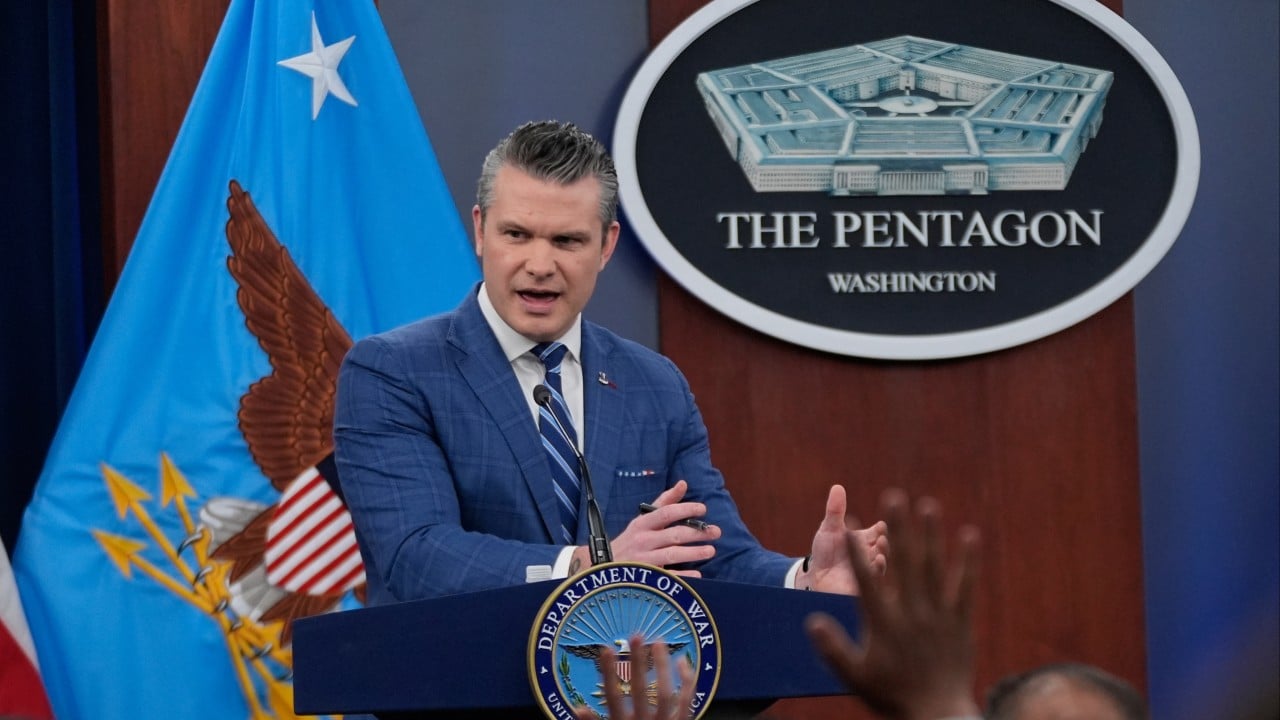
The air inside the Pentagon is different. It is heavy, filtered, and smells faintly of floor wax and old bureaucracy. For a journalist, that smell is the scent of a job. It represents the privilege of standing in a hallway where the most consequential decisions on the planet are made, notebook in hand, asking the questions that people in power would often rather not answer.
But for a group of veteran reporters, that air was suddenly cut off.
The Department of Defense didn't send a formal declaration of war against the press. Instead, they did something far more effective in the world of modern administration: they let the passes expire. They changed the rules in the dark. They turned the "World’s Largest Office Building" into a fortress that was no longer interested in being watched.
This isn't just a story about plastic ID badges or bureaucratic red tape. It is about who owns the truth when the military decides it has seen enough of the public's eyes.
The Silence of the Corridor
Imagine a reporter named Elias. He’s spent fifteen years covering the E-Ring. He knows which vending machines have the good coffee and which generals are likely to give a straight answer after a long briefing. One morning, he swipes his credential at the turnstile.
The light flashes red.
He tries again. Red.
The guard, who knew him by name last week, looks at him with a flat, institutional stare. "You’re not on the list, sir."
In 2023, the Pentagon overhauled its "press grounding" rules. They introduced new, stringent requirements for long-term "blue badge" credentials—the kind that allow reporters to move through the building without a military escort breathing down their necks. The new criteria were opaque. They required a certain number of days spent in the building, yet the building was increasingly difficult to enter. It was a classic Catch-22, designed by masters of the form.
The result was a ghost town in the press seating area. Outlets that had covered the building for decades suddenly found their veteran correspondents locked outside the gate, forced to apply for day passes like tourists.
A Judge Draws a Line in the Sand
When the government uses "security" or "administrative updates" as a shield to deflect scrutiny, the only recourse is a courtroom. That is where U.S. District Judge Ana Reyes stepped in.
The legal battle wasn't just about doors; it was about the First Amendment’s heartbeat. The Pentagon argued that it had the right to manage its own facilities. They claimed the new rules were about efficiency and modernization. It sounded reasonable on paper. Most bureaucratic overreach does.
Judge Reyes saw through the fog.
She observed that the Department of Defense had created a system that appeared arbitrary. It wasn't just that the rules were tough; it was that they were applied in a way that felt like a slow-motion purge. If you make it impossible for a journalist to do their job, you aren't just managing a building. You are managing the narrative of the nation.
The court's order was a thunderclap. It didn't just suggest the Pentagon play fair; it commanded the restoration of access. The judge recognized that a "credentialed reporter" is a specific role in a democracy. They are the proxy for the citizen who cannot spend their Tuesday afternoon at a 2:00 PM briefing on troop movements in the Pacific.
The Stakes You Can't See
Why does it matter if a reporter has to wait at the visitor center for an hour?
In the world of high-stakes reporting, time is the only currency that matters. If a story is breaking—if a missile has been fired or a budget has been leaked—a reporter with a blue badge can be at the relevant office in three minutes. A reporter waiting for a day pass might be stuck in a security line for three hours.
By the time they get in, the story has been shaped. The spin has been set. The opportunity to catch a source in the hallway for an unvarnished comment has vanished.
Consider the hypothetical case of a whistleblower. They aren't going to meet a journalist in a public cafeteria. They might, however, pass a note or share a look in a restricted hallway where they know a regular reporter is allowed to walk. When the Pentagon locks those doors, they aren't just stopping "the media." They are sealing the cracks where the light gets in.
The Human Cost of an Escorted Reality
There is a psychological shift that happens when a journalist is "escorted."
When you are forced to have a handler follow you to the restroom or stand by your side while you talk to a source, the nature of the conversation changes. It becomes a performance. The source speaks for the handler's ears, not for the public’s record.
The Pentagon's attempt to restrict these badges was an attempt to move toward an entirely escorted reality. It was an effort to ensure that every interaction a journalist had within those five-sided walls was monitored, scheduled, and sanitized.
The veterans of the press corps fought back because they knew what was being lost: the accidental truth. The best stories don't come from the podium at the front of the room. They come from the quiet conversations at the back of it. They come from seeing who is meeting with whom, and who looks worried when they think no one is watching.
The Fragility of the Win
The judge's order is a victory, but it is a fragile one. It serves as a reminder that the tension between a military and a free press is a permanent feature of our society, not a bug.
The Pentagon will likely try again. They will find new words for the same old barriers. They will cite different regulations, or invent new tiers of "access" that sound like upgrades but function like cages. The struggle for the "blue badge" is a microcosm of a much larger war over who gets to witness the exercise of power.
Power, by its very nature, seeks the dark. It seeks the comfort of the unobserved room.
As the reporters return to their desks in the Pentagon press pen, they do so with a renewed understanding of how quickly their seat can be taken away. They know that the badge around their neck isn't just a piece of plastic. It is a shield.
The corridors of the Pentagon are long, winding, and easy to get lost in. Without someone there to watch the turns, the people inside might eventually forget that the building belongs to the people outside.
The gates are open, for now.
The wax on the floors still smells the same, but the air feels a little bit thinner, a little more precious, and a lot harder to take for granted.


