The wind out here does not care about federal jurisdictions. It rushes down the jagged spines of the canyon, howling through creosote and mesquite, carrying dust across lines drawn on maps by men who never walked these ridges.
Stand long enough on a high overlook in the national park, and the horizon tricks you. You see only endless peaks, ancient volcanic rock, and the stark, breathtaking solitude of public lands meant for wandering. Then, a rattle of loose shale breaks the silence.
A border chief looks up from a topographic map, squinting against the glare. The plan is already inked. Steel bollards, concrete footings, heavy machinery crawling up switchbacks where only bighorn sheep used to tread.
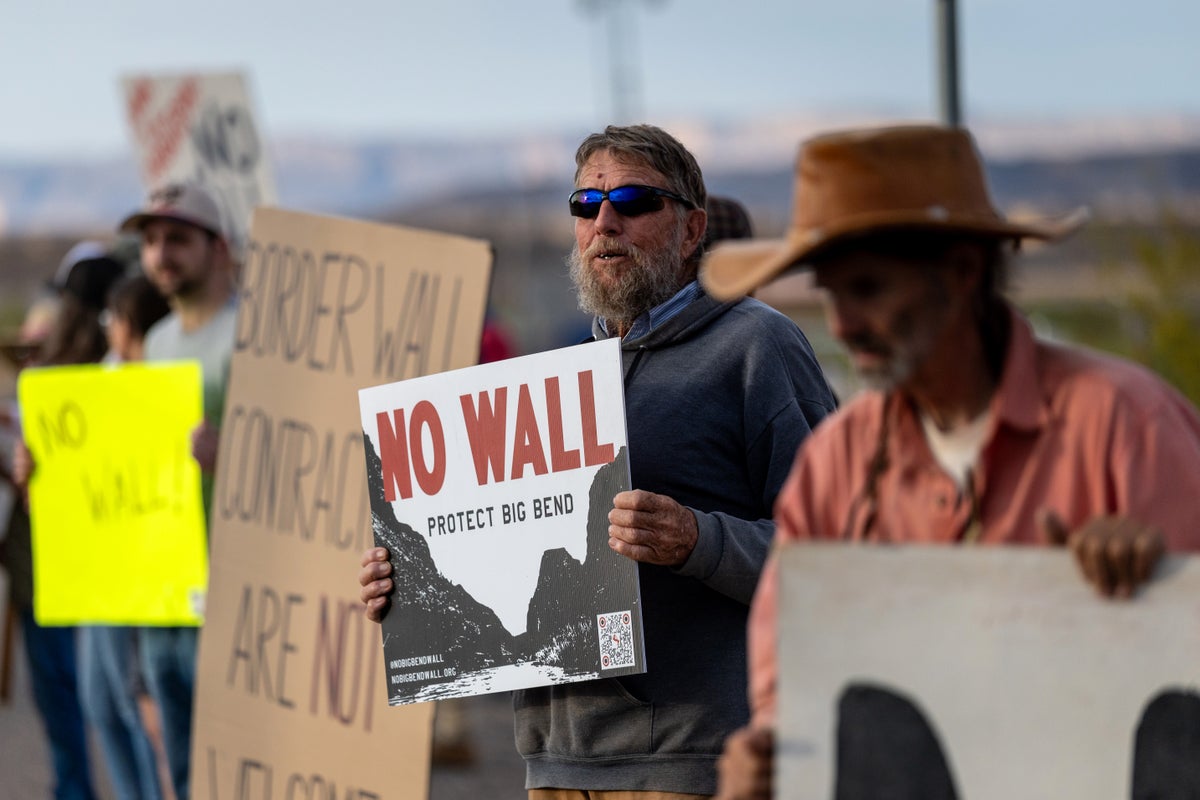
Locals are furious. They remember quiet trails, dark night skies unpolluted by stadium lighting, and a fragile desert ecosystem left to its own rhythm. They ask how a sanctuary meant for escape can become a fortress.
The official defense is blunt. We know the terrain.
That phrase hangs in the air like dust after a jeep passes. It is meant to reassure. It usually does the opposite.
To understand why this collision of conservation and containment feels so violently abrupt, you have to look closer at the ground beneath our boots. Parks are supposed to be the antidote to the border. They are wild places preserved for recreation, reflection, and the untamed spirit of the continent. When a federal agency proposes dropping physical barriers right through the middle of federally protected wilderness, the friction is immediate. It touches a nerve about what we value more: national security or natural heritage.
Consider what happens next.
Heavy equipment grinds against sandstone. Construction crews carve access roads into pristine hillsides. The scars left by bulldozers do not heal in a season; in the desert, a tire track carved today is still visible a decade from now.
Locals push back not out of stubbornness, but out of intimacy. When you live next to a park, you know every wash, every hidden spring, every shadowed canyon where mountain lions raise their young. You know the exact shade of gold the light hits the cliffs with at five o'clock in October. When outsiders arrive with heavy-duty blueprints and talk about operational necessity, it feels like an eviction notice served by people who just bought tickets to a place you called home.
Yet the border chief’s argument rests on a grim geometry. Smugglers and cartels do not respect park boundaries. They exploit the rugged topography, treating remote canyons as highways. Law enforcement officers face impossible odds across millions of acres of trackless wilderness.
We are caught in a cruel paradox. The very isolation that makes the park a treasure also makes it vulnerable.
Think of a hypothetical ranger named Tom, patrolling a thirty-mile stretch of desolate backcountry. Tom has spent twenty years learning how to read sign in the dirt. He knows when a footprint belongs to a lost hiker or a scout moving drugs. He knows that in the blistering heat of July, a wrong turn off a trail is a death sentence. Tom looks at the proposed barrier not as an abstract political symbol, but as a physical divider in a landscape that resists division.
He sighs, wiping sweat from his forehead. He knows the terrain, too. That is why he knows how hard it is to protect.
The pushback from nearby residents is rooted in a deep, protective instinct. They see the park as a living entity. Pouring concrete into a delicate desert wash feels like a violation. They worry about wildlife migration corridors being choked off, cutting pronghorn and desert bighorn off from crucial water sources. They worry about the aesthetic death of a place designed to make people feel small in the face of deep time.
The agency counters with mitigation strategies. They promise environmental assessments, wildlife gaps in the fencing, and remediation after construction finishes. But trust is hard to build when it has to be hauled in on the back of a flatbed truck.
History offers a sobering lens for this drama. Whenever a nation feels its borders are porous, it builds walls. It is an instinct as old as civilization. From Hadrian’s Wall to the earthen ramparts of ancient dynasties, governments turn to physical masonry to solve complex human tragedies.
It never fully works, and it always changes the landscape forever.
The debate is not merely logistical. It is philosophical. Are our national parks sanctuaries from the geopolitical anxieties of the world, or are they just another front line in an endless struggle for control?
When the sun dips below the horizon, painting the canyon walls in deep violet and burnt orange, the political talking points fade. The stars emerge, sharp and brilliant in a sky untainted by urban glare. For a few hours, the desert reclaims its silence.
The steel hasn't arrived yet. The heavy machinery sleeps in staging areas miles away.
Tomorrow, the arguments will resume. The permits will be reviewed, the lawsuits filed, the public comments shouted into microphones at tense town hall meetings.
A hawk circles silently above the wash, hunting in the fading light. It drops onto a ledge, indifferent to the maps, the arguments, and the looming walls. It knows the terrain better than anyone. And it has no vote.