There are moments in public life when the air in a room changes. It is not a dramatic shift. No alarms sound. No doors fly off their hinges. Instead, a quiet settles over the space, the kind that precedes a storm, and everyone present understands that a line has been drawn on the floor.
Step across it, and you belong to the machinery. Stay behind it, and you stand alone. You might also find this connected coverage insightful: The Forgotten Men in Foreign Cages.
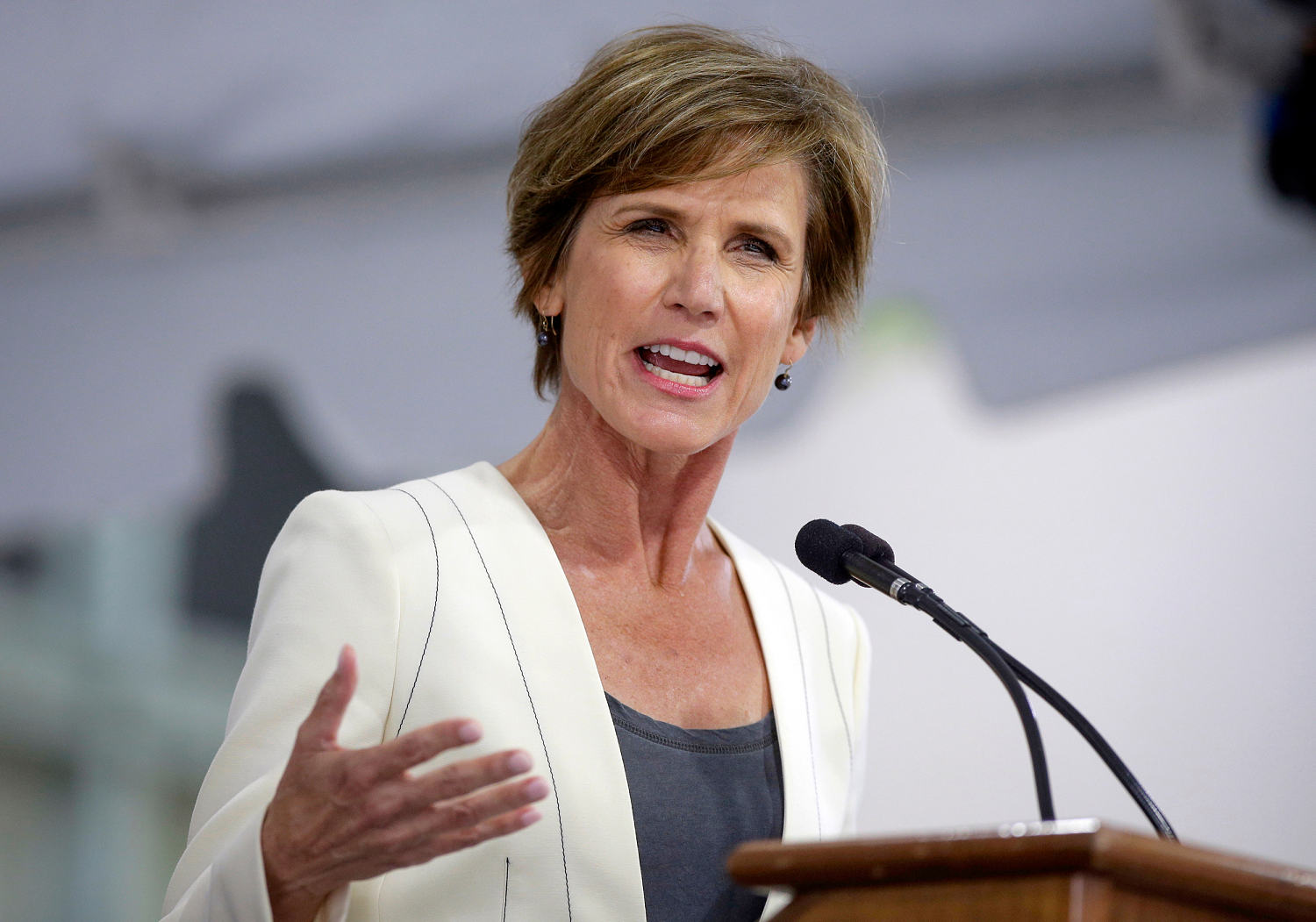
Sally Yates knows that room. She has stood in it before.
Years ago, in the high-stakes corridors of Washington, D.C., she found herself looking at a directive that strained the boundaries of constitutional integrity. As the acting Attorney General of the United States, she was handed an executive order she believed was unlawful. The pressure to nod, to smile, to fall in line with the steady, grinding gears of political expediency was immense. To say no is to invite a tempest. To say no is to risk your career, your reputation, and the quiet comfort of obscurity. As extensively documented in recent articles by BBC News, the implications are worth noting.
She said no.
That single syllable ended her tenure in the Department of Justice within hours, but it forged an enduring reputation. It marked her as someone who measures loyalty not by personal allegiance to power, but by fidelity to an oath.
Now, that same unwavering commitment to institutional integrity is being summoned to an entirely different arena. Not a federal courtroom or a congressional hearing room, but the leafy, sprawling campus of Cornell University.
Universities are supposed to be sanctuaries of thought. They are places where ideas clash, where young minds grapple with the heavy, jagged edges of history, science, and philosophy. But in recent years, these institutions have faced storms of a different kind. Pressure mounts from all sides—political donors, anxious parents, fierce student activists, and watchful trustees. The modern university campus has become a pressure cooker where free expression, institutional neutrality, and campus safety collide with explosive force.
When controversies erupt, the instinctive reaction of large institutions is often administrative self-preservation. Hire a friendly PR firm. Issue a carefully worded statement. Sweep the embers under the rug and hope the news cycle moves on by Tuesday.
Cornell chose a different path. They called in Sally Yates.
By appointing her to lead an independent review into recent campus controversies, the university signaled a profound departure from business as usual. This is not a polite internal committee designed to rubber-stamp the administration's preferred narrative. This is a rigorous, unyielding examination led by someone whose entire professional biography demonstrates a willingness to look authority in the eye and demand accountability.
Consider the invisible stakes of this investigation. It is not merely about a specific set of incidents or campus policies. It is about trust.
Trust is a fragile currency. It takes decades to accumulate through honest governance and transparent decision-making, and it can be squandered in a single afternoon of institutional cowardice. When students and faculty look at their leadership, they need to know that the rules apply equally to everyone. They need to know that truth matters more than public relations.
Yates steps into this role carrying the weight of her past. People expect iron. They expect fearlessness. But the human element of such a task is often overlooked. Behind the headlines and the formal titles is a person stepping into a community deeply divided, listening to painful stories, sifting through conflicting accounts, and attempting to find a clear, objective path forward.
There is a profound loneliness in being the arbiter of truth. When you investigate deeply, you rarely make friends. You uncover uncomfortable realities. You challenge cherished assumptions on both sides of an ideological divide. Yet, that is precisely why the role is necessary.
The campus is a microcosm of a broader societal struggle. Across the country, we are wrestling with how to maintain civil discourse in an era of hyper-polarization. We want simple answers to complex questions. We want our enemies proven wrong and our allies proven righteous.
Reality refuses to cooperate.
When the findings of this investigation are eventually released, they will not likely satisfy the partisans on either extreme. True independence rarely does. But that is the exact value of the enterprise. By placing the inquiry in the hands of someone who has already proven she cannot be bought, bullied, or easily swayed, Cornell is purchasing something invaluable: credibility.
History teaches us that institutions survive crises not by pretending they are flawless, but by confronting their failures with unflinching honesty. It requires courage to invite an independent investigator to comb through your decisions, examine your missteps, and lay bare the unvarnished facts.
The storm will pass. The news cycles will churn forward, chasing newer, shinier distractions. But the precedent set on this campus will linger.
Somewhere in a quiet office on that university campus, documents are being reviewed, interviews are being conducted, and difficult questions are being asked. The process is unglamorous. It involves late nights, cold coffee, and the meticulous parsing of words and policies.
Yet, in that quiet labor lies the entire mechanism of accountability.
Sally Yates sits at the center of it all, quietly holding the line she drew years ago, proving that integrity is not a theoretical concept to be debated in seminars, but a daily practice of choosing what is right over what is easy.