The Cold Room
A single office door slams shut in Port Moresby, and thousands of miles away, the humming of a power grid subtly shifts key.
Most people think of international relations as a sequence of handshake photos, red carpets, and carefully vetted press releases. It feels abstract. High-minded. Removed from the messy reality of everyday life. But geopolitics is rarely about ideology when you get down to the brass tacks. It is about energy. It is about keeping the lights on in a cramped apartment in Taipei while a monsoon rattles the windows.
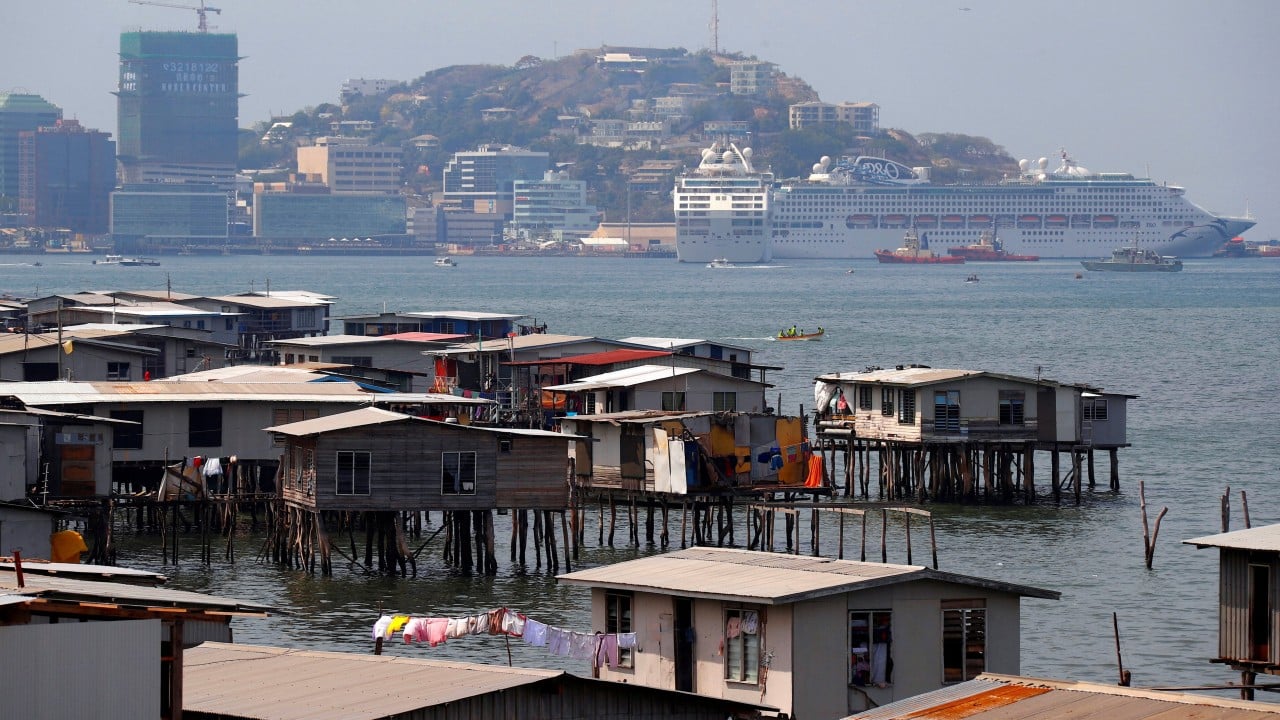
Recently, Papua New Guinea ordered the closure of Taiwan’s trade office in Port Moresby, bowing to long-standing diplomatic pressure from Beijing. It was a swift, bureaucratic maneuver. A piece of paper signed, a sign taken down from a building facade, a few diplomats packing up leather bound folders.
Then came the quiet retaliation.
Taiwan quietly announced it was reviewing its massive liquefied natural gas contracts with Papua New Guinea. Suddenly, a minor dispute over an office space morphed into a multi-billion-dollar game of economic chicken.
To understand why this matters, you have to stop looking at map borders and start looking at the meters on the side of human homes.
What Liquefied Natural Gas Actually Means
Energy is abstract until you lack it.
Consider a small bakery in a bustling district of Taiwan. The baker does not care about the fine print of bilateral trade treaties. She cares that when she turns the dial on her commercial ovens at four in the morning, the flame ignites with a reassuring, quiet roar. That flame depends on a supply chain so fragile, so impossibly complex, that a single political hiccup can break it.
Natural gas is a ghost. To move it across vast oceans, human engineering has to perform a kind of physical magic trick: cooling the gas to minus 260 degrees Fahrenheit. At that bone-chilling temperature, the gas condenses into a clear, non-toxic liquid, shrinking its volume six hundred times.
It gets loaded onto massive, double-hulled vessels that look like steel leviathans floating across the Pacific. These ships are floating insurance policies for island nations.
Taiwan is an island with virtually no domestic fossil fuel reserves. It imports roughly 97 percent of its energy needs. Imagine living in a house where you don’t own a single window, door, or water pipe, relying entirely on delivery trucks that must arrive every few hours without fail. That is Taiwan’s reality every single day.
When Taiwan buys gas from Papua New Guinea, it isn't just buying fuel. It is buying security. It is buying time.
The Pressure Chamber
Diplomacy in the Pacific operates like a pressure cooker.
For decades, Beijing has systematically persuaded nations around the globe to sever official and unofficial ties with Taiwan. Papua New Guinea, a nation rich in natural resources but desperately in need of infrastructure investment, sits right in the middle of this geopolitical tug-of-war.
When the authorities in Port Moresby forced the Taiwanese trade office to close its doors, they likely viewed it as a low-cost diplomatic concession. A simple trade-off to align more closely with a massive global economic superpower.
They forgot about the ships.
Liquefied natural gas contracts are not like buying stock on an app. They are multi-year, highly complex financial anchors that bind nations together for decades. When Taiwan signaled that its state-owned energy company, CPC Corp, would review its long-term LNG imports from Papua New Guinea, the financial earth shifted beneath Port Moresby's feet.
Money talks, but energy shouts.
If Taiwan pulls its contracts, Papua New Guinea loses a stable, high-paying customer for its vast resource reserves. On the flip side, Taiwan faces the daunting challenge of finding alternative suppliers in an already volatile global market.
Neither side wins. Everyone pays more. The cost trickles down from state treasuries to corporate ledgers, down to small business invoices, and finally onto the monthly utility bills of ordinary citizens who have no idea where Port Moresby even is on a map.
The Human Equation
Let’s strip away the corporate speak and look at the actual human stakes.
If you are a policy planner in Taipei, your nightmare isn't just a physical blockade or a foreign invasion. Your nightmare is a silent blackout. An industrial grid failure that halts the semiconductor fabs driving the global economy. A freeze that leaves millions without heating in the dead of winter.
Energy security is human security.
When diplomatic offices close, the informal human channels that prevent catastrophic misunderstandings evaporate. Trade offices are not just administrative hubs; they are shock absorbers. They are the places where bureaucrats grab coffee, settle small disputes, and build the invisible social capital that keeps trade flowing smoothly when politics get rough.
Removing that shock absorber means every interaction becomes rigid. Every policy dispute becomes an ultimatum.
Taiwan's response to the office closure was swift because an island state cannot afford to appear defenseless. If an economic partner can shut down your diplomatic footprint without consequence, what stops them from weaponizing your energy supply next?
It is a calculation driven by survival instinct.
The Ripple Effect Across the Pacific
This isn't just a localized spat between two Pacific entities. It is a preview of how international trade will function in an increasingly polarized world.
For years, global supply chains operated under a simple rule: buy from whoever sells it cheapest. Efficiency was king. Ideology took a back seat to the bottom line.
That era is dead.
Today, supply chains are being rewritten around trust, alignment, and political leverage. We are watching the emergence of "friend-shoring"—the practice of trading only with nations that share your geopolitical outlook.
When trade agreements are torn up over political office closures, every board room in the region takes notes. Japanese energy buyers look at the Papua New Guinea situation and re-evaluate their own risk exposure. European trade representatives adjust their long-term forecasts.
A single closed door in a tropical capital creates waves that wash over international markets for years.
The Unseen Price Tag
It is easy to read headlines about trade office closures and LNG contract reviews with a sense of detached indifference. It sounds like high-level bureaucratic posturing.
It isn't.
It is the sound of the modern world becoming slightly more precarious, slightly more expensive, and far more unpredictable. Every time political posturing threatens a critical supply route, the invisible tax on modern life goes up.
The ship carrying minus-260-degree liquid fuel across the Pacific does not care about foreign office press statements. It requires clear coordinates, a guaranteed port, and a signed contract.
When those things vanish, the ship turns around. And somewhere in the Pacific, a switch is flipped, a room goes dark, and the true cost of political pride becomes impossible to ignore.