The Ghost of a Tuesday Afternoon
Imagine a city held in the throat of a fever. It is May 9th, 2023. The air is thick, not just with the pre-monsoon heat of Pakistan, but with a static that makes the hair on your arms stand up. Smoke rises from places it shouldn't—from the gates of military residences, from the charred remains of public buses, from the very idea of civil order.
To an outsider, it looked like a riot. To those living through it, it felt like the ground was liquefying. I remember the sound most of all. It wasn't just shouting; it was the rhythmic, hollow thud of stones against metal and the crackle of fires that seemed to be burning more than just wood and gasoline. They were burning a social contract that had held for decades.
When the sun set that day, the country was different. The scars weren't just on the buildings. They were in the conversations at dinner tables where families realized they no longer agreed on what a hero looked like.
The Decree from the Desk of Power
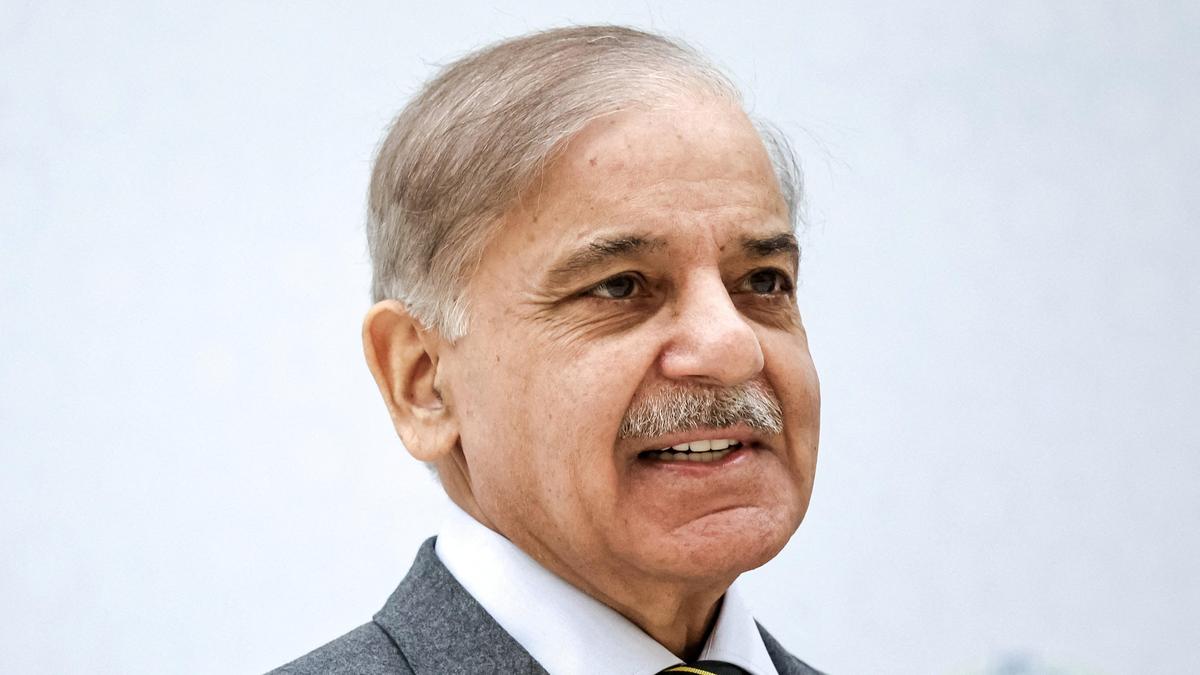
Fast forward to the present. Prime Minister Shehbaz Sharif stands at a podium. The atmosphere is sterile, professional, and heavy with the weight of statecraft. He isn't just giving a speech; he is attempting to reach back into the past and stitch a wound shut with the needle of policy.
The announcement is clear: May 10th will now be known as Marka-e-Haq Day.
In the dry language of official gazettes, this is an annual observance. In the reality of the streets, it is an attempt to reclaim the narrative of what happened during those forty-eight hours of chaos. The Prime Minister’s decree serves as a line in the sand. By designating May 10th as the "Battle for Truth," the government is shifting the focus away from the smoke and the fury of the previous day’s arrests and toward a defense of the state's integrity.
But why does a date on a calendar matter to a shopkeeper in Lahore or a student in Karachi?
The Anatomy of a Memory
National holidays are often thought of as mere breaks from work. We treat them as pauses. However, for a nation as young and volatile as Pakistan, a holiday is a weapon of memory.
Consider a hypothetical citizen named Salman. Salman works in a bank. He doesn't care much for high-level politics, but on May 9th, he had to abandon his car and walk four miles through tear gas because the roads were blocked by men with sticks. For Salman, May 10th wasn't a "battle for truth" yet. It was the day he went back to see if his car was still there. It was the day he realized that the institutions he took for granted—the safety of the streets, the sanctity of the monuments—were fragile.
By institutionalizing Marka-e-Haq Day, the government is telling Salman—and millions like him—that his fear that day was recognized. They are attempting to transform a moment of national trauma into a moment of national resolve. It is a psychological pivot.
The state argues that May 9th represented a "black day" of desecration, while May 10th represents the beginning of the restoration of the "Haq" or Truth. This isn't just about politics; it’s about the very survival of the state’s identity. When protesters breached the gates of the Corps Commander’s house in Lahore, they didn't just break a fence. They broke a taboo. The government’s response, through this new day of observance, is to reinforce that taboo with iron-clad ceremony.
The Invisible Stakes of a Name
Words have weight. "Marka" implies a decisive battle, a struggle of epic proportions. "Haq" implies a divine or absolute truth.
When you combine them, you aren't just talking about a riot. You are talking about a crusade. The Prime Minister is signaling that the events surrounding the fallout of former PM Imran Khan’s arrest were not a spontaneous outburst of democratic frustration, but a coordinated assault on the foundations of the country.
The stakes are invisible because they live in the psyche of the public. If the government fails to define what happened, the vacuum will be filled by the stories told on TikTok, encrypted WhatsApp groups, and whispered rumors in tea shops. In the digital age, a state that does not narrate its own history is a state that invites its own dismantling.
The Cost of Forgetting
There is a danger in these types of designations. Critics argue that by focusing so heavily on a single date, the government risks deepening the divide. If one side sees May 10th as a day of truth, and the other side sees it as a day of suppression, the calendar itself becomes a battlefield.
But the Prime Minister’s logic suggests a different path. During his address, he emphasized that this day is meant to honor the martyrs and the symbols of the nation that were insulted. It is an appeal to the heart. He is betting on the idea that, despite their political differences, the majority of Pakistanis still hold a deep, ancestral reverence for their "Shaheed" (martyrs) and their national icons.
He is banking on the "Silent Majority."
These are the people who watched the news in horror, not because they supported one politician over another, but because they saw their country’s dignity being dragged through the mud. For them, Marka-e-Haq Day is an invitation to exhale. It is a formal recognition that the chaos was not the new normal.
A Ritual of Resilience
What does this look like in practice?
It means school assemblies where children are taught about the sanctity of the state. It means television specials that highlight the restraint of the security forces. It means a concerted effort to ensure that the images of burning buildings are replaced by images of the national flag being hoisted back to its rightful place.
History is often written by the victors, but in the modern era, history is written by those who stay consistent. By making this an annual event, the government is ensuring that every year, the conversation returns to this specific interpretation of events. They are building a fortress of tradition around a very recent wound.
It is a bold move. It is also a desperate one.
When a country is facing an economic crisis that feels like a slow-motion wreck, when inflation makes the simple act of buying flour a feat of heroism, the government needs more than just numbers to keep people together. It needs a story. It needs a reason for people to believe that the "State" is something worth protecting, even when it is struggling to provide.
The Weight of the Crown
Shehbaz Sharif is a man often defined by his pragmatism, a builder of roads and bridges. But with the announcement of Marka-e-Haq Day, he is attempting to build something much more difficult: a collective memory.
He is trying to convince a fractured public that there is a "Truth" that transcends party lines. He is asking the people to look at the ashes of May 9th and see not a collapse, but a catalyst for a stronger, more disciplined Pakistan.
The success of this day won't be measured by the number of flags flown or the length of the speeches given. It will be measured in the quiet moments of the citizens. Will they see it as a meaningful tribute, or as a political footnote?
The Long Road to May 10th
The journey from the fire to the holiday is a short one in terms of time, but a long one in terms of the national soul.
The air in Pakistan remains thin. The tension hasn't fully dissipated. But as the first official Marka-e-Haq Day approaches, there is a sense that the country is trying to find its footing. It is a nation standing in front of a mirror, trying to decide which version of its face it wants to show the world.
The fires have been out for a long time. The glass has been swept up. The walls have been repainted. But under the fresh coat of paint, the heat of that Tuesday afternoon still lingers, waiting to see if a name on a calendar is enough to turn a tragedy into a triumph.
The pen of the Prime Minister has moved. Now, the people will decide if the ink holds.