Two words. That is all it took to send a shockwave through the sterile, fluorescent-lit corridors of Washington and the sun-drenched, anxiety-ridden campuses of Silicon Valley.
"Mistake corrected."
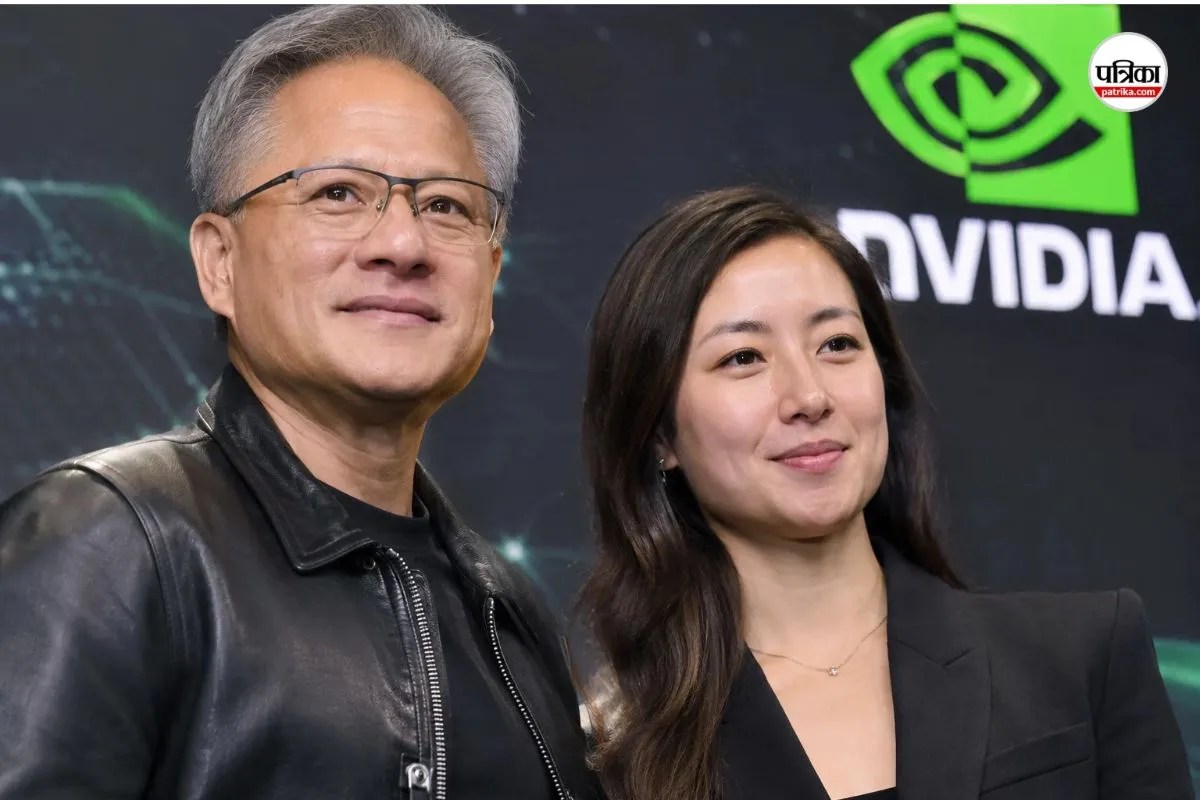
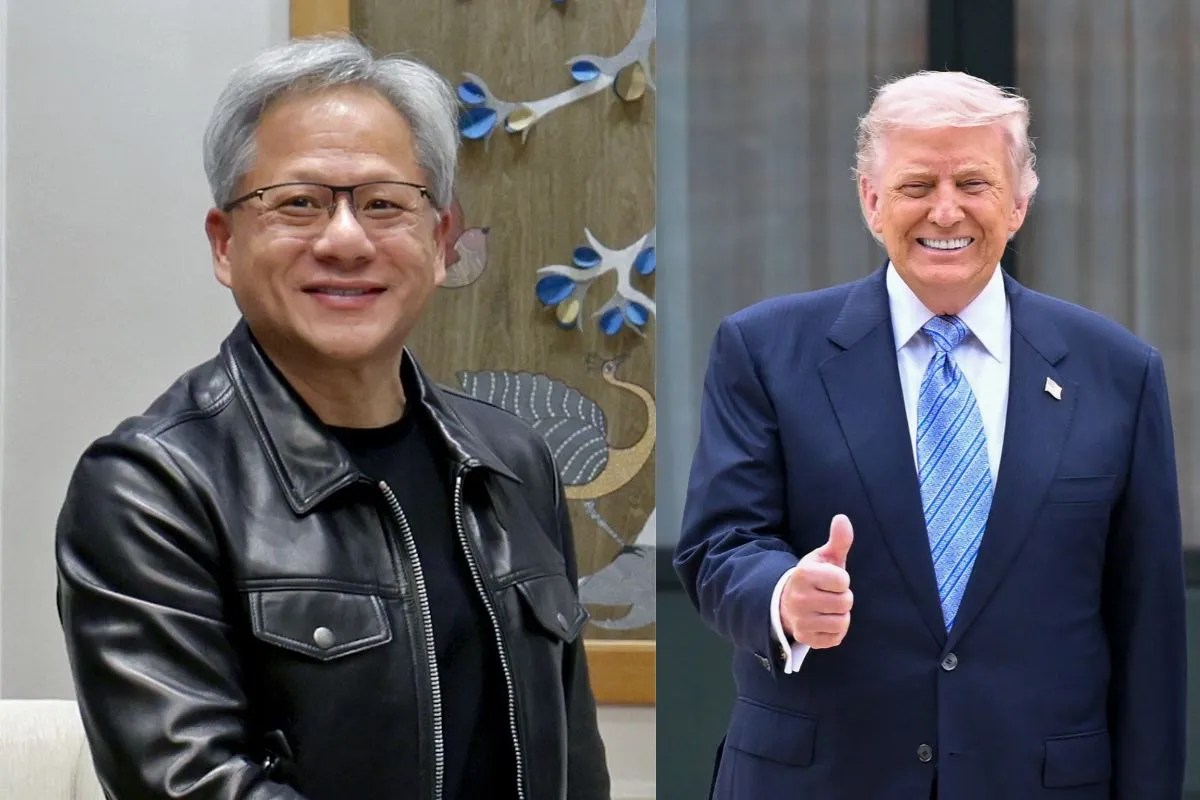
Elon Musk typed those sixteen characters—counting the period and the space—into the digital void of X, and suddenly, the abstract gears of global semiconductor policy ground against one another with a deafening screech. He was reacting to the news that Jensen Huang, the leather-jacket-clad architect of the modern artificial intelligence boom, had stepped back into a defining leadership role at NVIDIA—or rather, returned to the operational helm of a critical venture that observers feared had slipped away from his direct grasp.
Wait. Let’s pause and look at the chessboard before the pieces blur.
In the dry, sanitized language of wire reports, the story reads like a routine corporate shuffle mixed with predictable partisan bickering. Musk applauds Huang’s return to NVIDIA’s center of gravity. Meanwhile, Democratic lawmakers on Capitol Hill raise sharp, skeptical eyebrows, warning of unchecked consolidation, regulatory blind spots, and the dangerous concentration of compute power in the hands of a few billionaire titans.
If you read that version of the story, you might nod, sip your coffee, and scroll past. You would miss the quiet terror humming beneath the floorboards of the global economy. You would miss the fact that this isn't a story about boardroom titles or Washington talking points. It is a story about who owns the oxygen of the twenty-first century.
The Weight of a Single Wafer
To understand why a two-word endorsement from the world’s richest man sparked immediate pushback from the halls of Congress, you have to step away from the stock tickers. Put yourself in the shoes of a hypothetical founder—let’s call her Elena—sitting in a cramped, overheated office in Austin, Texas, at two in the morning.
Elena isn't trying to build a sentient god. She is trying to train a diagnostic model that can spot early-stage pancreatic cancer on blurry rural clinic scans. To make her math work, she needs compute. Specifically, she needs clusters of high-end graphics processing units—the silicon brains that NVIDIA designs and dominates with a near-monopolistic grip exceeding eighty percent of the market.
For Elena, the price of a single H100 or Blackwell chip isn't an abstract line item on a Wall Street analyst’s spreadsheet. It is the difference between keeping her three engineers on payroll or shutting down her servers by Friday. When supply tightens, or when the direction of NVIDIA shifts by even a fraction of a degree, Elena feels it in her chest before she sees it in her bank account.
I remember the first time I walked onto the floor of a tier-three data center in Northern Virginia a few years ago. The noise hits you first—a relentless, physical wall of white sound generated by thousands of cooling fans screaming to keep racks of silicon from melting into slag. The air smells faintly of ozone and hot dust. Standing between those towering black monoliths, you realize a terrifying truth: the digital world isn't ethereal. It isn't in a cloud. It is heavy, hot, extraordinarily expensive hardware, and almost all of it traces its lineage back to one man’s relentless, thirty-year obsession.
Jensen Huang founded NVIDIA in 1993 at a Denny’s roadside diner in San Jose, sketching out a vision for accelerated computing over bottomless cups of coffee. For decades, Wall Street treated his company as a niche purveyor of video game graphics cards. Then the math of deep learning caught up to his architecture, and overnight, Huang became the arms dealer to every tech giant on earth.
So when whispers circulated that Huang had stepped back from the granular, day-to-day trenches of a key NVIDIA initiative—or faced structural separation from the core engine he built—the industry held its breath. To engineers, NVIDIA without Huang’s hands directly on the wheel feels like an orchestra playing Mahler without a conductor: the sheet music is there, the musicians are brilliant, but the terrifying, cohesive momentum vanishes.
When news broke of his return to direct command, the sigh of relief from the engineering class was audible. And nobody exhaled louder than Elon Musk.
An Alliance Forged in Compute
Why does Elon Musk care so deeply about where Jensen Huang sits?
Follow the cables. Musk’s artificial intelligence venture, xAI, has been sprinting at a breakneck, almost reckless pace to catch up with OpenAI and Google. To build Colossus—his massive supercomputer cluster in Memphis—Musk needed tens of thousands of NVIDIA chips delivered, wired, and powered up in months rather than years. Huang didn't just sell him the hardware; Huang’s engineers worked alongside Musk’s teams to make the impossible timeline happen, prompting Musk to publicly praise NVIDIA’s execution as unmatched on earth.
When Musk posted "Mistake corrected," he wasn't offering polite corporate congratulations. He was firing a flare into the night sky. In Musk’s worldview, great companies are not run by committees, compliance officers, or rotating casts of professional managers. They are driven by founder-mode obsessives who sleep on factory floors and understand every line of code and every millimeter of silicon architecture.
To Musk, any scenario where Jensen Huang was sidelined, diluted, or pulled away from NVIDIA’s core mission was an existential error—not just for shareholders, but for the velocity of human progress. By celebrating Huang’s return, Musk was validating his own deeply held philosophy of industrial warfare: put the builder back in charge, get the bureaucrats out of the way, and let the machines run.
The View from the Marble Halls
Now, cross the country to Washington, D.C., where the air smells of damp wool, old paper, and deep institutional anxiety.
When Democratic lawmakers looked at the exact same headline, they didn't see a triumphant homecoming for a visionary founder. They saw an alarm bell ringing in an already crowded room.
To understand their skepticism, you have to set aside partisan caricatures and look at the historical pattern they are trying to prevent. Throughout the twentieth century, whenever a single resource became the indispensable lifeblood of modern society—whether it was Standard Oil’s kerosene, AT&T’s copper telephone lines, or Microsoft’s desktop operating system—the concentration of power eventually forced the federal government to step in.
In the eyes of progressive lawmakers and antitrust hawks on Capitol Hill, artificial intelligence is the new utility, and NVIDIA owns the pipes.
Consider what happens next when the leader of the dominant chipmaker and the billionaire owner of one of the world’s largest AI clusters—who also controls a major social media platform and a satellite internet network—publicly lock arms in mutual admiration. To critics in Congress, the optics are radioactive.
Lawmakers raised immediate concerns along three distinct fault lines:
First, the question of market fairness. If Jensen Huang is back in total, unbridled command, and his closest allies include mega-cap titans like Musk, what happens to smaller competitors? What happens to startups like our hypothetical founder Elena in Austin, or rival chipmakers like AMD and Intel trying to claw away market share? Critics worry that cozy relationships at the very top of the tech pyramid inevitably lead to preferential allocation—where the richest buyers get the newest chips first, starving everyone else of the oxygen needed to compete.
Second, there is the issue of governance and oversight. Corporate structures often separate roles or bring in independent leadership specifically to create checks and balances. When a founder returns to consolidate authority, Wall Street often cheers the clarity of vision, while regulators wince at the removal of guardrails. Democratic lawmakers pointed out that NVIDIA is no longer just a scrappy Silicon Valley success story; it is a multi-trillion-dollar systemic pillar of the global economy, deeply entangled with national security, export controls, and defense contracts.
Third, and perhaps most acutely, is the political entanglement. Musk is no longer merely a tech CEO; he is a polarizing political force who has reshaped public discourse and federal policy debates. When he steps into the arena to champion Huang’s corporate positioning, Democratic lawmakers naturally view the move through a political lens. They see an emerging coalition of tech oligarchs who believe they should operate above the reach of regulatory scrutiny, using public platforms to pressure institutions and shape market narratives in real time.
The Collision of Two Realities
Here is the uncomfortable truth that neither side wants to admit out loud: both the Silicon Valley builders and the Washington skeptics are right. And that is precisely why this moment feels so volatile.
Let’s be honest about the tension here. It is genuinely confusing, and a little frightening, to watch the future of human intelligence get negotiated between a handful of men in leather jackets and a committee of lawmakers who often struggle to explain how an algorithm works.
If you side entirely with Musk and the techno-optimists, you recognize a hard reality of engineering. You cannot regulate a breakthrough into existence. Breakthroughs happen because obsessive, brilliant people like Jensen Huang spend thirty years betting their entire company on architectures nobody else believes in. When you bog down pioneers in endless compliance reviews, forced leadership rotations, and antitrust paralysis, you don't protect the public—you just hand the technological lead to geopolitical rivals who don't care about your committee hearings.
Yet, if you listen closely to the warnings coming from Democratic lawmakers, you hear the echo of every cautionary tale in economic history. Unchecked monopolies eventually stop innovating and start extracting. When one company controls the hardware, the software ecosystem—NVIDIA’s proprietary CUDA platform, which locks developers in like gravitational pull—and the supply chain, the free market ceases to be free. It becomes a feudal court where startups have to beg for allocation and pay whatever toll the gatekeeper demands.
Think of it like a city built around a single bridge.
Imagine a thriving metropolis separated from its farmland and factories by a wide, turbulent river. One brilliant engineer designs and builds the only bridge capable of carrying heavy freight across the water. For years, the city prospers because of his genius. When that engineer steps away for a moment, traffic slows, maintenance falters, and the merchants panic. When he returns to personally oversee the bridge, the freight trucks roar back to life, and the city’s biggest shipping magnate cheers from the riverbank.
At the exact same moment, the city council looks out the window and realizes a terrifying vulnerability: the entire survival of the metropolis depends on the whims, health, and alliances of one bridge builder and his wealthiest shipping friend. If they decide to raise the toll tomorrow, or give priority lanes exclusively to their own trucks, the rest of the city has nowhere else to go.
That bridge is NVIDIA. The freight is artificial intelligence. And the argument between Elon Musk and Capitol Hill is simply a fight over who gets to hold the keys to the tollbooth.
What the Headlines Miss
When news cycles churn through stories like this, they love clean heroes and simple villains. Tech blogs will paint Democratic lawmakers as out-of-touch bureaucrats trying to shackle American innovation. Political commentators will paint Musk and Huang as unchecked robber barons consolidating an empire in plain sight.
Both narratives are lazy. Both miss the human pulse driving the story.
Look at Jensen Huang himself. Watch him walk onto a stage in Taipei or San Jose, wearing the same black leather jacket he has worn for twenty years, sweating under the spotlights as he explains tensor cores and liquid-cooled server racks with the breathless enthusiasm of a graduate student showing off his first circuit board. He isn't driven by the desire to sit in a quiet office counting dividends. He is driven by an almost pathological fear of irrelevance—a famous NVIDIA internal motto is that the company is always "thirty days from going out of business."
For a man wired like that, stepping back isn't retirement; it is suffocation. Returning to the fray isn't a power grab; it is a return to breathing.
And look at the lawmakers pushing back. Many of them represent districts where regular people are terrified of what AI will do to their livelihoods, their electricity bills, and their children’s futures. When they see data centers sucking up enough power to light up mid-sized cities, and they watch billionaire executives trade public high-fives while consolidating control over the underlying hardware, their pushback isn't just political theater. It is an attempt—however clumsy—to assert that democratic society still gets a vote in how the future is built.
The Stakes Beneath the Noise
We are living through the opening chapters of a transformation as profound as the industrial revolution, except it is happening at the speed of fiber-optic light. Every major decision about how silicon is designed, who gets to buy it, and who gets to lead the companies that make it ripples outward into the real world within months.
It determines whether Elena in Austin gets the server capacity she needs to train her cancer-detection model before her seed funding runs out.
It determines whether the electric grid in rural Georgia gets strained to its breaking point to power another sprawling server farm.
It determines whether the next decade of technological progress belongs to an open ecosystem of thousands of competing dreamers, or a tightly knit club of mega-corporations trading favors in the stratosphere.
Elon Musk’s two-word endorsement—"Mistake corrected"—captured the raw, uncompromising ethos of Silicon Valley in 2026: speed above all, builders at the helm, zero apologies. The immediate pushback from Democratic lawmakers captured the equally fierce counter-current: skepticism of concentrated wealth, demand for accountability, and fear of an unaccountable tech oligarchy.
Neither side is going to back down. Musk will keep posting, building, and pushing the boundary of what regulators can stomach. Lawmakers will keep drafting bills, summoning executives to testify under harsh fluorescent lights, and threatening antitrust remedies that take years to wind through the courts.
And somewhere in Santa Clara, far above the noise of political pundits and social media firestorms, Jensen Huang will walk back onto the floor, adjust his leather jacket, and stare down at a silicon wafer no bigger than a coaster—holding in his hands the tiny, etched piece of glass that the entire world is fighting to control.