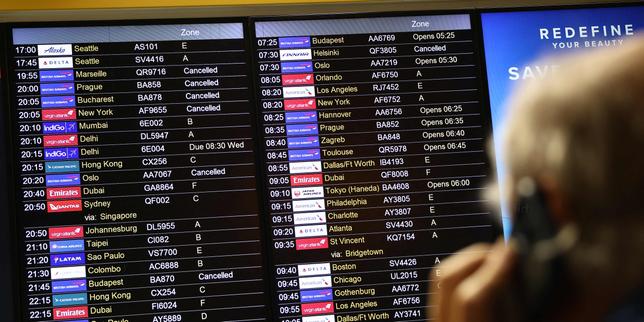
Another day, another catastrophic tech failure in British airspace. Thousands of travelers found themselves stranded at Heathrow, Gatwick, and regional hubs as a major glitch crippled the National Air Traffic Services (NATS) flight processing system. Over a thousand flights vanished from schedules in a single afternoon, leaving crews out of position, aircraft parked on foreign tarmac, and passengers staring at departure boards scrolling endless updates of misery.
If you travel through British airports frequently, this script feels painfully familiar. NATS called the recovery "very complex", but airline bosses and frustrated passengers are calling it something else: incompetence. When critical national infrastructure breaks down repeatedly, it stops being an unfortunate accident and starts looking like a systemic failure that nobody wants to fix until the damage is already done.
What Actually Happened in the Control Rooms
The disruption began when engineers detected a fault in the core flight data processing system. While British airspace didn't technically close and planes managed to stay airborne, departures were heavily regulated. That sounds safe on paper, but in practice, it creates an instant bottleneck.
Airports stopped letting planes take off to prevent overcrowding in the skies. Inbound flights got diverted to Amsterdam, Brussels, Paris, and Düsseldorf.
British Airways scrubbed major chunks of its short-haul network. EasyJet, Ryanair, and international carriers reported thousands of delayed passengers.
NATS implemented a software fix and declared systems recovering by early evening, but fixing the code doesn't fix the logistics. Once modern aviation schedules break, they don't magically snap back into place when a server restarts. Planes were thousands of miles away from where they needed to be for the next morning's commute. Crew members hit their legal maximum working hours stranded in terminal chairs.
The Growing Anger Over Repeated Failures
Airlines are furious, and frankly, they have every right to be. This wasn't an isolated anomaly. It marks a major technical breakdown following previous high-profile meltdowns over the last few years.
Industry leaders didn't hold back. Ryanair's chief operating officer openly questioned how much longer passengers have to suffer under the current management, while Wizz Air labeled the infrastructure provider fundamentally unfit for purpose. Transport Secretary Heidi Alexander demanded answers and a full report within a week, echoing political promises made during past crises that ultimately yielded little visible modernization.
When infrastructure is funded by airlines and overseen by regulators, accountability tends to get lost in a bureaucratic shuffle. NATS CEO Martin Rolfe faced immediate pressure to step down as critics pointed out that a modern economy cannot rely on fragile software prone to buckling under routine operational loads.
How to Protect Your Travel Plans Right Now
You can't control what NATS or your airline does, but you can stop walking blindly into travel chaos. If your journey touches UK airspace over the next few days, you need a different strategy.
First, stop booking the last flight of the day. When a network falls behind, delays compound hourly. By evening, morning slots turn into cancellations.
Second, download your airline's app and track your incoming aircraft using flight radar tools before you even leave for the airport. If the plane operating your leg is delayed three cities away, you know you're stuck before the airline desk agent even types it into the system.
Finally, know your rights under UK and EU aviation regulations. If your flight is canceled or delayed past threshold hours due to technical faults within air traffic control, carriers often try to hide behind the "extraordinary circumstances" excuse. Push back. Recent rulings and regulatory enforcement mean you are entitled to care, meal vouchers, alternative re-routing, and proper compensation when carriers fail to manage the aftermath effectively. Stop accepting vague text messages and demand concrete options at the counter.