The air inside the execution chamber always smells of bleach and stale sweat, a sterile disguise for a very ancient, very human finality. I remember the weight of the silence the morning the state decided a man's life was worth precisely zero grams of a white powder. You do not forget the sound of a latch dropping, nor do you forget the strange, hollow rationalization that follows it. For decades, Southeast Asia has operated under a terrifying calculus. The equation was simple: traffic the poison, forfeit the breath. But equations are written by humans, and humans are notoriously bad at accounting for mercy, error, and the slow, grinding machinery of justice.
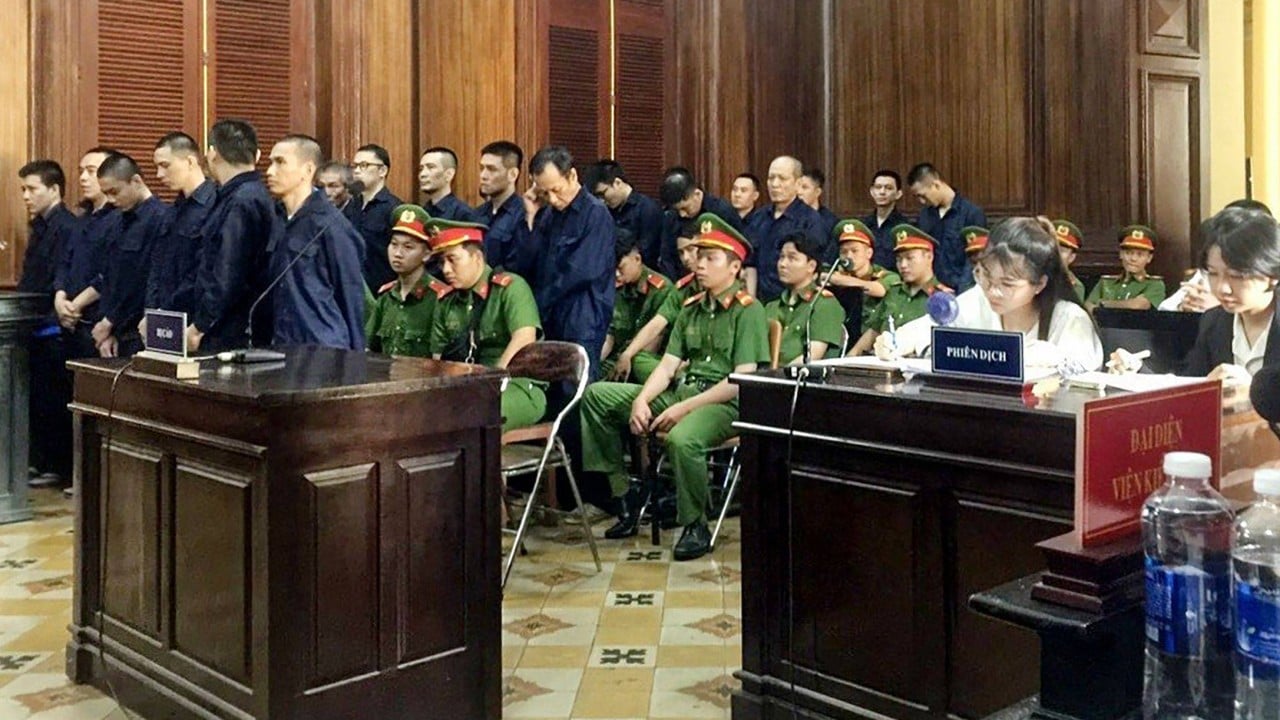
Now, the ground is shifting beneath our feet. Vietnam, a nation whose penal code has long cast a long, cold shadow over the drug trade with mandatory death sentences, is quietly, nervously, agonizingly debating an end to executions for non-violent drug crimes.
Consider what happens next. Or rather, consider what has been happening in the shadows all along.
Drug trafficking in this part of the world is rarely the cinematic enterprise of kingpins lounging on leather sofas. More often, it looks like a terrified nineteen-year-old girl named Linh—a hypothetical composite built from hundreds of real court files I have poured over—crossing a jungle border with a heavy backpack strapped to her ribs. She does not own the drugs. She does not see the billions of dollars filtering through offshore accounts in Singapore or the Cayman Islands. She sees rent. She sees medicine for a dying grandmother. She sees a way out of an inescapable rural poverty that tastes like red dust and boiled rice.
When the border guards stopped her, her hands did not shake because she was a hardened criminal. They shook because she was a child playing a game rigged by ghosts. Under the current legal framework, Linh’s destination was predetermined. The state’s hammer falls heaviest on the smallest nails. The kingpins stay safely behind velvet curtains in neighboring provinces, insulated by layers of couriers, while the foot soldiers face the lethal injection chamber.
For years, policymakers defended this severity with a grim logic of deterrence. If the penalty is death, the reasoning went, the supply will dry up. The logic is clean. It is mathematically appealing. It is also entirely, demonstrably false.
Data from the United Nations Office on Drugs and Crime reveals a stubborn, uncomfortable truth. Capital punishment for narcotics has never once successfully choked the vascular system of the black market. It merely raises the stakes, driving the trade deeper underground, breeding greater desperation, and incentivizing cartels to use more vulnerable, more easily manipulated mules. When the penalty for carrying ten grams is the same as carrying ten kilograms, the courier might as well carry the heavier bag. The deterrent effect is a ghost story told to comfort the public.
Yet, shifting away from the death penalty is not a simple administrative pivot. It requires a fundamental rewiring of a nation's psyche.
To understand why this debate in Vietnam is so agonizing, you have to understand the profound fear of social decay that haunts rapidly modernizing economies. Drug addiction is viewed not as a public health failure, but as a moral rot—a foreign contagion threatening the fragile prosperity of a rising middle class. When officials talk about maintaining strict control, they are speaking to a collective trauma. They remember centuries of foreign domination, economic ruin, and internal conflict. Stability, even when enforced at the point of a bayonet or the tip of a needle, feels like survival.
Change, therefore, arrives like a thief in the night. It is messy, contested, and fraught with internal contradiction.
Legal scholars, human rights advocates, and even reform-minded party insiders in Hanoi are now asking a question that would have been unthinkable a generation ago: What if execution does not protect society, but merely brutalizes it?
The debate hinges on proportionality and international pressure, but at its heart, it is an existential reckoning. Vietnam is integrated into global trade agreements that increasingly look askance at capital punishment, particularly for non-violent offenses. European Union trade partners have made human rights benchmarks clear. Economic pragmatism, surprisingly, is becoming an unlikely ally to humanitarian reform. If you want to play in the global sandbox, your penal code cannot belong to the sixteenth century.
Imagine sitting across from a judge who knows the man in the dock is a pawn, yet is bound by a statute that strips away judicial discretion. That is the quiet tragedy of mandatory minimums and automatic death sentences. It turns the judiciary into a rubber stamp for a guillotine.
When we talk about ending executions for drug trafficking, we are not talking about going soft on crime. That is the lazy framing of cable news pundits who have never smelled the bleach in a execution room. We are talking about precision over panic. We are talking about recognizing that a trafficking network is a hydra; cutting off the head of a starving mule only causes two more to grow in its place, while the beast itself feeds undisturbed in the dark.
True reform demands that we look at the root causes of the trade: systemic poverty, lack of alternative livelihoods, predatory lending, and the corrupt officials who take bribes to look the other way at border crossings. It demands that we treat addiction as a medical emergency rather than a moral failing punishable by extinction.
The conversation happening in Vietnam right now is a fragile seedling breaking through cracked concrete. It will face opposition from hardliners who fear that any retreat from absolute severity will be interpreted as weakness. It will stumble over bureaucratic inertia and public skepticism.
Every legal code is a mirror reflecting what a society fears most. For decades, Vietnam feared the chaos of the drug trade more than it feared the finality of its own state-sanctioned killings. Now, looking out at a changing world, it is daring to ask whether a nation can be strong without being cruel.
The latch still drops in other cells across the region. The bleach still covers the floor. But somewhere in Hanoi, in a quiet office lit by the pale glow of a desk lamp, a draft is being rewritten. A pen hovers over a sentence that has ended thousands of lives. The ink is wet. The night is quiet. And the dawn is refusing to break the old way.