The snow on the rooftops of St. Petersburg has that specific, heavy grey look of a winter that refuses to yield, even when the calendar insists otherwise.
For years, the address at Peter-the-Great Street was a quiet intersection of two worlds. Walk down the granite embankments of the Neva River, turn past the neoclassical facades where history feels less like a textbook and more like a draft chilling the back of your neck, and you would find it. A flag. A brass plaque. A place where a passport stamp could bridge an invisible chasm.
Then came the flash in the sky over Moscow.
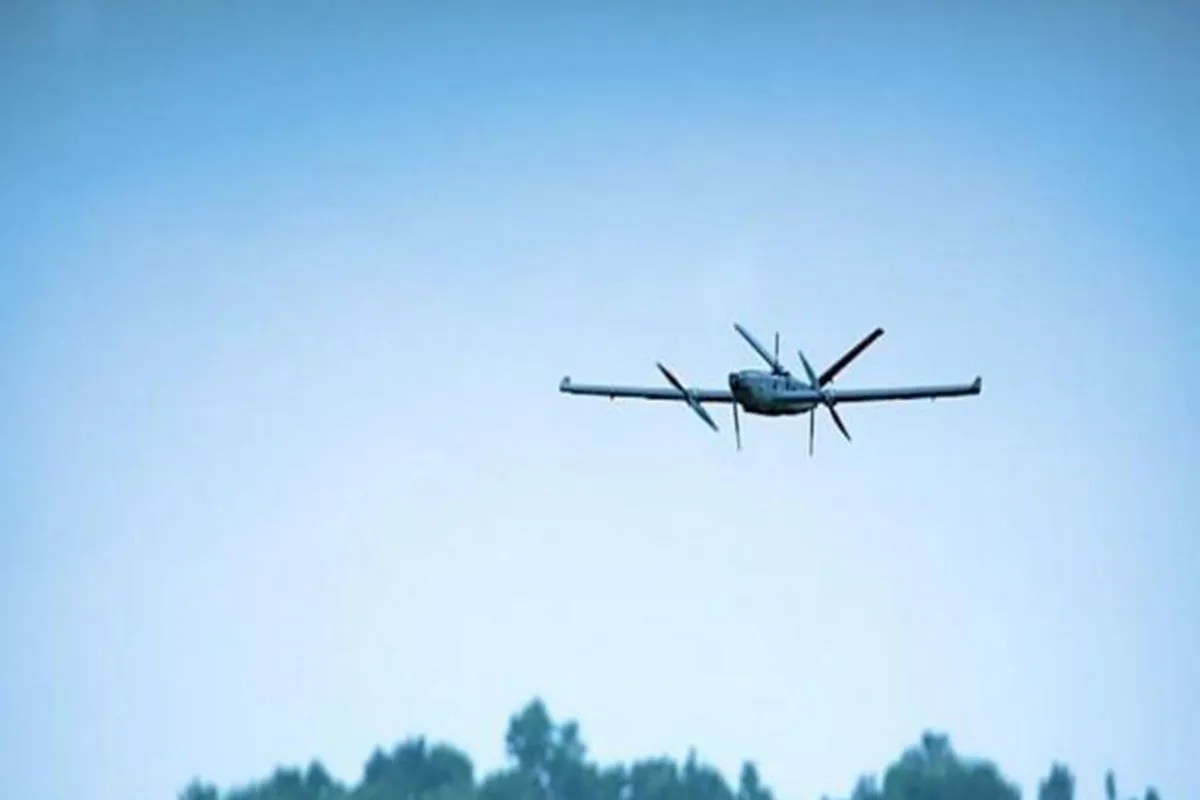
A drone, fragile and mechanical, humming with a sudden, violent purpose, punched through the night air toward the seat of Russian power before being swatted down by air defenses. No monumental damage. No structural ruin. But the shockwave did not travel through concrete. It traveled through diplomacy. Within days, the retaliation arrived not in the sky, but in administrative ink. Moscow struck back at Berlin. The German consulate in St. Petersburg, a small outpost of quiet bureaucracy and cross-border lifeline for thousands, was ordered to shutter its doors.
Empty desks. Stamped papers left in wire baskets. The abrupt, sickening silence of a door locked from the inside.
We talk about geopolitics as if it were a game played on a giant map by men in tailored suits moving plastic pieces. We talk about expulsions, tit-for-tat retaliations, and strategic posturing. But geopolitics is ultimately human. It is felt in the gut of a pensioner who suddenly cannot reach a relative across a closed border. It is felt by the young student whose scholarship visa evaporates into a bureaucratic void. It is the sudden, terrifying realization that the bridges we spent decades building can be torched with a single stroke of a pen.
Consider what happens next.
When a consulate closes, the architecture of trust fractures. Imagine a hypothetical traveler—let us call him Dmitri—sitting in a modest kitchen in the heart of Vasilevsky Island, staring at a stack of rejected documents. Dmitri is not a politician. He is a retired machinist whose daughter married a German engineer living in Stuttgart. For years, the consulate on Peter-the-Great Street was his anchor. It was where he went to secure the permissions that allowed him to hold his infant granddaughter, to watch her take her first wobbly steps on a wooden floor in Bavaria.
Now, that door is locked.
To secure a visa, Dmitri must now navigate a labyrinth of distant alternative offices, staggering costs, and months of helpless waiting. The drone attack over the Kremlin was an abstract flash on a television screen thousands of miles away for most people. For Dmitri, it is the reason he will miss his granddaughter's fifth birthday.
This is the hidden cost of escalation. Every diplomatic tit-for-tat is paid for in the currency of human friction.
Relations between Moscow and Berlin have curdled over the years into something resembling a cold war rerun, complete with economic blockades, mutual expulsions of intelligence personnel, and a deep, poisoned well of suspicion. The war in Ukraine served as the grand catalyst, tearing down whatever architecture of security remained in Europe. Every diplomatic expulsion is another brick pulled from a crumbling wall.
When Germany's consulate in St. Petersburg was ordered to close, it wasn't just an administrative inconvenience. It was a severing of cultural arteries. For centuries, St. Petersburg has viewed itself as Russia’s window to Europe—a city designed by Peter the Great precisely to look outward, to absorb Western art, philosophy, and engineering. Closing the German mission is an act of bricking up that window. It tells the citizens of both nations that looking across the divide is no longer just difficult; it is suspect.
Fear is a contagious architect.
When authorities on both sides look at each other through the crosshairs of suspicion, every diplomat becomes a spy, every cultural center becomes a front, and every visa applicant becomes a potential threat. The nuance of human connection is flattened into a binary code of us versus them.
Yet, beneath the frozen surface of statecraft, ordinary lives persist. People fall in love across borders. Families stretch across enemy lines. History does not stop just because politicians decide to stop talking. When official channels are slammed shut, people find underground rivers—desperate workarounds, third-country detours, digital whispers in encrypted chat rooms. But those alternatives are exhausting, expensive, and fragile. They punish the innocent while doing nothing to deter the powerful.
The snow continues to fall on Nevsky Prospect. The brass plaque outside the shuttered consulate has been unbolted, leaving faint, clean rectangles of untarnished metal on the brickwork where the name once stood.
The drones will keep flying in the imaginations of strategists. The statements will keep echoing from ministry podiums, sharp and devoid of grace. But somewhere in a quiet kitchen, a grandfather looks at a photograph, wondering how a machine he never saw and a war he never voted for managed to make the world so terribly small.