The Mechanics of Secondary Targeting
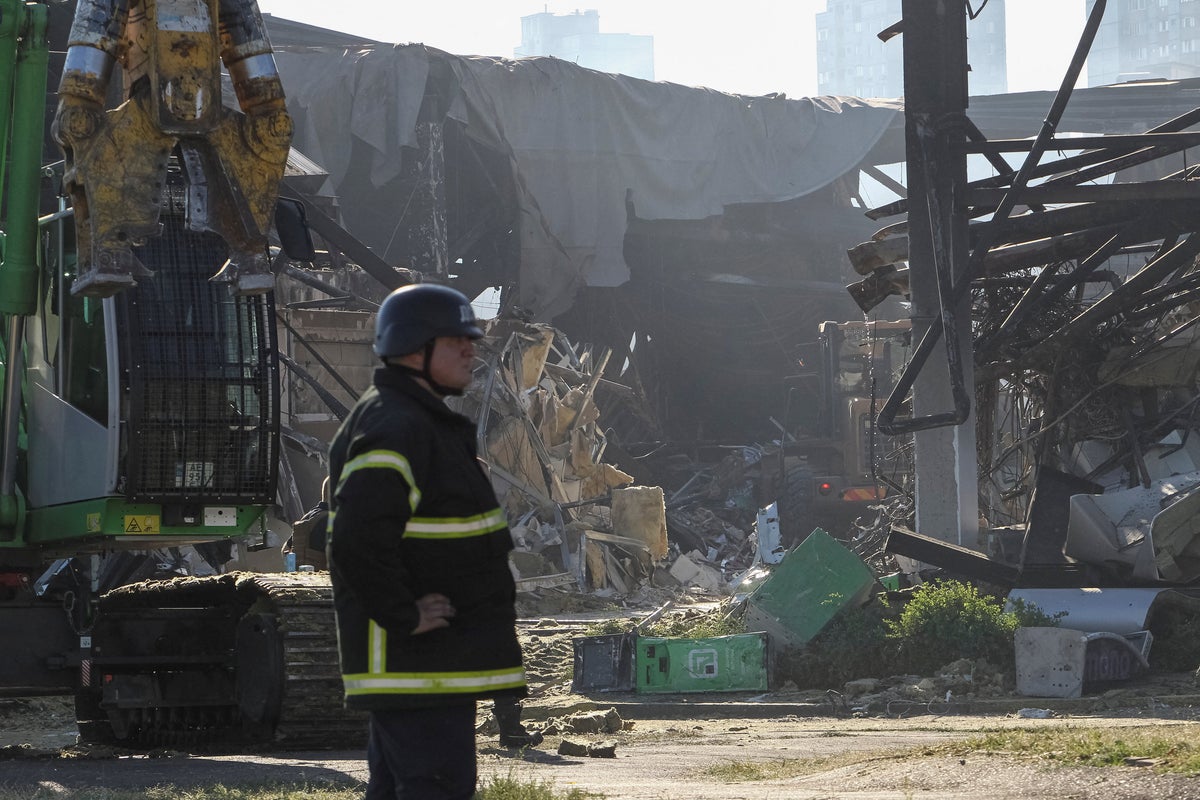
War develops its own morbid lexicon. A double-tap strike used to be an obscure term found in the footnotes of counter-terrorism studies, describing an initial explosion followed closely by a second one designed to kill first responders, medics, and civilians rushing to pull survivors from the rubble. Today, that operational signature defines the air war over central Ukraine. When a ballistic missile slammed into a commercial district in Kryvyi Rih, President Volodymyr Zelensky's hometown, the immediate devastation killed 16 people. Yet the structural horror lay not just in the initial impact, but in the deliberate cadence of the follow-up strike designed to maximize human toll among the rescue crews.
We have watched this script unfold across multiple fronts for over four years. Moscow's military planners understand human psychology with clinical precision. They know that sirens draw crowds, that smoke attracts neighbors looking for family members, and that local emergency services will flood the impact zone within minutes. By programming a delayed second warhead or launching a synchronized follow-up projectile, the attacking force turns rescue operations into mass casualties. Kryvyi Rih did not suffer a random munitions failure or an off-target stray shell. This was an engineered escalation intended to shatter civic cohesion from the inside out.
Inside Zelensky's Hometown
Geography dictates vulnerability. Kryvyi Rih stretches for more than a hundred kilometers along the banks of the Inhulets River, earning its reputation as the longest city in Europe. It is an industrial spine of steel mills, iron ore quarries, and dense Soviet-era micro-districts that house generations of metalworkers. For Zelensky, who grew up navigating these very concrete courtyards and technical institutes, the strikes carry a profoundly personal weight. Every siren wailing through the broad avenues echoes against buildings where he once walked to school.
Yet the Kremlin's obsession with Kryvyi Rih transcends personal animus toward Ukraine's leadership. The city represents the logistical and economic heartland of the Dnipropetrovsk oblast. Severing its supply lines, terrorizing its workforce, and paralyzing its commerce achieves a strategic objective that purely military engagements often fail to secure. When a shopping mall or a neighborhood market vanishes in a plume of white phosphorus and pulverized concrete, the shockwaves ripple through every factory shift and school board meeting in the region.
Foreign observers often misinterpret these attacks as erratic acts of frustration. That is a dangerous miscalculation. Every missile trajectory and payload weight is calibrated. The targeting of civilian infrastructure in regional hubs serves a dual purpose: it forces Kyiv to divert scarce air defense batteries away from active frontlines, and it weaponizes civilian exhaustion against the political will to continue fighting.
The Calculus of Retaliation and Constraint
Vows of revenge carry a specific resonance when uttered from a bunker in Kyiv, but the operational reality on the ground dictates a far more complicated path. Zelensky's immediate pledges to make Moscow pay for the blood spilled in Kryvyi Rih face an unyielding wall of military physics. Ukraine lacks strategic depth. While Western partners continue to supply advanced interceptors, the sheer volume of incoming ballistic and cruise missiles outpaces defensive stocks.
The political leadership finds itself trapped between public outrage and military constraint. Citizens standing outside smoking craters demand immediate retribution, striking back at Russian logistics hubs across the border. At the same time, Western allies impose strict geographic limitations on the use of donated long-range weaponry, fearing an uncontrollable escalation that could drag NATO directly into the theater.
Consider the logistical hurdles governing modern air defense networks. A Patriot or NASAMS battery cannot be moved on a whim to protect every regional shopping center. These systems require complex maintenance, massive electrical power grids, and secure radar profiles. Protecting Kryvyi Rih means leaving another vital transit junction or energy substation exposed. Moscow's military commanders exploit this mathematical impossibility daily, probing for gaps where air cover is thin or non-existent.
Beyond the Crater
The smoke clears from the streets of Kryvyi Rih, but the structural wounds remain etched into the pavement. Reporters pack up their satellite uplinks, foreign dignitaries issue carefully worded condemnations, and the international news cycle shifts toward the next flashpoint. Local utility crews patch the water mains, and shopkeepers sweep up the glass.
Behind closed doors in military command centers, the calculations continue without pause. The double-tap strike remains an active doctrine, a grim reminder that modern industrial warfare has abandoned any pretense of separating the battlefield from the home front. Kryvyi Rih absorbed the blow, buried its dead, and adjusted to the sirens once more, locked in a brutal cycle where survival itself is an act of defiance