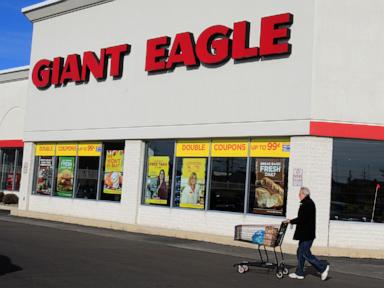
The financial press is running its usual playbook. Kroger announced a $1.65 billion acquisition of regional grocer and pharmacy chain Giant Eagle, and the talking heads immediately started chanting the same tired mantra: "Scale wins. Synergy creates value. Regional dominance secured."
It is the lazy consensus. It is also entirely wrong.
This is not an aggressive expansion strategy. It is an expensive, defensive retreat. I have spent two decades analyzing retail mergers and acquisitions, watching executive suites burn billions of dollars chasing the illusion of "synergy" while their core business models slowly rot from the inside out. Kroger is not buying Giant Eagle because it wants to grow; it is buying Giant Eagle because its massive, multi-year attempt to merge with Albertsons is trapped in an antitrust chokehold. This is panic-buying disguised as corporate strategy.
Let us dismantle the fiction surrounding this deal and look at the brutal operational reality.
The Mirage of the Regional Moat
The standard defense for this acquisition rests on market density. Giant Eagle controls a fiercely loyal, legacy footprint across Pennsylvania, Ohio, West Virginia, and Indiana. The naive analysis says Kroger just bought a turnkey moat.
But a moat is useless if the water is drying up.
Giant Eagle is a traditional, high-margin, high-friction supermarket chain. Its corporate structure is weighed down by a massive, expensive unionized workforce and an aging real estate portfolio that requires constant, capital-intensive remodeling just to keep pace with modern consumer expectations. Kroger is paying $1.65 billion to inherit a localized civil war with hard-discount giants like Aldi and digital behemoths like Amazon and Walmart.
Traditional regional grocery is a dying format. The middle market is getting hollowed out. Aldi owns the low-cost, high-efficiency sector by keeping SKUs low and operating margins lean. Walmart owns the absolute scale play. Amazon owns the digital ecosystem. Buying another traditional grocer to fight this shift is like trying to survive a flood by buying a heavier anchor.
The Pharmacy Trap Everyone Is Ignoring
A massive chunk of Giant Eagle's valuation rests on its pharmacy business. Wall Street views retail pharmacies as sticky customer acquisition tools. The logic goes: come for the lipitor, stay for the $8 box of cereal.
The reality? The retail pharmacy model is a toxic asset.
Pharmacy Benefit Managers (PBMs) like Caremark, Express Scripts, and OptumRx have spent the last decade systematically squeezing the reimbursement rates of retail pharmacies to the absolute bone. Every year, the margin on dispensing maintenance medications shrinks. Independents are going bankrupt, and national chains like Rite Aid have collapsed into Chapter 11.
By expanding its pharmacy footprint through Giant Eagle, Kroger is doubling down on a sector where they have zero pricing power. They are tethering their growth to a reimbursement model controlled entirely by health insurance giants who have every incentive to starve retailers. If you think filling prescriptions in a brick-and-mortar store is going to drive high-margin grocery sales in 2026, you are living in 1996.
The Illusion of Synergy and the Cost of Integration
Every corporate press release promises "operational synergies." It is the ultimate corporate euphemism for firing middle managers and combining supply chains.
Imagine a scenario where a massive conglomerate tries to merge two completely distinct supply chain architectures, two entirely different point-of-sale systems, and two deeply entrenched corporate cultures, all while maintaining daily inventory for perishable goods across hundreds of stores.
Integration is where retail value goes to die.
I have watched companies blow hundreds of millions trying to force regional distribution centers to talk to a centralized corporate ERP system. For the next three years, Kroger’s management team will not be focusing on digital innovation or customer experience. They will be trapped in integration hell. They will be fighting over warehouse management software, re-routing delivery trucks, and trying to pacify union reps angry about store overlapping and distribution shifts.
The transaction cost alone eats the projected "synergy" savings for breakfast.
What People Always Ask About Grocery Mergers
When deals like this drop, retail analysts and consumers ask the wrong questions because they rely on flawed premises.
Wont this consolidation lead to lower prices for consumers through bulk purchasing power?
No. This is the biggest lie in retail economics. Increased purchasing power only lowers consumer prices if the retailer passes those savings along. Kroger is facing massive inflationary pressures on labor, logistics, and energy. They are paying a premium for Giant Eagle. They will use whatever margin expansion they wring out of suppliers to service the debt and justify the transaction to Wall Street, not to lower the price of a gallon of milk.
Doesnt this acquisition give Kroger the scale needed to compete with Walmart?
Walmart’s revenue is over $600 billion. Kroger’s is around $150 billion. Buying a $1.65 billion regional player does not change the math. It is a rounding error to Bentonville. Walmart wins because of its unparalleled technological infrastructure and global logistics network, not because it has a few more stores in Western Pennsylvania. Kroger is chasing a metric—sheer store count—that no longer dictates dominance in a digitized retail world.
The High-Risk Alternative No One Has the Guts to Try
There is a downside to my contrarian view: ignoring regional acquisitions requires a level of executive patience that Wall Street rarely tolerates. If Kroger did not buy Giant Eagle, their stock would likely take a short-term hit from analysts demanding "growth initiatives."
But the alternative—the harder, smarter path—is to stop buying legacy brick-and-mortar storefronts entirely.
If you have $1.65 billion in capital, you do not spend it on brick, mortar, and union contracts in Ohio. You plow it entirely into micro-fulfillment automation, dark stores, and proprietary supply chain logistics that bypass the traditional supermarket format altogether. You build an infrastructure that can profitably deliver groceries to a consumer's doorstep in two hours without requiring them to walk through a 50,000-square-foot neon-lit box.
Instead, Kroger chose the comfortable, predictable path of legacy consolidation. They bought revenue instead of building capability.
Stop looking at the $1.65 billion price tag as a sign of strength. It is a premium paid for a temporary shield against an inevitable retail evolution. Kroger just bought themselves a massive integration headache, a declining pharmacy business, and a front-row seat to a regional price war they cannot win.
Unpack the spreadsheet, ignore the corporate PR spin, and look at the chessboard. This is a tactical retreat, and the clock is ticking.