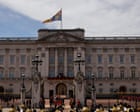
The British tabloid press is suffering from a collective meltdown over the £369 million renovation of Buckingham Palace. The outraged headlines write themselves. Taxpayers foot a staggering bill to overhaul a 775-room monolith, only for King Charles III and Queen Camilla to decide they prefer the cozy confines of Clarence House. Critics call it the ultimate display of royal detachment. They claim it proves the monarchy is out of touch.
They are entirely wrong. For another perspective, check out: this related article.
The lazy consensus views this decision through the lens of a feudal housing program. People look at the palace as an overpriced Airbnb for billionaires. If the landlord isn't sleeping in the master bedroom, the investment must be a failure. This logic is fundamentally flawed.
Stepping away from Buckingham Palace as a primary residence is not a snub. It is the most astute, business-minded move the British monarchy has made in a century. It marks the long-overdue transition of a sprawling heritage asset from an inefficient, drafty family home into a highly optimized global corporate headquarters. Similar coverage on the subject has been published by NPR.
The Myth of the Royal Living Space
To understand why the King is right to stay away, you have to look at what Buckingham Palace actually is. It is not a home. It has not been a comfortable home since the mid-19th century.
I have spent years analyzing high-net-worth real estate and institutional heritage assets. When you peel back the gold leaf, the reality of these grand estates is grim. They are logistical nightmares. Buckingham Palace features over 700 rooms, miles of decaying lead plumbing, and an electrical grid that hadn’t seen a meaningful upgrade since the 1950s. Before the current Reservicing Programme began, the building was a catastrophic fire hazard waiting to happen.
The £369 million figure sounds offensive to the average taxpayer. But that number is not a decoration budget. It is a massive structural stabilization project for a Grade I listed building owned by the state, not the King personally. The Sovereign Grant funding this project is essentially a state-mandated infrastructure bill for a national monument.
Forcing a reigning monarch to live inside an active, decade-long construction zone is bad logistics. More importantly, maintaining a full-time residential staff for a King inside a building that is primarily used for state functions is an exercise in fiscal insanity.
The Hidden Math of Clarence House
Let’s look at the financial reality of the King’s preferred residence, Clarence House.
Running a smaller, consolidated household is vastly cheaper. When a monarch resides in a palace, the operational footprint explodes. You need dedicated security cordons, localized catering infrastructure, private domestic staff, and climate control optimized for living spaces rather than historic preservation.
By keeping his primary residence at Clarence House, Charles shrinks his immediate residential footprint. He avoids the massive overhead of waking up a 775-room giant every morning.
Consider the energy costs alone. Heating a localized mansion like Clarence House is a controllable expense. Heating the vast, cavernous wings of Buckingham Palace to a comfortable living temperature for two people is a form of environmental and financial vandalism.
Transforming a Sovereign Monopoly into a Revenue Engine
The real value of this move lies in the liberation of Buckingham Palace as a commercial and diplomatic asset.
When the monarch lives on-site, large portions of the palace must remain strictly locked down. Security protocols restrict public access. Touring schedules are interrupted by the sudden need for royal privacy. Private events are constrained by the operational realities of a working family home.
Look at how successful corporate brands manage their legacy real estate. They do not turn their flagship properties into apartments for the CEO. They turn them into experience centers, event spaces, and brand repositories.
By removing the residential requirement, the palace can significantly expand its public opening windows.
- Extended Tourism Windows: Instead of opening the State Rooms for just a few weeks in the summer, the palace can transition toward a year-round visitor model.
- Commercial Event Hosting: The palace can host high-value diplomatic summits, charity galas, and state banquets without displacing the residents or requiring complex domestic coordination.
- Asset Preservation: Conservators can maintain precise temperature and humidity controls optimized for priceless artwork and furniture, without worrying about whether a King thinks the room feels too drafty.
The public complains about the £369 million cost, but they fail to realize that an open, fully operational, non-residential Buckingham Palace can generate a massive return on investment through ticket sales, merchandising, and tourism spillover for the London economy. The Royal Collection Trust already brings in millions annually. Removing the "monarch at home" bottleneck allows that revenue engine to scale.
Dismantling the People Also Ask Outrage
The public debate surrounding this move is filled with bad-faith questions that need to be answered with cold reality.
Why should taxpayers pay for a palace the King won't live in?
Because the public owns the building. The Crown Estate belongs to the nation, not to Charles Windsor. If the monarchy were abolished tomorrow, the British government would still have to spend every single penny of that £369 million to keep the roof from collapsing and the wiring from burning the place down. The work is structural maintenance on a national museum, not a home renovation project for a wealthy senior citizen.
If it's a corporate headquarters, why call it a palace?
Because branding matters. The mystique of the monarchy is the primary driver of its soft power and tourism draw. Stripping the name or turning it into a sterile office park destroys the underlying economic value of the asset. It functions as a corporate headquarters, but it sells the illusion of ancient majesty. That illusion is what fills the hotels in central London.
Isn't living in Clarence House just a sign of royal laziness?
It is a sign of pragmatic efficiency. Charles III has made it clear that he favors a slimmed-down monarchy. A slimmed-down monarchy cannot logically justify occupying a 4.2-million-square-foot palace as a private residence. Moving to Clarence House aligns the King's lifestyle with his stated goals of reducing waste and minimizing the royal footprint.
The Operational Risk of the Contrarian Approach
This strategy is not without its downsides. The primary risk is symbolic. The monarchy relies heavily on tradition and continuity. For centuries, the image of the Royal Standard flying over Buckingham Palace indicated that the monarch was in residence, anchoring the nation’s sense of stability.
By decoupling the monarch from the palace, you risk turning the building into a dead monument—a British Versailles that feels more like a museum of a bygone era than the beating heart of a living state. If the public begins to view Buckingham Palace as just another historic attraction like the Tower of London, the emotional connection that sustains the institution of the monarchy could begin to fray.
Furthermore, managing a historic property as a high-volume public space accelerates the wear and tear on the building fabric. The carpets, floors, and structural elements will degrade faster under the boots of millions of tourists than they ever would under the slippers of a King. The long-term maintenance costs will rise, potentially offsetting some of the commercial gains.
The Final Verdict on the Royal Relocation
The critics wanting the King to move into Buckingham Palace are trapped in a romanticized, outdated view of royalty. They want the drama of a monarch living in a fortress, regardless of the staggering operational inefficiencies that come with it.
Charles III is looking at the ledger. He recognizes that a modern institution cannot survive if it treats its primary assets like personal playgrounds.
Leaving Buckingham Palace empty of a resident monarch is not a failure of duty. It is a triumph of asset management. It preserves a historic treasure, cuts unnecessary residential overhead, and unlocks unprecedented commercial potential. The £369 million renovation isn't a gift to a King; it's an investment in a state-owned powerhouse that is finally being run like a proper business.