Central bankers love to talk. For more than a decade, the Federal Reserve operated like a hyperactive narrator, constantly telling markets what it was thinking, what it was going to do next, and how it felt about every minor blip in the economic data. This practice, known as forward guidance, became the ultimate financial crutch.
Now, the crutch has been kicked away.
Under newly minted Fed Chair Kevin Warsh, who took the oath of office in May 2026, the era of the chatty central bank is officially over. Warsh is keeping his mouth shut, and it is driving Wall Street absolutely crazy. In his early July public appearances and congressional hearings, Warsh made it clear that he will not be hand-holding investors through the next cycle.
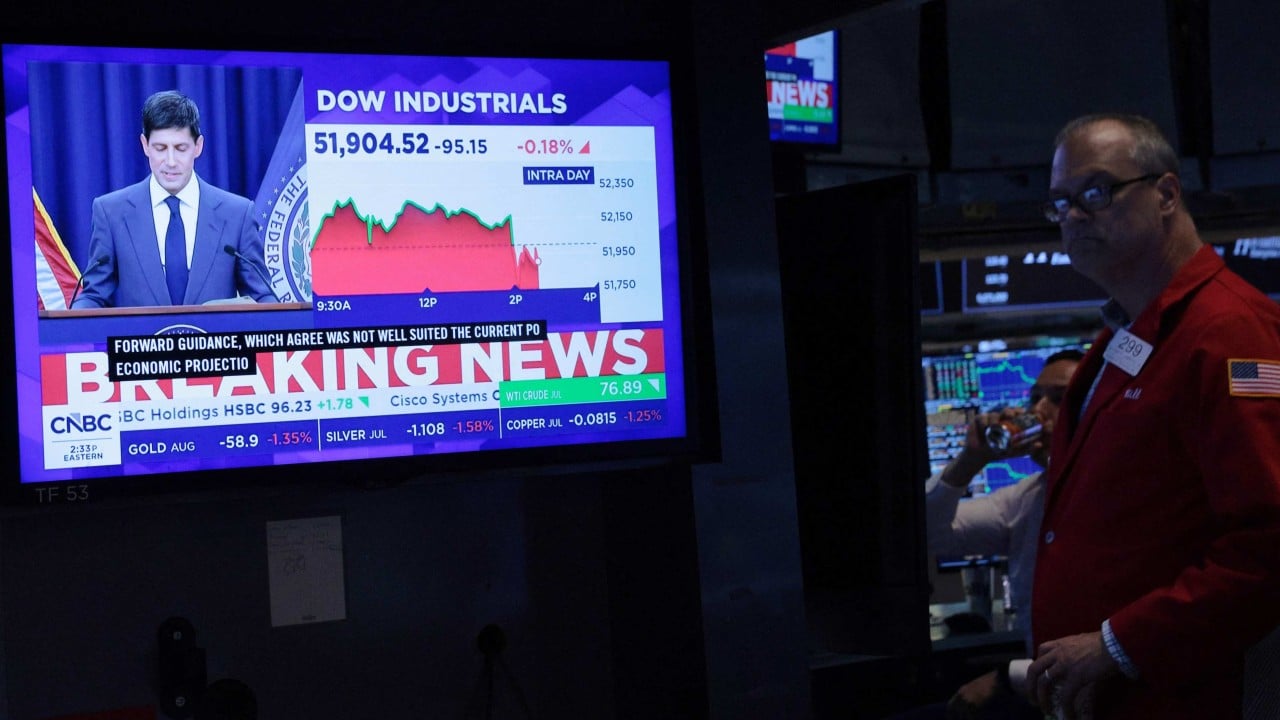
The June Federal Open Market Committee (FOMC) statement was stripped of its usual long-winded explanations. Warsh declined to provide his own economic projections. During his press conferences, he essentially told the world that he has no intention of giving forward guidance on future interest rate decisions.
This silence is not just a change in communication style. It is a fundamental shift in how the world’s most powerful central bank operates. But as global markets try to parse the quiet, a painful realization is setting in: silence is not golden when the world is looking for a path forward.
The Death of Forward Guidance
For years, the Fed treated the market like a fragile child. Jerome Powell and his predecessors believed that by telegraphing every policy move months in advance, they could avoid market tantrums.
Warsh thinks that theory is garbage. He has been a vocal critic of forward guidance for years, arguing that it binds the Fed to a pre-determined path and robs the central bank of its flexibility. By refusing to drop breadcrumbs about the next interest rate decision, Warsh is trying to force markets to do their own homework again.
But there is a fine line between fostering market discipline and creating blind panic.
Right now, the global economy is dealing with major structural challenges. We have got an ongoing conflict involving Iran that threatens energy supplies. We have got an artificial intelligence boom that is rapidly shifting productivity models. And we have inflation that remains stubbornly above the Fed’s 2% target, even after the Fed held rates steady in the 3.50% to 3.75% range so far this year.
When the Fed goes silent during a period of high geopolitical tension and economic transition, it does not calm the waters. It introduces a massive premium on uncertainty.
Why the Silence is Backfiring
The main problem with Warsh’s silent-treatment strategy is that markets hate a vacuum. If the Fed refuses to fill the airwaves with its own narrative, the market will simply invent one.
We are already seeing this play out. Following Warsh's blunt comment in early July that "prices are too high," bond yields spiked and stock market volatility crept up. Why? Because without any clarifying guidance from the Chair, investors immediately jumped to the worst-case scenario: a sudden, aggressive rate hike.
While it is true that forward guidance often proved counterproductive—sometimes locking the Fed into bad policies—completely abandoning the market is not the answer. The Fed's primary job is to manage monetary policy, but its secondary job is to prevent unnecessary panic.
Here is what happens when the Fed stops talking:
- Volatility spikes: Without a clear policy anchor, every single economic data release—whether it is a CPI print or a jobs report—becomes a high-stakes event that swings the markets wildly.
- The Fed loses control of the narrative: Instead of the Fed guiding expectations, a handful of vocal Wall Street analysts and hedge fund managers dominate the narrative, creating a self-fulfilling loop of market anxiety.
- Global spillover: The US dollar is the world's reserve currency. When the Fed becomes unpredictable, emerging markets suffer the most as capital flees back to the safety of US assets, forcing foreign central banks to make defensive policy moves.
The Reality of the Warsh Fed
If you want to understand where the Fed is actually heading under Warsh, you have to ignore the silence and look at his core philosophy. Warsh is a traditionalist. He believes in a lean, independent central bank that focuses on price stability above all else.
He has already vowed to "disappoint" anyone who thinks the Fed will tolerate inflation above its 2% target. He is not going to cut rates just to make the stock market happy. If inflation stays sticky, he will keep rates higher for longer—or even raise them—regardless of how loud Wall Street complains.
The FOMC itself is deeply divided. The minutes from the June meeting revealed that half of the policymakers supported keeping rates steady or cutting them, while the other half wanted to hike rates before the end of 2026. Normally, a Fed Chair would use their public platform to build a consensus and prepare the public for whichever side is winning the debate. Warsh is doing the opposite. He is letting the debate rage in the background while keeping his own cards close to his chest.
How to Position Your Portfolio for the Silent Era
If you are waiting for the Fed to give you a clear signal on when to buy or sell, you are going to be waiting a long time. Investors need to adapt to a world where the central bank is no longer their financial safety net.
First, stop trying to predict the exact month of the next rate cut or hike. It is a guessing game that even the Fed governors are split on. Instead, focus on companies with strong balance sheets that can survive a prolonged period of interest rates sitting near 4%. Debt-heavy companies that rely on cheap refinancing are going to struggle in this environment.
Second, expect more bond market volatility. Without forward guidance, Treasury yields will jump around as the market tries to guess the Fed's next move based on raw economic data. If you are holding variable-rate debt, now is the time to look into locking in fixed rates before any surprise hikes hit the tape.
Ultimately, Warsh wants to break the market's addiction to central bank liquidity and hand-holding. It is a noble goal, but the transition is going to be incredibly messy. Get ready for a bumpy ride.