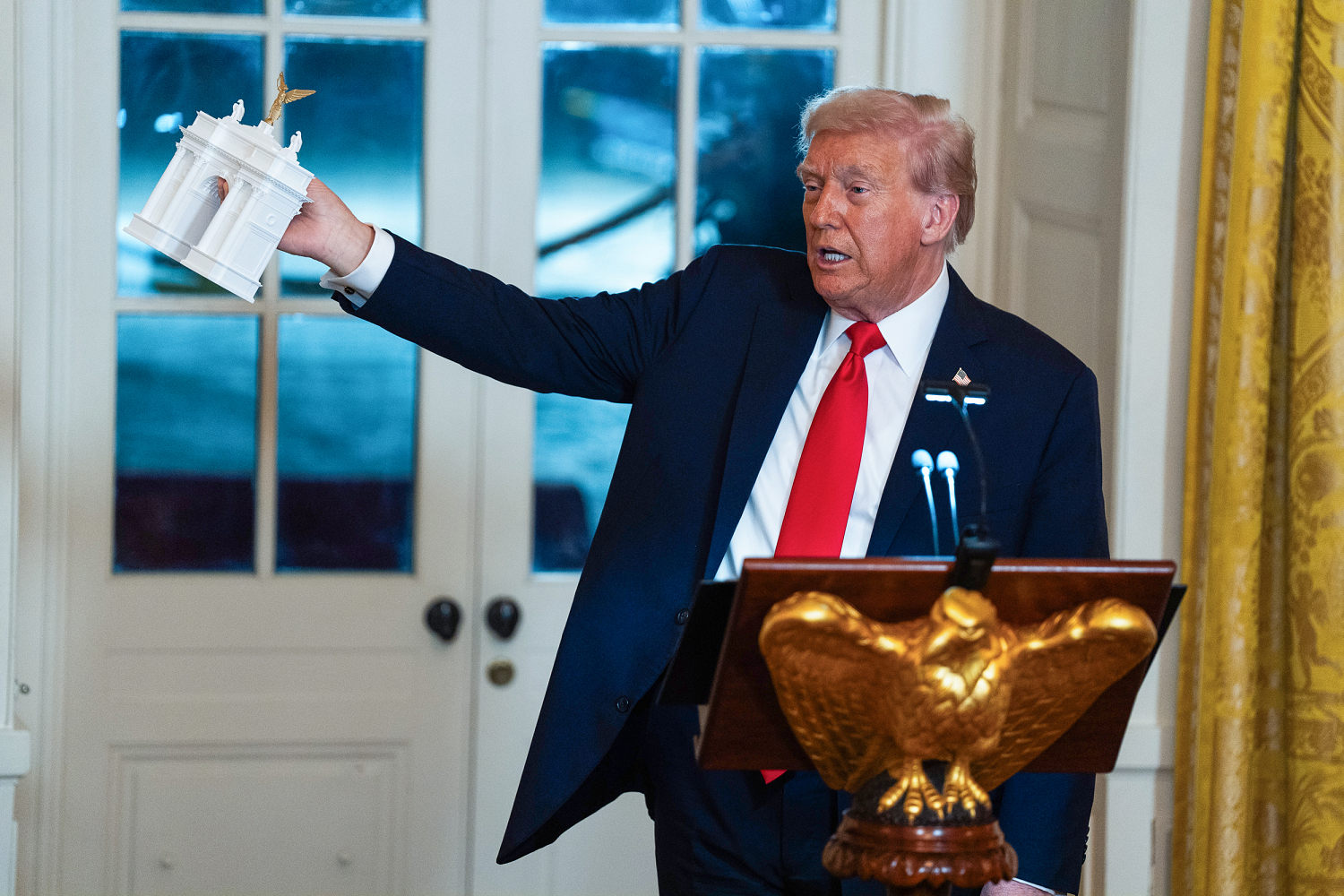
Building a massive monument near Arlington National Cemetery isn't just a zoning headache. It's a collision of American political dynasties, federal preservation laws, and deeply personal family history. When members of the Kennedy family stepped forward to oppose the construction of Donald Trump's proposed triumphal arch, the move immediately sparked questions about who actually controls the visual and historical space around Washington's most sacred grounds.
Let's get straight to the point. The pushback from Kennedy family members centers on the proposed scale, location, and historical appropriateness of a massive arch—often referred to in planning discussions as the Independence Arch or "Arc de Trump"—slated for the Memorial Circle area near the Arlington Memorial Bridge. Because that exact corridor directly connects the Lincoln Memorial to Arlington National Cemetery, where President John F. Kennedy, Robert F. Kennedy, and Edward M. Kennedy are buried, the family views the structure as an intrusive, out-of-place addition that disrupts a carefully preserved national sightline.
What Is Actually Being Proposed Near Arlington?
You might wonder why a single architectural project is causing this much friction. The proposal involves erecting a monumental neoclassical triumphal arch at the western end of the Arlington Memorial Bridge, right in the traffic circle leading to the cemetery entrance.
Supporters of the project envision it as a grand, permanent centerpiece celebrating American milestones, drawing heavy inspiration from European victory arches like the Arc de Triomphe in Paris. Proponents argue that Washington, D.C., lacks a traditional triumphal arch and that placing one along the ceremonial axis between the Lincoln Memorial and Arlington elevates the capital's grandeur.
Critics see something entirely different.
To architectural historians, preservationists, and the Kennedy family, Memorial Circle isn't an empty lot waiting for a centerpiece. It's an intentional buffer zone. Designed in the early twentieth century as part of the McMillan Plan, the bridge and its surrounding approaches were meant to symbolize the reunification of North and South after the Civil War, leading quietly and reverently toward the resting place of the nation's war dead. Dropping a towering triumphal arch right into that transition space changes the emotional tone from solemn reflection to imperial display.
Why the Kennedy Family Has Standing Here
It's easy to dismiss political opposition as partisan reflex, especially when the names Kennedy and Trump appear in the same headline. That misses the real story. The Kennedy family's connection to this specific patch of Virginia and D.C. borderland is uniquely personal and legally tangled with federal preservation standards.
Following President John F. Kennedy's assassination in November 1963, Jacqueline Kennedy worked directly with architect John Carl Warnecke to design the permanent gravesite at Arlington National Cemetery. They intentionally aligned the Eternal Flame on an exact axis with the Lincoln Memorial across the Potomac River. If you stand at JFK's gravesite today and look straight ahead, your line of sight travels down the hill, across the Arlington Memorial Bridge, and directly into the columns of the Lincoln Memorial.
That sightline wasn't an accident. It was an explicit architectural statement linking Lincoln's preservation of the Union with Kennedy's presidency.
Placing a massive stone arch directly in the middle of that corridor physically severs that visual connection. For surviving members of the Kennedy family, allowing a towering monument to block or dominate the view between JFK's grave and the Lincoln Memorial violates the core design intent approved over sixty years ago.
The Federal Hurdles Blocking Construction
Even without the Kennedy family's vocal opposition, building anything monumental in the National Capital Region requires surviving one of the strictest regulatory gauntlets in the United States. You can't simply pour concrete near Arlington and ask for forgiveness later.
Any major structure proposed for Memorial Circle or adjacent federal parkland triggers mandatory reviews under multiple federal statutes and oversight bodies:
- The National Capital Planning Commission (NCPC): This agency holds primary review authority over federal buildings and monuments in Washington and surrounding areas, evaluating whether projects align with the Comprehensive Plan for the National Capital.
- The U.S. Commission of Fine Arts (CFA): Established by Congress in 1910, the CFA advises on the design and aesthetics of monuments, bridges, and public buildings, paying strict attention to historical context and visual impact.
- The Commemorative Works Act (CWA): Enacted in 1986 to prevent "monument clutter" on the National Mall and surrounding reserves, the CWA imposes strict rules on where new memorials can be sited, banning new construction in designated "Reserve" areas unless Congress passes specific exemptions.
- Section 106 of the National Historic Preservation Act: Because both Arlington National Cemetery and the Arlington Memorial Bridge are listed on the National Register of Historic Places, any federal undertaking that alters their visual setting requires formal consultation with historic preservation officers and public stakeholders.
This regulatory framework is exactly where the Kennedy family's opposition carries practical weight. Under Section 106 and NCPC public comment procedures, descendants and stakeholders with direct historical ties to affected landmarks are recognized as consulting parties. Their formal objections become part of the permanent administrative record, giving preservation groups strong legal ammunition to challenge approvals in federal court.
The Bigger Fight Over Washington's Monumental Identity
Step back from the immediate legal skirmish, and you'll see a much older argument playing out in real time. Washington, D.C., has always been a battleground over what kind of republic America wants to project through stone and marble.
Traditionalists who favor classical grandeur often argue that modern federal architecture has grown too timid. From their perspective, a bold triumphal arch honors American strength and provides a dramatic gateway into the capital. They point out that every major generation leaves its mark on the city's layout, often over the loud protests of contemporaries—just as critics initially hated the designs for the Washington Monument, the Lincoln Memorial, and Maya Lin's Vietnam Veterans Memorial.
Preservationists counter that Washington's genius lies in its restraint and adherence to the L'Enfant and McMillan plans. Unlike European capitals built around royal palaces and military victory arches, D.C.'s monumental core was laid out around democratic institutions and open vistas. Blocking the axis between Lincoln and Arlington doesn't add to that tradition; it breaks the rules that make the city's layout coherent in the first place.
What Happens Next in the Approval Process
If you're tracking whether this arch actually gets built, watch the administrative dockets rather than the cable news debates. Monuments in Washington rarely die from public outrage alone; they stall out in committee reviews, environmental assessments, and congressional funding fights.
To move forward, backers of the arch must secure formal site approval from both the Commission of Fine Arts and the National Capital Planning Commission, navigate the Section 106 historic preservation review, and ensure compliance with the Commemorative Works Act. If federal agencies determine that the arch causes an "adverse effect" to the historic viewshed of Arlington National Cemetery and the Lincoln Memorial, the project faces years of mandatory mitigation negotiations or outright rejection.
You can monitor the exact status of these filings directly through the public meeting agendas published monthly by the National Capital Planning Commission (ncpc.gov) and the U.S. Commission of Fine Arts (cfa.gov). Both agencies post staff recommendations, architectural renderings, and public comment deadlines ahead of every vote, offering the clearest look at whether the Kennedy family's campaign will stop the project before a single stone is laid.