The legal challenge against the John F. Kennedy Center for the Performing Arts renovation project represents a classic friction point between institutional expansion and the Section 106 review process of the National Historic Preservation Act (NHPA). While the controversy is often framed as a dispute over aesthetics or local inconvenience, the core conflict centers on the perceived failure of a federal agency to satisfy procedural mandates regarding "adverse effects" on historic properties. When cultural groups move to block a federal project via a preliminary injunction, they are not merely protesting construction; they are challenging the legal sufficiency of the environmental and historical impact assessments that underpin the project's legitimacy.
The Triad of Preservation Law Violations
The plaintiffs' argument rests on three distinct procedural failures that occur when federal institutions prioritize operational expansion over historical continuity.
- Iterative Dilution of Impact: This occurs when a project is presented in phases, preventing a cumulative assessment of how multiple changes—such as the construction of the "Reach" followed by the current "Connection Project"—fundamentally alter the site's historic integrity.
- Procedural Bypassing of the Section 106 Process: Federal agencies are required to consult with the State Historic Preservation Officer (SHPO) and other consulting parties. The legal trigger for a lawsuit usually involves the claim that this consultation was "pro forma" rather than substantive, meaning the agency reached a decision before the consultation concluded.
- Inadequate Alternatives Analysis: Under federal guidelines, an agency must demonstrate that it explored all feasible alternatives to avoid or minimize harm. If the record shows the Kennedy Center dismissed less-intrusive designs without rigorous technical justification, the project becomes vulnerable to Administrative Procedure Act (APA) challenges.
Structural Conflict in the Connection Project
The specific renovation at the heart of the litigation involves a proposed pedestrian bridge and elevator system designed to link the Kennedy Center’s main campus with the Potomac River waterfront. From a strategic institutional perspective, this is a "connectivity play" intended to solve a geographic isolation problem. However, from a preservationist perspective, this creates a permanent "visual intrusion" into the Theodore Roosevelt Island viewshed and the Rock Creek and Potomac Parkway.
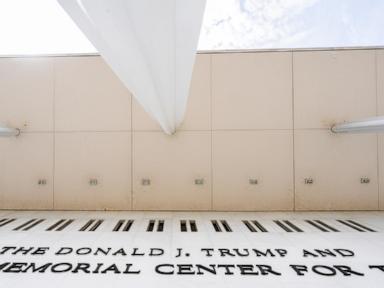
The tension exists because the Kennedy Center is both a "living memorial" and a functional performing arts venue. The original Edward Durell Stone design emphasized a certain monumental isolation—a "temple on a hill" aesthetic. Modern renovations that favor porous boundaries and accessibility directly contradict the architectural intent of the original structure. The court must now decide if the National Park Service and the Kennedy Center overstepped by defining "accessibility" so broadly that it nullifies the "memorial" aspect of the site’s designation.
The Economics of Injunctions and Delay
In federal litigation of this scale, the primary weapon of the opposition is the preliminary injunction. To secure this, the cultural groups must prove "irreparable harm." In preservation cases, this is a high bar because once a historic viewshed is altered or a structure is demolished, the damage is, by definition, irreversible.
The Kennedy Center faces a "cost-of-carry" crisis if the judge grants a stay. Large-scale federal construction projects operate on tight mobilization schedules. A six-month delay due to a court order can result in:
- Escalation of Material Costs: Specifically in steel and specialized glazing required for the Potomac-facing elements.
- Mobilization Penalties: Payments to contractors for idle equipment and personnel.
- Grant Compliance Risk: Federal or private funding often comes with "use-it-or-lose-it" timestamps.
The plaintiffs leverage these economic pressures to force a settlement or a redesign. If the court finds that the Federal Highway Administration or the National Park Service failed to properly document the "Viewshed Analysis," the entire project may be sent back to the "Finding of No Significant Impact" (FONSI) stage, effectively resetting the project clock by 18 to 24 months.
Logical Flaws in the Federal Defense
The federal government’s defense typically relies on the concept of "functional necessity." They argue that the renovations are required to meet Americans with Disabilities Act (ADA) standards or to ensure the long-term financial viability of the institution. However, this logic contains a significant bottleneck: ADA compliance does not grant a blanket exemption from the NHPA.
There are often multiple ways to achieve ADA compliance that do not involve building a massive external elevator tower. When the government argues that a specific, high-impact design is the only solution, they invite scrutiny into the engineering Narrowing of the project. If the plaintiffs can produce a credible "Alternative C" that achieves the same goals with 30% less visual mass, the government’s "arbitrary and capricious" defense begins to crumble.
The Viewshed as a Quantifiable Asset
One of the more sophisticated elements of this legal battle is the quantification of "viewshed integrity." Modern preservationists use digital sightline modeling to prove that a renovation will obscure specific historical vistas. In the case of the Kennedy Center, the focus is on the North and South approaches.
The "Zone of Theoretical Visibility" (ZTV) is a framework used to map exactly where the new construction will be seen from. If the Kennedy Center’s environmental assessment underestimated the ZTV by failing to account for winter foliage (or lack thereof), the data used to justify the project is fundamentally flawed. This is not a matter of opinion; it is a matter of geometric accuracy. The court's decision will likely hinge on whether the "Visual Impact Assessment" provided by the defendants used realistic viewpoints or if it cherry-picked angles that minimized the structure’s profile.
Institutional Strategy vs. Public Trust
The Kennedy Center leadership is managing a pivot from a 20th-century "Fortress for the Arts" to a 21st-century "Urban Hub." This shift is common among Tier 1 cultural institutions (e.g., the Lincoln Center’s renovation or the MoMA expansion). However, the Kennedy Center is unique because of its status as a Presidential Memorial.
The strategic error often made by these institutions is treating the memorial status as a secondary "branding" element rather than a primary legal constraint. By attempting to modernize the riverfront access, the Center is prioritizing its role as a "venue" over its role as a "monument." The cultural groups suing the Center are essentially acting as the enforcers of the memorial’s original mission. This creates a reputational risk: the Center risks being seen as a developer rather than a steward of national heritage.
The Judicial Pivot Point
The presiding judge will look for a "Redline Violation" of the National Environmental Policy Act (NEPA). The most likely outcome is not a permanent block on the project, but a "Remand without Vacatur." This means the court allows the project to exist on paper but requires the Kennedy Center to redo its impact studies to account for the specific omissions identified by the plaintiffs.
For the cultural groups, this is a tactical victory. It forces the Center back to the negotiating table. For the Center, it is a logistical nightmare that threatens the "Reach" ecosystem's integration with the waterfront.
The institutional play here is to immediately initiate a "Supplemental Environmental Assessment" before the judge issues a final ruling. By proactively addressing the "Viewshed" gaps and proposing minor mitigation measures—such as specialized non-reflective materials or adjusted height profiles—the Kennedy Center can moot the plaintiffs' claims of "irreparable harm." This "Mitigated FONSI" strategy is the most efficient path to breaking the legal stalemate, provided the Center is willing to compromise on the architectural scale of the connection. If they choose to fight on the grounds of total institutional autonomy, they risk a precedent-setting defeat that could hamper all future expansion efforts on the Potomac.