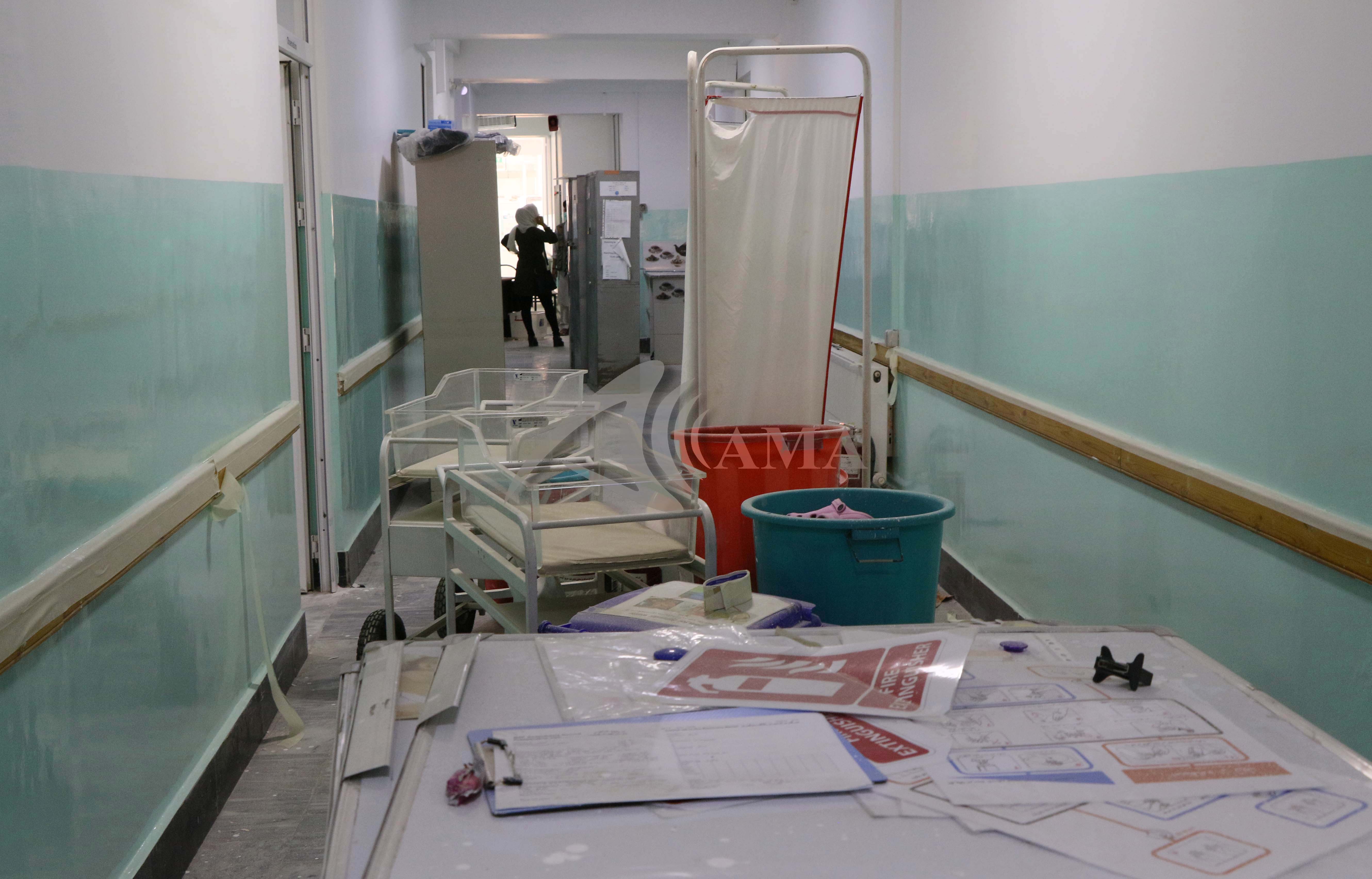
War reporting has become a stenography contest. When the Afghan Taliban claims 400 people died in a Pakistani air strike on a Kabul hospital, and Islamabad issues a flat denial, the global media performs a predictable dance. They print both quotes, shrug their shoulders, and call it "conflicting reports."
This isn't journalism. It’s a dereliction of duty. For an alternative perspective, see: this related article.
The "lazy consensus" here is the belief that the truth lies somewhere in the middle. It doesn't. In modern proxy conflicts and cross-border skirmishes, the middle is usually a vacuum. We are watching a high-stakes information operation where the casualty count is a currency, not a data point. If you are waiting for a "verified" number to emerge from a high-stress combat zone involving two entities with zero transparency, you aren’t just optimistic—you’re being played.
The Mathematics of Impossible Casualties
Let’s look at the physics. To kill 400 people in a single surgical strike on a specific building, you need a confluence of factors that rarely exist in reality. Further coverage regarding this has been provided by Associated Press.
Imagine a scenario where a standard hospital wing is targeted. For 400 fatalities to occur, the building density would need to exceed that of a packed stadium. You would need a specific payload—likely multiple 2,000-pound munitions—delivered with such devastating precision that no one within the structural footprint survives.
But there is a contradiction in the Taliban’s narrative. If Pakistan used that level of force, the seismic signature and the visual debris field would be visible from low-earth orbit commercial satellites within hours. If they used smaller, tactical drones to minimize international blowback, the 400-person figure is mathematically absurd.
I’ve analyzed post-strike imagery for years. When someone drops a number like "400" within sixty minutes of an event, they aren't counting bodies. They are reading from a script prepared for the court of public opinion.
Why Pakistan’s Denial Is Equally Cheap
On the flip side, we have the Pakistani military’s "total rejection." This is the standard operating procedure for any state facing accusations of extrajudicial or cross-border strikes.
The denial is a legal shield, not a factual one. By rejecting the claim entirely, Islamabad avoids the "Gray Zone" of admitting to a strike but disputing the target. If they admit to hitting a militant hideout near the hospital, they open themselves to a decade of litigation and diplomatic sanctions.
The status quo media treats these denials as credible counter-points. They aren't. They are structural necessities. In the world of intelligence and border friction, a denial is just the first layer of a multi-week scrubbing operation.
The Sovereignty Performance
The real story isn't the body count. It's the death of the border.
For decades, the Durand Line has been a suggestion, not a boundary. The current friction between the Taliban and Pakistan represents a fundamental shift in the regional power dynamic. The Taliban, once viewed as a proxy, is now asserting itself as a sovereign state.
When the Taliban reports a massive casualty count, they are trying to trigger a specific response:
- International Condemnation: Forcing the UN to look at Pakistan as a rogue actor.
- Domestic Radicalization: Using the "hospital" imagery to ensure the local population views Pakistan as an existential enemy, not a former patron.
- Strategic Leverage: Demanding concessions on trade or border crossings in exchange for "calming" the rhetoric.
If you focus on whether 400 people actually died, you miss the fact that the Taliban needs 400 people to have died to justify their next move.
The Problem With "People Also Ask"
People are currently searching for: "Is the Kabul hospital strike real?"
That is the wrong question. The strike happened. The explosion is real. The narrative is what’s manufactured.
You should be asking: "Who benefits from the specific optics of this tragedy?"
In a world of decentralized information, we have lost the ability to admit that some things are currently unknowable. We demand instant answers. This demand creates a market for lies. The Taliban provides the "fact," the Pakistani government provides the "counter-fact," and the Western reader consumes the friction.
The Failure of OSINT in Totalitarian Zones
Open-Source Intelligence (OSINT) is often touted as the solution to this fog of war. "Wait for the satellite photos," the experts say.
But satellite imagery has limits. It can show a collapsed roof. It cannot show you who was under it. It cannot tell the difference between a patient and a combatant stored in a basement. In a region where the Taliban controls the ground and the "first responders," the evidence is curated before the first shutter clicks on a Maxar satellite.
I’ve seen this play out in various theaters. The ground truth is scrubbed within three hours. The hospital is turned into a stage.
Stop Searching for "The Truth"
The hard reality that nobody admits is that in the immediate aftermath of a strike in Kabul, there is no "truth." There are only competing interests.
If you want to understand the situation, stop looking at the death toll. Start looking at the flight paths. Look at the diplomatic cables being sent to Beijing and Washington. Look at the currency fluctuations in the region.
The 400-person figure is a weapon. The denial is a shield. Both are tools of war.
If you aren't willing to accept that the data is intentionally corrupted, you should stop reading the news entirely. You are just participating in a mass hallucination scripted by two intelligence agencies.
Stop asking how many died. Start asking why they want you to believe that number. Until you change your frame of reference, you’re just another casualty of the information war.
Go look at the satellite heat maps from the last 24 hours. See if the thermal signature matches a 400-casualty event. Then ask yourself why the "experts" haven't mentioned it yet.