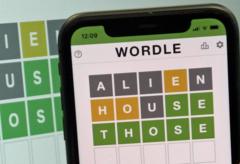
Josh Wardle does not play Wordle anymore. For the man who built a global phenomenon in a Brooklyn apartment, the ritual ended the moment the New York Times cut the check. It is a clean break that sounds like heresy to the millions of players who still share their green-and-yellow grids every morning. But for those who understand the mechanics of accidental success and the crushing weight of viral scale, Wardle’s departure from his own creation is the only logical conclusion to a story about preservation versus profit.
The game was never meant to be a product. It was a gift for his partner, Palak Shah, designed to narrow the infinite noise of the internet into a five-letter focus. When the world found it, the simplicity became its primary burden. Wardle recently admitted that since selling the game for a price "in the low seven figures" in early 2022, he hasn't touched the puzzle. To understand why a creator would abandon their masterpiece the second it achieves immortality, you have to look at the friction between indie soul and corporate machinery.
The Architecture of an Accidental Monopoly
Wordle succeeded because it broke every rule of modern software development. It had no notifications. It had no streak-protection microtransactions. It didn't want your email address. It was a static webpage that lived in the browser, a relic of an era where the web was a collection of interesting places rather than a series of data-harvesting funnels.
When the New York Times stepped in, they weren't just buying a word game. They were buying a habit. The Times has spent the last decade pivoting from a news organization to a "subscription bundle" company. Games, along with Cooking and Wirecutter, are the hooks that keep the churn rate low. Wordle was the ultimate hook.
The transition, however, changed the DNA of the experience. While the Times kept the core mechanics intact, the underlying infrastructure shifted. The game moved from a solo project to a cog in a massive corporate wheel. For Wardle, the "why" disappeared. If the game was a conversation between two people, the entry of millions of strangers made it a shout. The sale made it an industry.
The Psychological Cost of Going Viral
Most developers spend their lives praying for the kind of traffic Wordle received. When it actually happens, it is often a nightmare. Wardle has spoken about the stress of managing a site that had become a vital part of the daily routine for tens of millions of people. When you are a solo developer, a server crash isn't just a technical glitch; it is a personal failure witnessed by the entire world.
There is a specific kind of burnout associated with "winning" the internet. We saw it with Dong Nguyen and Flappy Bird. We saw it with Markus "Notch" Persson and Minecraft. When a project goes from a labor of love to a global obligation, the joy evaporates. The creator becomes a janitor for their own imagination.
By walking away, Wardle performed a rare act of digital hygiene. He recognized that his relationship with the game was tainted by the stress of its maintenance. The sale wasn't just a payday. It was an exit ramp from a level of scrutiny that no single human is equipped to handle.
Why the New York Times Version Feels Different
To the casual observer, Wordle is still Wordle. But the purists noticed the shifts immediately. The Times eventually integrated the game into their central app. They adjusted the word list to remove obscure or potentially offensive terms. They added a "Wordle Bot" to analyze your play style.
Every one of these additions is a logical business move. They add "value." But they also add weight. The original Wordle felt like it existed in a vacuum. The current version feels like it is trying to sell you something, even if that "something" is just the idea of staying on the NYT website for five more minutes.
The Data Retention Shift
- Original Wordle: No accounts, local storage only, zero tracking.
- NYT Wordle: Cross-device syncing via accounts, standard corporate tracking pixels, integration with the broader NYT data profile.
This shift is where the "indie" spirit died. Wardle’s version was an island. The Times version is a port of entry. For a creator who built the game to be a quiet space, seeing it turned into a data-collection engine—no matter how benign—creates a fundamental disconnect.
The Myth of the Perpetual Player
There is a romantic notion that creators should be the biggest fans of their work. We want George Lucas to love Star Wars and Wardle to love Wordle. But the act of creation is often an act of exorcism. You build the thing to get the idea out of your head. Once it is out, and once it belongs to a corporation with a marketing department and a legal team, the creator is often the last person who wants to look at it.
Wardle’s refusal to play is an honest admission of the "maker's curse." You cannot play a game when you can see the wires behind the curtain. Every time he looks at a five-letter grid, he likely sees the code, the server logs, and the frantic weeks of January 2022 when the world was knocking on his door.
The Commodification of Simplicity
We are currently living through a period where every simple pleasure is being optimized for engagement. Wordle was a counter-protest against that trend. Its success proved that people are hungry for experiences that have an "end." You play once, and you are done for the day.
The danger of the Wordle acquisition is the precedent it sets. It tells independent creators that the ultimate goal is to be absorbed. It suggests that a "good" idea is only "great" once it has been validated by a nine-figure balance sheet. Wardle got his money, and he deserves it, but the ecosystem lost a symbol of pure, unmonetized intent.
The Five Letter Shadow
The legacy of Wordle isn't the game itself, but the brief moment where a single man in a small apartment could capture the attention of the globe without a PR firm or a venture capital round. That window is closing. As platforms become more gated and the web becomes more centralized, the "accidental viral hit" is being replaced by engineered trends.
Wardle has moved on to other things, likely relieved to be just another face in Brooklyn. He is a veteran of Reddit's experimental projects like "The Button" and "Place," which suggests he is more interested in how people interact in digital spaces than in the mechanics of linguistics. Wordle was just one experiment that happened to explode.
If you find yourself frustrated that your favorite creator has "sold out" or stopped participating in their own community, consider the pressure of being the center of a storm. Most people would take the money and run. Wardle is just the only one honest enough to admit he didn't look back.
The game continues. The grids are shared. The streaks grow longer. But the soul of the project left the building the day the contract was signed. The New York Times bought the code, the name, and the traffic. They could never buy the specific, quiet affection that started it all.
Stop looking for the creator in the product once the product has been scaled to death. Wardle is busy living a life that doesn't involve thinking about whether "ROBOT" or "ADIEU" is the better opening move. He won the game by stopping the play.